












At least 20 people, including five journalists, were killed in Israeli airstrikes on Nasser Hospital in Gaza on August 25
Newsroom (25/08/2025, Gaudium Press )In a tragic escalation that underscores the fragility of human life in the Holy Land, at least 20 people, including five journalists, were killed in Israeli airstrikes on Nasser Hospital in southern Gaza on August 25. The attack, verified by BBC News through multiple videos, has drawn sharp international condemnation and renewed pleas from Catholic leaders for an end to the violence that continues to ravage the region.
The strikes targeted the hospital’s upper floors and exterior staircase, where emergency workers and journalists had gathered to document the aftermath of an initial blast. Footage from Al Ghad TV captured the chaos, showing rescuers scrambling amid debris before a second strike hit, leaving at least one body visible in the rubble. Among the deceased were Reuters cameraman Hussam al-Masri, freelance journalist Mariam Abu Dagga (who had collaborated with the Associated Press), Mohammed Salama of Al Jazeera and Middle East Eye, Ahmad Abu Aziz (also with Middle East Eye), and Moas Abu Taha, whose affiliations are under confirmation.
This incident follows the deaths of six other journalists in a similar strike on Al-Shifa Hospital in Gaza City on August 10, highlighting a disturbing pattern in a conflict that has claimed over 62,000 Palestinian lives, according to Gaza’s health ministry, alongside 1,200 Israelis killed and more than 5,400 injured since Hamas’ October 7, 2023, attack. Of the 251 hostages taken that day, 50 remain captive, with only 20 believed alive.
Such violence stands in stark opposition to the Church’s unwavering commitment to the sanctity of every human life, created in the image of God. As Pope Leo XIV called for a global day of prayer and fasting for peace on August 22 – the Feast of the Queenship of the Blessed Virgin Mary – the strikes serve as a somber reminder of the urgent need for conversion of hearts. The Pontiff’s initiative, amid surging conflicts in the Middle East and Ukraine, invited the faithful to implore Mary’s intercession for fraternity and an end to hatred.
Latin Patriarch Cardinal Pierbattista Pizzaballa, speaking to Vatican News ahead of the observance, expressed gratitude for the focus on peace, noting, “It is the only thing that at this moment we can do: to pray and to fast, to keep our attention directed toward God.” He emphasized that prayer is not a “magic formula” but a transformative force that fosters rejection of violence and embraces mutual respect. “Prayer also serves to create this bond with people of all faiths who, despite everything, still want to believe that the heart of man, even in the Holy Land, can change,” the Cardinal added, affirming that “Christ is not absent from Gaza.”
The Israel Defense Forces (IDF) confirmed the strike in an August 25 statement, expressing regret for harm to “uninvolved individuals” and denying any intent to target journalists. The IDF announced an initial inquiry and reiterated efforts to minimize civilian casualties while protecting troops. However, the attack has intensified global outcry, particularly over the protection of medical facilities and media personnel under international humanitarian law.
World Health Organization Director-General Tedros Adhanom Ghebreyesus condemned the strikes on X, stating they impacted critical areas including the emergency department, inpatient ward, surgical unit, and staircase. “While people in Gaza are being starved, their already limited access to health care is being further crippled by repeated attacks,” he wrote, urging, “Stop the attacks on health care. Ceasefire now.”
The Foreign Press Association noted that the strikes hit the hospital’s exterior staircase, a common vantage point for journalists, without warning. Reporters Without Borders Director-General Thibaut Bruttin decried the incident as part of a broader effort to “eliminate information coming from Gaza,” pointing to over 200 journalists killed by Israeli forces in the past two years – a figure that defies the protections afforded to media under international law.
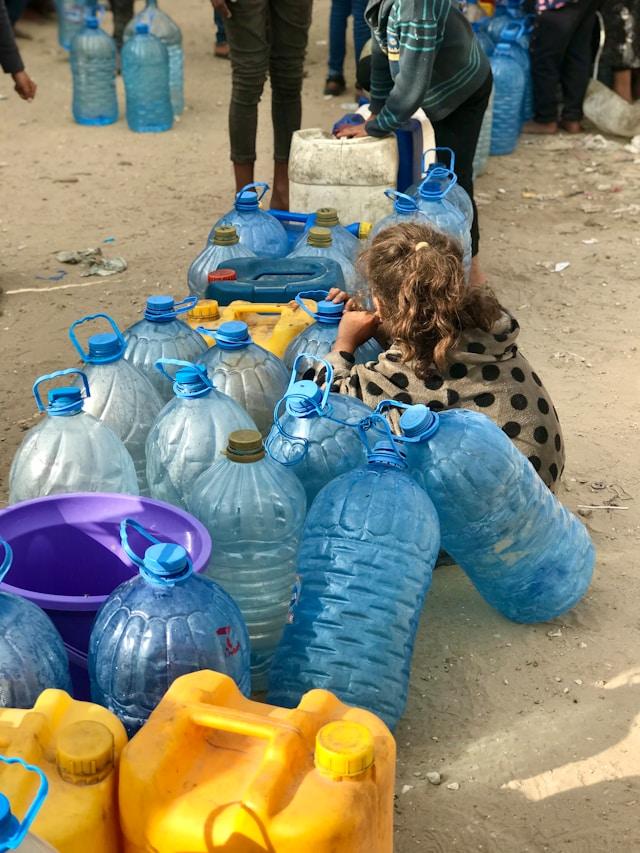
Compounding the humanitarian crisis, a famine has been declared in Gaza by the Integrated Food Security Phase Classification, a metric endorsed by global hunger relief agencies. Caritas Internationalis, the Catholic Church’s confederation of aid organizations, issued a fervent appeal on the heels of the strikes, bearing witness to the “horror” where “civilians, mostly children and women, are being starved, bombed, and erased.” The organization demanded an immediate ceasefire, unrestricted humanitarian access, release of hostages and detainees, deployment of UN peacekeepers, and protection for the vulnerable.
“The famine in Gaza is a test of moral integrity, and too many have failed,” Caritas stated. “To starve a population is to desecrate life. To remain silent is to be complicit.” Calling on people of faith and conscience to pressure governments for justice, Caritas emphasized that “Gaza is waiting, not for words, but for salvation.”
The personal toll is exemplified in the story of Mariam Abu Dagga, a 33-year-old Palestinian photojournalist and mother from Khan Yunis. Hours before her death, she messaged followers on X: “Hi Assalamualaikum, thanks for following me. I hope you’ll continue to share my posts and support Palestine, so the world can see the inhuman treatment we suffer every day.” Her profile chronicled Gaza’s daily hardships, echoing the Church’s teachings on solidarity with the oppressed. Just days prior, she reflected: “We are passers-by in this life, passing by like a cloud, we have nothing from it but our deeds.”
This sentiment aligns deeply with Catholic spirituality, reminding us of life’s transience and the eternal value of acts of mercy and truth-telling. Mariam’s voice, like those of slain journalists before her – including Arab Christian Shireen Abu Akleh in 2022 – humanizes the statistics, urging a recommitment to the Gospel imperative of peacemaking.
As the Church continues to advocate for dialogue and reconciliation, these events challenge the international community to move beyond platitudes. In the words of Cardinal Pizzaballa, hope persists that hearts can change, even in the Holy Land, through prayer, fasting, and unwavering pursuit of justice. The faithful are called to join in this mission, imploring divine mercy for all affected by this enduring tragedy.
- Raju Hasmukh with files from Asianews.it and OSV News
Related Images:


