













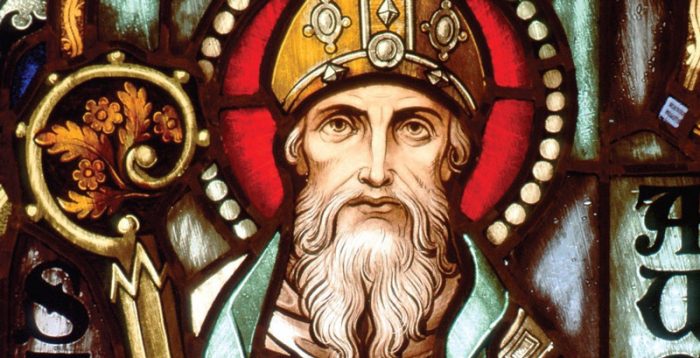
Today we honor St. Augustine, Doctor of the Church—whose journey from restless youth through conversion to bishop shaped Christian theology forever.
Newsroom (08/28/2025 7:21 AM, Gaudium Press) Today the Church celebrates the great St. Augustine, Doctor of the Church and the greatest of all the Church Fathers. He wrote many invaluable books, a greatness recognized even beyond the borders of Christianity.
He was born on November 13, 354, in North Africa. His mother was St. Monica, also very well known. His father was a violent pagan named Patricius.
St. Monica taught her son to pray and instructed him in the faith. Augustine fell gravely ill and pleaded for Baptism—yet he recovered and never received it. He pursued his studies passionately but gradually veered into a disordered life.
At age 17, he joined with a woman and had a son, Adeodatus.
He studied rhetoric and philosophy and embraced Manichaeism, which held that spirit is the principle of all good and matter the principle of all evil.
Ten years later, he abandoned that belief. In Milan, he secured the Chair of Rhetoric and was warmly received by St. Ambrose, the city’s bishop. Upon hearing his sermons, Augustine’s views on the Church, faith, and God’s nature began to change.
St. Monica sought his conversion through prayer. She had followed him to Milan and hoped he would marry Adeodatus’s mother—but instead she decided to return to Africa, leaving the boy with his father.
Augustine believed truth resided in the Church, but resisted converting. He understood the value of chastity, yet struggled to live it, which delayed his full conversion to Christianity. He would say, “I’ll do it soon, little by little; give me more time.” But that “soon” never came.
A friend visited and shared the life of St. Anthony, impressing Augustine deeply. He realized it was time to move toward the right path. He kept asking, “How long? Until tomorrow? Why not today?” Then he heard a child next door singing, “take and read, take and read.” Recalling that St. Anthony converted after hearing Scripture, Augustine saw this as a sign from Heaven. He dried his tears, found his friend holding a Gospel, and both resolved to convert immediately. They went to inform St. Monica, who thanked God. Augustine was then 33.
He devoted himself to study and prayer, did penance, and prepared for Baptism. He received it with his friend Alipius and his son, Adeodatus. He prayed, “Too late, too late have I loved You,” and also said, “You called me, O Lord, with cries, and ended up overcoming my deafness.” His son, aged 15, was baptized and died soon after. Augustine became a monk, striving toward Christian perfection.
The Manichaean becomes Bishop
Desiring service, he returned to Africa. There, for about three years, he served God with fasting, prayer, and good works—teaching his neighbors through sermons and writings. In 391 he was ordained priest and began preaching; five years later, he became Bishop of Hippo. He organized his home like a monastery where only those willing to live under his Rule were admitted—based on simplicity. He also founded a women’s branch.
He was very charitable—he melted sacred vessels to ransom captives and insisted that parish poor be clothed. During his 34-year episcopate, he defended the Catholic faith zealously against heresies. He authored over 60 important works, including Confessions and The City of God.
His final years were troubled by war; the north of Africa suffered Vandal invasions. After three months, Augustine fell ill with fever and sensed the end. At this time, he wrote, “He who loves God cannot be afraid of meeting Him.”
He died at age 76—having served God for 40 years. He left behind the most influential philosophical-theological thought history has seen. He died in 430.
with files from the Archdiocese of Madrid
Compiled by Gustavo Kralj
Related Images: