














Slovak bishops and educators decry new school law for discriminatory funding on Catholic/private schools, ignoring input amid rushed reforms.
Newsroom (07/11/2025, Gaudium Press ) A sweeping education reform signed into law by President Peter Pellegrini has ignited sharp criticism from Catholic bishops and educators, who warn that revised funding mechanisms could disproportionately harm private and Church-run schools, potentially limiting parental choice and educational diversity.
The amendments to the School Act introduce several structural changes aimed at modernizing Slovakia’s education system. Key provisions include a unified online registration process for all students at the start of the school year, mandatory preschool education beginning with 4-year-olds and expanding to 3-year-olds in subsequent phases, and relaxed qualifications for teaching staff to address widespread teacher shortages. Universities are directed to streamline bureaucracy and integrate modern technologies, such as artificial intelligence, into their operations.
However, the core controversy centers on financing for non-state schools. According to the Ministry of Education, private and Church-affiliated institutions can secure full public funding if they comply with new admission rules, offer tuition-free education, or demonstrably serve the public interest. Ministry officials have defended the measures as promoting equity and transparency across the board.
The Slovak Bishops’ Conference (KBS) has vowed to closely monitor the law’s rollout but expressed deep reservations about its development. In a September statement, the KBS declared itself “fundamentally in conflict with the amendment to the School Act in the form in which it was submitted to Parliament,” citing the ministry’s failure to incorporate numerous proposals submitted by the conference during consultations.
Educators echoed these concerns over the legislative process. The Slovak Chamber of Teachers condemned the reforms’ passage as occurring “without any professional discussion in a few hours, and not months,” emphasizing the need for “high-quality, honest legislative and professional work” to ensure meaningful reforms.
Ján Horecký, a former Minister of Education and ex-principal of a Catholic school, described the funding shifts as “discriminatory and unfair.” In his view, the changes will “reduce the availability of education” and “worsen conditions for children in the name of shifting decision-making about children from parents to the state,” effectively centralizing control at the expense of family autonomy.
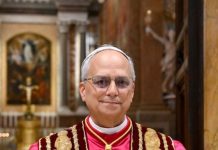
In a symbolic act of solidarity and spiritual renewal following the law’s enactment, principals from Catholic schools in the Košice Archdiocese embarked on a pilgrimage to Rome for the Jubilee of the World of Education. The group attended a general audience with Pope Leo XIV, where Auxiliary Bishop Marek Forgáč, who accompanied them, conveyed greetings to the pontiff. Forgáč later reflected that the visit was essential “to be with our supreme teacher, as we need to be formed and spiritually encouraged, too, to be a good example for those to whom we are sent — our pupils and students.” The bishop described the pope’s words as “very encouraging” for the educators amid the ongoing challenges.
As implementation begins, stakeholders on both sides anticipate further dialogue, with the KBS and teaching associations pushing for amendments to safeguard institutional independence while addressing systemic shortages and modernization goals. The reforms’ long-term impact on Slovakia’s pluralistic education landscape remains under intense scrutiny.
- Raju Hasmukh with files from CNA
Related Images: