























For over two decades, Vincentian sisters in Russia have quietly offered food, faith, and hope to forgotten children and the homeless.
Newsroom (30/12/2025 Gaudium Press ) In the industrial city of Nizhnyj Tagil, where faith is often a minority language and poverty a daily companion, a quiet mission of mercy has taken root. It began with hungry children and a priest who could not look away.
In 1997, the Vincentian Fathers arrived to serve in a region where few were Christian. Among them was Fr. Tomaž Mavrič, CM, whose heart broke at the sight of children wandering the cold streets—hungry, forgotten, and without warmth. His conversations with parishioners and with the headmistress of a local school sparked what would become a long-lasting ministry of compassion.
It started simply: parishioners paid for school lunches for 50 or 80 children who could not afford to eat. From that modest act of charity grew a parish partnership with state institutions, and eventually, an enduring community of service.
A Home for the Forgotten
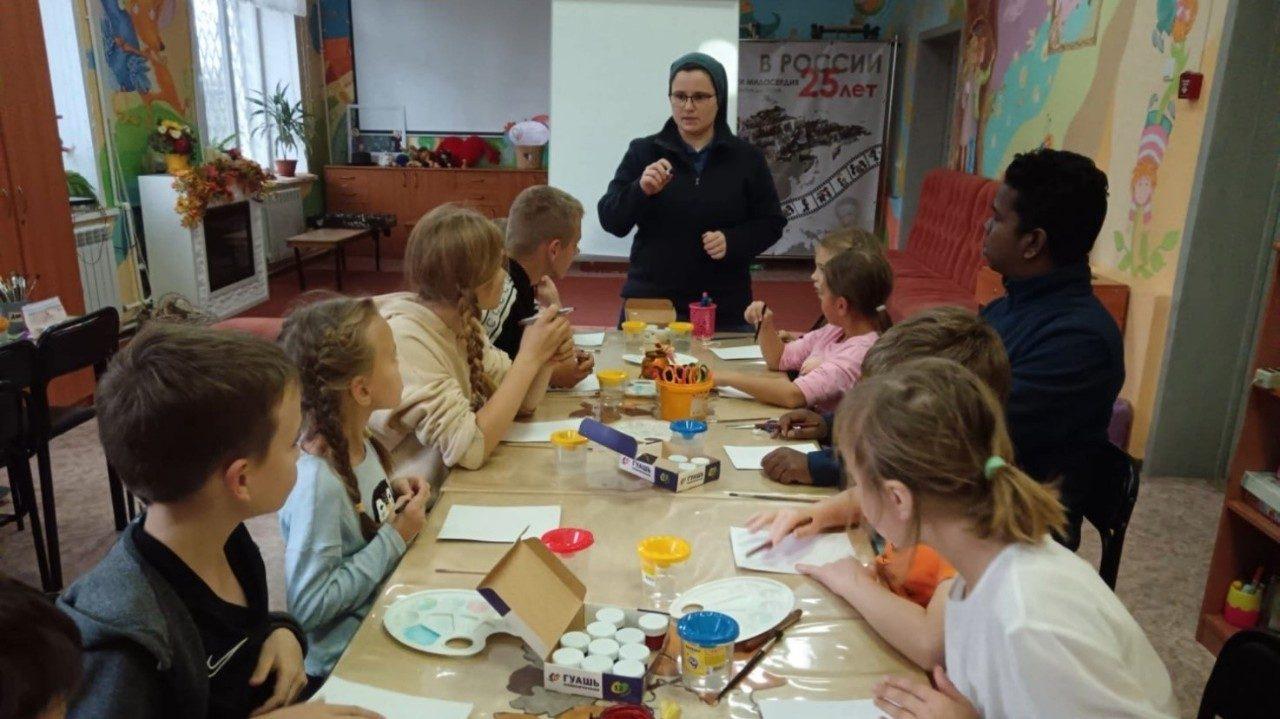
When Fr. Tomaž asked for sisters to help, the Daughters of Charity of St. Vincent de Paul answered his call. In 2000, sisters from Slovakia arrived to establish what they called the Children’s Club Care—a refuge, classroom, and second home for many of Nizhnyj Tagil’s children.
“Over 1,500 children have benefited from this club,” says Sr. Antonia Lednicka, a Daughter of Charity who has served in Russia for 23 years. “For some, it’s a year; for others, it’s their entire school life.”
The sisters’ mission was simple but profound: to give love and stability to children who had none. Religion was never a barrier. “Many weren’t believers,” Sr. Antonia recalls. “We helped Orthodox and Muslims alike. What mattered was showing them someone cared.”
Lives Transformed
One of those children was Ulyana, now 34. “I have fond memories of my childhood,” she says, smiling. “We went sledding in the winter, hiking in the summer—it was fun and homely. I was happier than ever.”
Coming from a dysfunctional family, Ulyana found in the club what her home life lacked: kindness, constancy, and love. “It molded my creativity,” she says. “Now I’m a designer, and I owe that to the sisters.”
Serving the Margins
The Daughters of Charity’s work extends far beyond childhood care. In Nizhnyj Tagil, they visit shelters daily, assisting the homeless with food, hygiene, and even building repairs. They also serve tuberculosis patients—many homeless and undocumented—helping them secure papers needed to receive healthcare and social benefits.
“We use our car to take patients to offices and cover all the expenses,” Sr. Antonia explains. Once a month, the sisters deliver food to the dispensary to encourage regular checkups, turning charity into both nourishment and incentive.
Their outreach includes parish catechesis, holiday performances, and pastoral care throughout the year. Funding for these efforts comes largely through grants from the Vincentians’ Slovakia Province and donations collected during the annual “St. Vincent’s Bag” campaign. “People give generously,” Sr. Antonia says. “They know the food goes directly to those in need.”
Expanding the Circle
In 2010, Bishop Joseph Werth of Novosibirsk invited the sisters to Omsk, a city deep in Siberia. There, they continued their distinctive mix of practical and spiritual service—teaching catechism, aiding the homeless, and assisting tuberculosis patients through local Catholic charities. Together with parish priests, they sometimes travel over 100 kilometers to reach remote communities.
Wherever they go, their mission remains grounded in presence: to be with people, not above them. Whether in a small parish hall or a hospital ward, the sisters embody the quiet witness of their Vincentian calling.
Joy in the Struggle
After decades in Russia, Sr. Antonia reflects on the perseverance that keeps their mission alive in times of dwindling faith and enduring hardship. “We live among fear, poverty, and broken families,” she says softly. “Yet we find joy when we see children grow—especially those whose parents we once cared for.”
In a nation often defined by vast distances and harsh winters, the Vincentian sisters have built oases of shelter and love—one bowl of soup, one laughter-filled afternoon, one compassionate encounter at a time.
Their legacy in Russia may never make headlines, but it endures in something deeper: the quiet conviction that a small act of love can still change a life.
- Raju Hasmukh with files from Vatican News
Related Images: