

















The body of Saint Teresa of Jesus was returned to the chapel of the Basilica of the Annunciation on May 26, following a two-week public exposition that drew over 90,000 pilgrims to Alba de Tormes, Spain. This rare event marked only the third time since her death in 1582 that her incorrupt body was displayed for public veneration.
Newsroom, May 26, 2025, Gaudium Press On Monday, May 26, the body of Saint Teresa of Jesus was returned to the chapel of the Basilica of the Annunciation after more than two weeks of public exposition. According to data provided by the Carmelite Order, over 90,000 people visited Alba de Tormes, Spain, during this fifteen-day period.
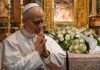
The Saint’s body was reverently displayed in the Basilica of the Annunciation, inviting contemplation, prayer, and reflection on her mystical legacy. Her incorrupt body, “a testimony of faith and dedication, remains silent but speaks powerfully to the souls of those who approach with devotion,” said Fr. Miguel Ángel González, Carmelite prior of Alba and Salamanca.
Though the body appeared “as it did the last time the tomb was opened,” the Carmelite prior emphasized that during veneration, “we must look beyond the visible image with a contemplative gaze, like Saint Teresa of Jesus, to fully receive the spiritual gift she offers—the testimony of her life, the richness of her writings, the greatness of her witness as a woman, a saint, and a doctor of the Church.” He added, “Saint Teresa of Jesus is for everyone, a true heritage of humanity.”
The procession began early in the morning. Eight Discalced Carmelites, each from a different convent, carried the urn from the Plaza de Santa Teresa through Sánchez Rojas and the Plaza Mayor to the Carmus Museum. Leading the procession was a tray with the keys used to open the tomb.
Once in the upper chapel of the basilica, the press was asked to leave the church to preserve a moment of silence and prayer for the religious community. The ceremony began with the signing of a notarial act, which was placed inside the urn.
The saint’s habit was also changed to a simpler one. The previous habit will be preserved in the relic room.
The tomb was sealed with the traditional four keys: one held by the Father General of the Carmelite Order, one by the Mother Prioress of the Discalced Carmelites, one by the Mayor of Alba de Tormes representing the Ducal House, and one by the Carmelite Prior of Ávila representing the Royal House.
Fr. Miguel Ángel González publicly thanked the more than seventy volunteers and commended the pilgrims for their respectful behaviour. He described it as “an intense experience” filled with moments “of faith, silence, gratitude, and emotion.”
He explained that this was the third time since her death in 1582 that the saint’s body was exposed to the public: the first in 1760, the second in 1914, and now, the most significant and widely attended.
Historical Background
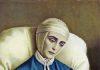
On October 4, 1582, Mother Teresa of Jesus passed away in her convent in Alba de Tormes. Her body was displayed in the original church until the funeral and burial, which took place the following morning on October 15, 1582.
In 1760, the new and permanent tomb was inaugurated, and the saint’s body was placed in a new silver urn in the presence of many notable figures. At that time, the body was displayed in the lower choir for about seven hours before being transferred to the new marble sepulcher. Since then, her body has remained in the Basilica of the Annunciation of Our Lady of Mount Carmel.
In 1914, her tomb was opened twice. On August 16, the body was privately displayed in the upper chapel until August 23, when it was returned to the marble tomb. On August 28, the tomb was opened again for public veneration but was closed later the same day. Plans to reopen the tomb in 1981–1982 for the fourth centenary of her death were ultimately not realized.
A scientific report on Saint Teresa’s body confirmed that it is in an “extraordinary state of preservation” despite the passage of time. However, it also revealed that the saint may have suffered from osteoporosis, bilateral knee osteoarthritis, and a bone condition in both heels likely linked to chronic pain.
Compiled by Gustavo kralj
Related Images: