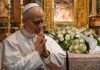












August 21 commemorates the great Giuseppe Sarto – Pope Pius X – whom no one considered a candidate for the papacy.
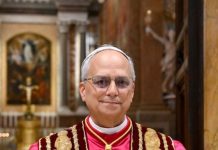
Newsroom (08/21/2025, Gaudium Press) It is impossible to summarize the life of St. Pius X in a few lines, given the enormous number of his achievements and the interesting events of his life. Let us therefore limit ourselves to giving a few highlights of the great Pope Sarto’s life.
Giuseppe Sarto was born in Riese, near Venice, in 1835. He was a parish priest, canon, bishop of Mantua, and Cardinal Patriarch of Venice, holding each of these positions for nine years.
He never imagined he would be elected pope
When Leo XIII died, he went to Rome for the conclave with his characteristic bonhomie. No one considered him a candidate for the Chair of Peter, least of all himself.
The cardinals elected Cardinal Rampolla, but, appealing to an ancient tradition, the Cardinal of Czechoslovakia presented the Austrian emperor’s veto of that candidate. It was then that the votes began to converge on Cardinal Sarto, who only accepted the Throne of Peter when a commission of cardinals convinced him that not accepting the appointment was to deny the Divine Will. He was elected Pope – amid tears – on 4 August 1903. He said that he was taking on the papacy as Christ took up the Cross.
He ascended to the papacy at a time when dangerous heresies were circulating in Catholic circles. It was then that the lamb became a lion, without ever losing his kind nature, and Pius X, the only pope canonized in the 20th century, fought heroically against these errors.
St. Pius X was Pope for 11 years. His motto was Instaurare omnia in Christo, Restore all Things in Christ. More than 3,000 official documents were issued by him with this intention.
Fight against internal errors
Some of his works include the reform of the Roman Curia, the founding of the Biblical Institute, the construction of central seminaries and the promulgation of laws for better discipline of the clergy, a new discipline regarding First Communion and frequent Communion, and the restoration of sacred music.
But above all, there is the fight against heresies in the Church, grouped under the name of modernism; and also his defense of the freedom of the Church in France, Germany, Portugal, Russia and other countries.
Also worthy of mention, due to the enormous amount of work involved, is the compilation made in the Code of Canon Law, the first exhaustive compilation of canonical norms gathered in one work. He also promoted the study of the Catechism in many ways.
His Encyclical Letter Pascendi Dominici Gregis (on the doctrines of modernists) will go down in history as the bastion that clarifies true Catholic doctrine against errors, some overt and others subtle, that sought to obscure it, and which from then on would crash against the firm wall of Pascendi.
St. Pius X died on 21 August in 1914.
Compiled by Sandra Chisholm
Related Images: