

















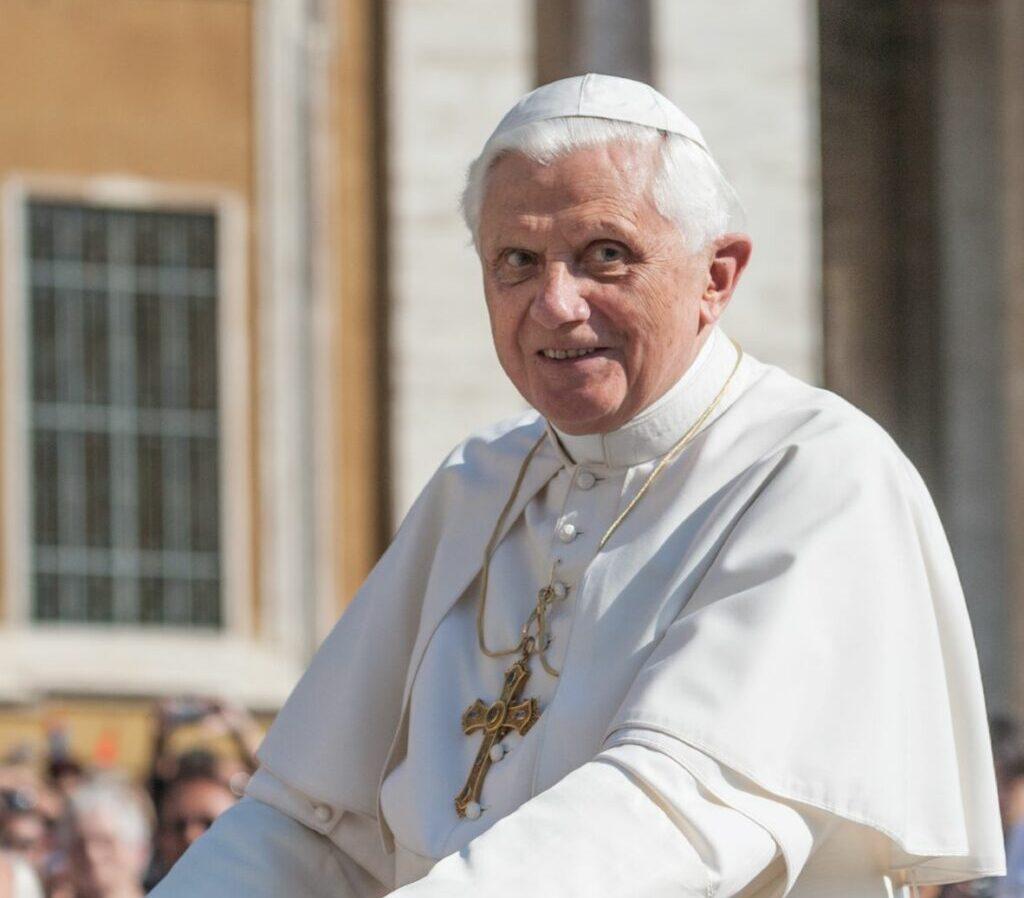
Inspired by Pope Benedict XVI’s vision of broadening the scope of reason, the Award aim to counter the fragmentation of knowledge and excessive specialization that can hinder the pursuit of truth
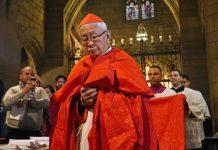
Newsroom (25/09/2025, Gaudium Press )On Tuesday, September 30, 2025, at 4:30 p.m., the Casina Pio IV, home of the Pontifical Academy of Sciences, will host the seventh edition of the “Ragione Aperta” (Open Reason) Award. This prestigious recognition, a collaboration between the Vatican-based Joseph Ratzinger-Benedict XVI Foundation and the Francisco de Vitoria University in Madrid, celebrates works that integrate science, philosophy, and theology to address profound anthropological, ethical, epistemological, and existential questions. The ceremony, presided over by Cardinal Kurt Koch, Prefect of the Dicastery for Promoting Christian Unity, will feature remarks by Fr. Federico Lombardi, president of the Ratzinger Foundation, and Prof. Daniel Sada, rector of Francisco de Vitoria University. Awards will be presented to winners selected from 410 submissions across 63 universities worldwide.
Expanding the Horizons of Reason
Inspired by Pope Benedict XVI’s vision of broadening the scope of reason, the “Ragione Aperta” Awards aim to counter the fragmentation of knowledge and excessive specialization that can hinder the pursuit of truth. The initiative promotes an integrated approach, fostering dialogue between disciplines to explore humanity’s fundamental questions and ultimate destiny.
The awards are divided into two categories: Research and Teaching. The Research category honors original scholarly publications that tackle anthropological, epistemological, ethical, or existential dimensions within a specific scientific field. The Teaching category recognizes innovative academic programs—such as syllabi or curricula—that incorporate these themes into the instruction of a particular discipline, supported by detailed accounts of their implementation and outcomes.
This year, the international jury reviewed over 400 submissions in English, Spanish, and Italian, spanning fields such as law, economics, social sciences, communication, physical and biomedical sciences, engineering, architecture, humanities, philosophy, and theology. In addition to the main awards, honorable mentions may be awarded to works deemed particularly noteworthy.
Esteemed Jury
The jury comprises globally recognized experts in philosophy, theology, science, and education. Alongside Fr. Federico Lombardi and Prof. Daniel Sada, the panel includes:
-
Marta Bertolaso, professor of philosophy of science at the University Campus Bio-Medico in Rome.
-
Fr. Paolo Benanti, a theologian, engineer, and AI ethics expert, member of the Pontifical Academy for Life and Vatican consultant on artificial intelligence.
-
Rafael Vicuña, a molecular biology scholar and member of the Pontifical Academy of Sciences, based at the Pontifical Catholic University of Chile.
-
Javier Prades, a theologian and former rector of San Dámaso Ecclesiastical University in Madrid, specializing in the dialogue between faith and reason.
-
Stefano Zamagni, an economist and former president of the Pontifical Academy of Social Sciences, known for his work on civil economy and integral human development.
Teaching Category Winner
The Teaching category award goes to the Programa de Grandes Libros at the University of Navarra, led by José María Torralba. Implemented in the faculties of law and medicine, this program integrates the study of philosophical and literary classics into the curriculum. Through seminars and lectures, it fosters a holistic educational approach, encouraging students to engage with fundamental questions about humanity, truth, and meaning in dialogue with specific sciences.
Research Category Winners
Three works were honored in the Research category:
-
Body and Identity: A History of the Empty Self by Angela Franks (St. John’s Seminary, Boston). This historical-philosophical study traces the evolution of identity from antiquity to modernity, arguing that the loss of a transcendent foundation has fueled a contemporary crisis of identity.
-
The Polycentric Republic: A Theory of Civil Order for Free and Diverse Societies by David Thunder (University of Navarra). This work proposes an alternative to the modern state, advocating for a “polycentric republic” where diverse associations collaborate freely to advance the common good.
-
Thomistic Philosophy in the Face of Evolutionary Fact by Juan Eduardo Carreño (Universidad de los Andes, Chile). This study integrates biological evolution with Thomistic philosophy, offering a methodological framework that harmonizes scientific findings with a sapiential worldview.
Honorable Mentions
Two works received honorable mentions:
-
Insolente belleza: Una propuesta de apreciación del arte contemporáneo by Pablo López Raso (Francisco de Vitoria University). This work defends the aesthetic journey as a path to the transcendent, highlighting contemporary art’s potential to spark questions about meaning, identity, and truth.
-
Educación aumentada: Desafíos de la educación en la era de la inteligencia artificial by Santiago Bellomo (Universidad Austral, Argentina). This study critically examines the impact of artificial intelligence on education and proposes a renewed pedagogy that blends classical humanism with open, critical reasoning.
The “Ragione Aperta” Awards continue to champion interdisciplinary scholarship, inspiring a global academic community to pursue truth through an expansive and integrated vision of reason.
- Raju Hasmukh with files from Vatican News
Related Images: