












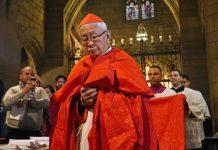

For Quebec’s faithful, the proposed prayer ban is not just a legal issue but a profound challenge to the public expression of their beliefs.
Newsroom (09/09/2025, Gaudium Press ) A proposed ban on public prayer by Quebec Premier François Legault’s government has ignited fierce opposition from religious leaders, civil liberties groups, and constitutional experts, who warn it undermines fundamental freedoms and risks deepening social divisions in the province.
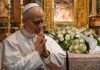
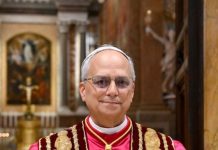
In a public letter published on September 2 in La Presse and posted on the Archdiocese of Montreal’s website, Archbishop Christian Lépine described the proposed ban as a direct assault on the principles enshrined in the Canadian Charter of Rights and Freedoms, Quebec’s Charter of Human Rights and Freedoms, and the Universal Declaration of Human Rights. “At its core, to forbid public prayer would be somewhat like forbidding thought itself,” Lépine wrote, emphasizing the ban’s chilling effect on expressions of faith that foster hope and solidarity in a world grappling with economic, social, and environmental crises.
The archbishop called the proposal both unworkable and discriminatory, arguing it would jeopardize cherished Quebec traditions such as the Way of the Cross, Palm Sunday processions, and Corpus Christi celebrations. “These events, marked by order and dignity, are spaces of encounter,” he said. “To forbid prayer in public would be to threaten their very existence.” He further noted that Pope Francis’ 2022 penitential pilgrimage to Quebec City could have been prohibited under such a law.
Quebec’s Catholic bishops echoed these concerns, with Bishop Martin Laliberté, president of the Assembly of Quebec Catholic Bishops, expressing shock at the suggestion of banning prayer in public spaces like parks and streets. In an open letter, the bishops warned that the legislation would disproportionately target minority religious groups, violate constitutional protections, and prove unenforceable. “Prayer is not dangerous,” Laliberté had previously written to the government in response to the Coalition Avenir Québec (CAQ) party’s initial proposal last year.
The controversy stems from a series of public Islamic prayer gatherings in 2024, often linked to pro-Palestinian protests, including a weekly prayer event outside Notre-Dame Basilica in Old Montreal. These gatherings, widely covered by media, prompted Quebec’s secularism minister, Jean-François Roberge, to announce on August 28 that the government would introduce legislation this fall to ban street prayer. While it remains unclear whether the government will invoke the notwithstanding clause to shield the bill from legal challenges, the move has drawn sharp criticism.
The Canadian Constitution Foundation (CCF) labeled the proposal “an assault on the constitutionally protected right to freedom of religion.” Litigation director Christine Van Geyn argued that while the government may seek to address disruptions caused by protests, a blanket ban on public prayer is an overreach that unfairly targets people of faith. “Secularism does not require hostility to religious communities,” she said, urging the government to enforce existing laws on traffic obstruction and noise violations rather than punishing religious expression.
The Canadian Civil Liberties Association (CCLA) similarly condemned the proposal as a “clear infringement” on freedoms of religion, expression, assembly, and association. “Suppressing peaceful religious expression, individually or communally, under the guise of secularism not only marginalizes faith-based communities but also undermines principles of inclusion, dignity, and equality,” said CCLA Director Harini Sivalingam. Executive Director Howard Sapers criticized the growing trend of governments using the notwithstanding clause to bypass fundamental rights.
The Canadian Muslim Forum also decried the proposal, warning that it would stigmatize religious minorities, fuel exclusion, and erode Quebec’s social cohesion. “The government should be focused on solving real problems, not policing the fundamental rights of its citizens,” the group stated.
As Quebec approaches provincial elections in 2026, issues of identity and secularism are once again dominating the political landscape. Legault’s CAQ, which has faced declining support in recent opinion polls and lost its third consecutive byelection to the Parti Québécois, appears to be doubling down on secularism to rally its base. However, critics argue this approach risks alienating diverse communities and undermining the province’s commitment to human rights.
For Quebec’s faithful, the proposed ban is not just a legal issue but a profound challenge to the public expression of their beliefs. As Archbishop Lépine asked, “Can we afford to discourage gestures that foster hope and solidarity?” For many, the answer is a resounding no.
- Raju Hasmukh with files from CNA
Related Images: