













Pope urges deep foundations in Christ for living Church on Saint John Lateran feast, citing Zacchaeus, Synod, liturgy as paths to renewal and charity.
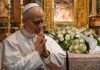
Newsroom (10/11/2025, Gaudium Press ) In a homily delivered on the Feast of the Dedication of the Basilica of Saint John Lateran, the cathedral of Rome and “mother of all churches,” the Holy Father emphasized the enduring significance of this fourth-century edifice not merely as a historical monument but as a vivid symbol of the living Church composed of “chosen and precious stones in Christ Jesus, the cornerstone” (cf. 1 Pet 2:4-5).
Consecrated under Pope Sylvester I following Emperor Constantine’s 313 Edict of Milan, which granted Christians freedom of worship, the basilica stands as a testament to gratitude for this pivotal moment in Church history. Yet, the Pope stressed, its commemoration transcends nostalgia. Quoting the Italian Episcopal Conference’s Rite of the Blessing of the Oils and Dedication of the Church and Altar, he described it as “a sign of the living Church,” echoing the Dogmatic Constitution on the Church Lumen Gentium (no. 6), which portrays believers as “living stones” built into a spiritual temple.
Drawing from Saint Paul VI’s Angelus address on November 9, 1969, the pontiff noted how early Christians applied the term “Church”—denoting the assembly of the faithful—to the physical temples that gathered them. “It is the ecclesial community, the society of believers, [which] gives Saint John Lateran its most solid and striking external structure,” he reiterated, inviting reflection on today’s scriptural readings to illuminate what it means to be Church.
The homily’s first pillar focused on foundations, likening the basilica’s deep, stable base—dug with great effort—to the spiritual groundwork required in believers’ lives. “If the builders had not dug deep enough… the entire building would have collapsed long ago,” he warned, urging the removal of “unstable material” to reach “the solid rock of Christ” (cf. Mt 7:24-27). Citing Saint Paul’s second reading (1 Cor 3:11), he declared: “No one can lay any foundation other than the one that has been laid; that foundation is Jesus Christ.” This demands constant return to the Gospel and docility to the Holy Spirit, avoiding hasty or superficial efforts driven by “worldly criteria” demanding immediate results.
The Pope advocated humility and patience, drawing lessons from the Church’s millennial history. Such virtues enable communities to spread charity, promote mission, proclaim and celebrate the faith, and serve the Apostolic Magisterium, of which Saint John Lateran is the primordial seat (cf. Paul VI, Angelus, 1969).
Turning to the Gospel (Lk 19:1-10), he highlighted Zacchaeus, the wealthy tax collector who climbed a sycamore tree to see Jesus despite his stature and status. This “unusual and inappropriate gesture” symbolized overcoming pride and limitations, leading to Jesus’ declaration: “I must stay at your house today” (v. 5). The encounter transformed Zacchaeus, marking “the beginning of a new life” (cf. v. 8). Jesus, the Pope said, shapes believers for God’s salvation project.
He embraced the metaphor of the Church as a “construction site,” evoking activity, creativity, dedication, and challenges. This resonates in the Synod’s implementation phase in Rome, where years of maturation now face real-world testing. “It implies an uphill journey, but we must not be discouraged,” he encouraged, praising the tenacity of predecessors amid the basilica’s own delays and plan changes. In Rome, “a great good is growing,” and fatigue must not dim recognition of this, lest enthusiasm wane. Through “charity in action,” the Church reveals her maternal face—“a ‘mom,’” as Saint John Paul II told children on this feast in 1986.
Finally, the pontiff underscored liturgy as the Church’s “summit” and “source” of power (Sacrosanctum Concilium, no. 10), building believers as God’s temple and empowering evangelization (cf. no. 2). At Peter’s See, liturgical care must exemplify norms, respect sensibilities, allow wise inculturation (cf. nos. 37-38), and uphold Roman tradition’s “solemn sobriety” for active participation (cf. no. 14). Quoting Saint Augustine—“beauty is nothing but love, and love is life” (Discourse 365, 1)—he expressed hope that worshippers leave the cathedral “filled with the grace that the Lord wishes to flood the world” (cf. Ezek 47:1-2, 8-9, 12).
This feast, the Pope concluded, calls the faithful to deepen their role as living stones in Christ’s enduring temple.
- Raju Hasmukh with files from Vatican.va
Related Images: