









Pope Leo XIV tours Istanbul’s Blue Mosque in respectful silence but chooses not to pray, unlike Benedict XVI and Francis, emphasizing encounter over gesture.
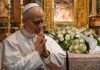
Newsroom (29/11/2025 Gaudium Press )On the third day of his first Apostolic Journey to Türkiye, Pope Leo XIV paid a brief morning visit to the Sultan Ahmed Mosque — better known as the Blue Mosque — where he toured the 17th-century masterpiece but, unlike his two immediate predecessors, did not pause for prayer.
Arriving at 9 a.m. local time, the pontiff was welcomed by Turkey’s Minister of Culture and Tourism Mehmet Nuri Ersoy, Istanbul provincial mufti Emrullah Tuncel, and the mosque’s Grand Imam Kurra Hafız Fatih Kaya. After removing his shoes — revealing white socks — Pope Leo was guided through the interior by muezzin Aşgın Musa Tunca.
The visit took place in contemplative silence. According to the Holy See Press Office, the Pope experienced the mosque “in a spirit of recollection and attentive listening, with deep respect for the place and for the faith of those who gather there in prayer.”
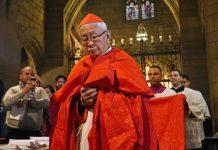
Yet the moment carried a notable difference from past papal visits. When Pope Benedict XVI entered the same mosque in November 2006 — two months after his controversial Regensburg lecture quoting a Byzantine emperor’s harsh words about Islam — he famously paused alongside the grand mufti for a moment of prayer, an image widely interpreted as a gesture of reconciliation.
Pope Francis, for whom dialogue with Islam was a hallmark, also observed a moment of silent prayer inside the Blue Mosque during his 2014 visit to Turkey.
Pope Leo XIV, however, took another path. Muezzin Tunca later told Vatican journalists that he had explicitly invited the Pope to pray: “I told him, this is the house of Allah! It’s not my house, it’s not your house, it’s the house of Allah. If you want you can worship here.”
According to Tunca, the Pope replied politely, “That’s okay,” expressing instead a desire “to see the mosque, to feel the atmosphere of the mosque.” Tunca added that no one prayed during the brief visit, but stressed that the mere act of meeting carried profound meaning.
“We are the children of Adam and Eve,” Tunca said, quoting the Qur’an: “Allah said … I made you peoples and tribes, to come together to get to know each other. … That’s why I’m very happy to meet him here.”
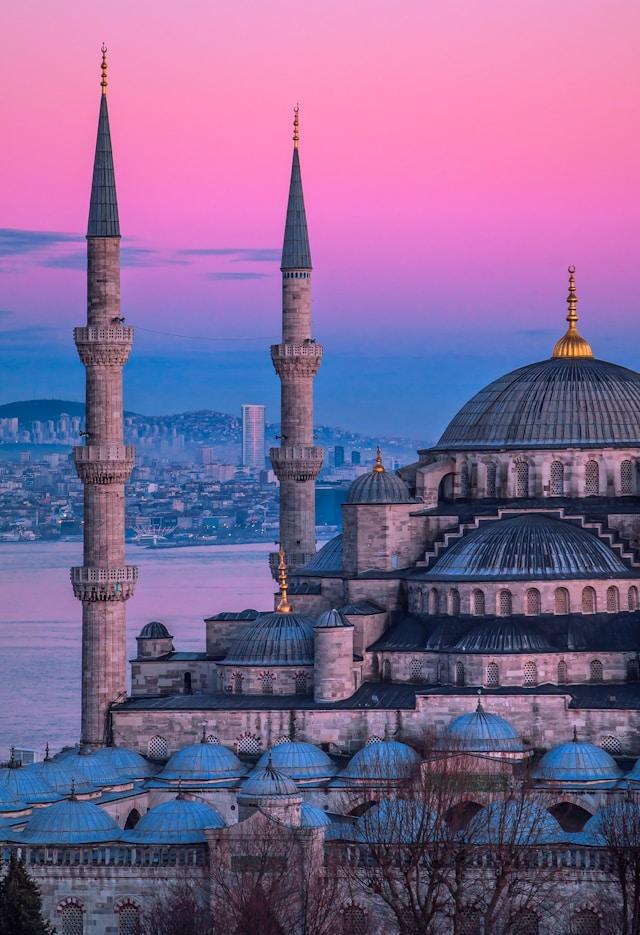
The Blue Mosque, completed in 1617 by Sultan Ahmed I on the site of the former Great Palace of Constantinople and adorned with more than 21,000 blue and turquoise Iznik tiles, remains one of Istanbul’s most symbolically charged religious sites.
After the roughly 15-minute visit, Pope Leo was driven to the Syriac Orthodox Church of Mor Ephrem for a closed-door meeting with leaders of local Christian communities. There he was greeted by Ecumenical Patriarch Bartholomew I of Constantinople and Syriac Orthodox Patriarch Ignatius Aphrem II of Antioch.
Following a group photograph and an opening hymn, some 20–25 representatives entered private talks. At the conclusion, gifts were exchanged and Pope Leo signed the guestbook, writing:
“On the historic occasion in which we celebrate 1700 years since the Ecumenical Council of Nicea, we gather to renew our faith in Jesus Christ true God and true man, celebrating the faith we share together.”
He concluded by invoking God’s blessing “on all who have gathered here and on all the communities they represent.”
Later in the day the Pope is scheduled to join Patriarch Bartholomew for a doxology at the Patriarchal Church of Saint George in the Phanar.
While the decision not to pray in the Blue Mosque marks a tonal shift from the highly symbolic gestures of Benedict XVI and Francis, Vatican officials have portrayed the visit as fully consonant with Pope Leo’s emerging style: respectful encounter, attentive listening, and fraternity without necessarily replicating the precise choreography of his predecessors.
https://www.youtube.com/watch?v=p3Y93RgRCWU
- Raju Hasmukh with files from Crux Now and Vatican News
Related Images: