















Pope Leo XIV tells Türkiye’s small Catholic community to embrace the “logic of littleness,” trust in divine promise, and serve with joyful hope.
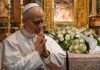
Newsroom (28/11/2025 Gaudium Press )On the second day of his Apostolic Journey to Türkiye, Pope Leo XIV urged the country’s small Catholic community to find its strength not in numbers or worldly influence but in what he termed the “logic of littleness,” assuring them that “it is your Father’s good pleasure to give you the kingdom.”
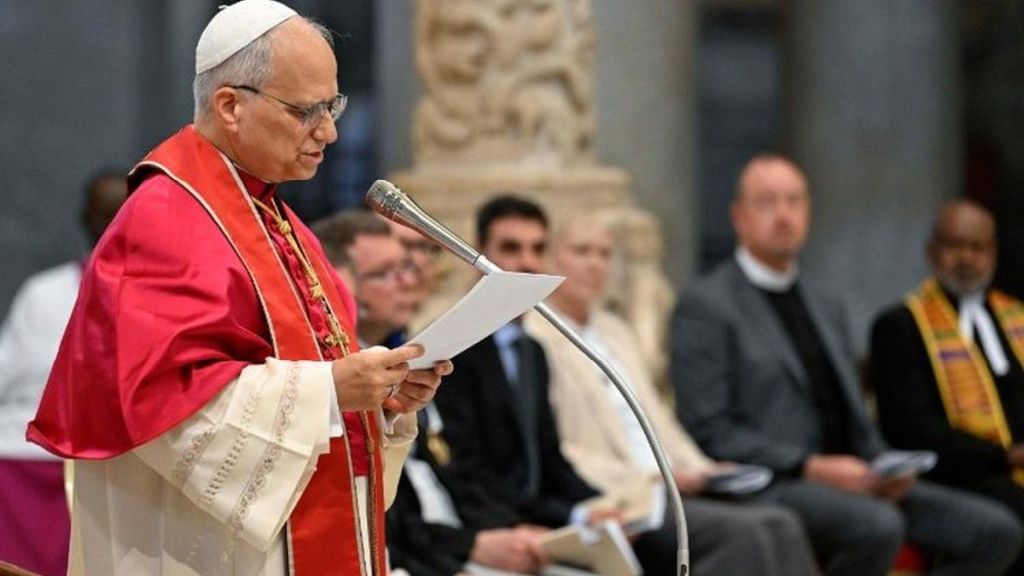
Speaking Friday morning to bishops, priests, religious, and pastoral workers gathered in Istanbul’s Cathedral of the Holy Spirit, the Pope rooted his message in the land’s profound Christian heritage while directing attention firmly toward a confident future.
“This heritage is not simply to be remembered,” he said, recalling that it was on this soil that Abraham began his journey of faith, that the disciples were first called Christians, and that the early Church Fathers forged the foundations of doctrine. Yet memory alone is insufficient; it must become “renewed vision and commitment today.”
The heart of the Pope’s address was an extended reflection on smallness as a Gospel paradox of power. In a country where Catholics number fewer than 100,000 in a population of 85 million, Leo XIV insisted that mission does not depend on demographic weight or political leverage. “The way of littleness,” he said, frees the Church from resignation and opens the door to “joy and hopeful perseverance.”
He pointed to concrete signs of vitality already present: a steady stream of young Turks knocking on the Church’s doors with questions about faith, evidence that the Holy Spirit continues to work even in seemingly barren ground.
The Pope outlined three priority areas for the local Church’s mission. First, intensified ecumenical and interreligious dialogue, which he described as indispensable in Türkiye’s multi-faith context. Second, the transmission of faith to the local population, a task complicated by the fact that many pastoral workers themselves are foreign-born. This reality, he said, demands “a special commitment to inculturation” so that the Gospel may speak authentically in Turkish language and culture.
Third, he highlighted pastoral service to refugees and migrants – a pressing reality in a nation that hosts the world’s largest refugee population. Their presence, he said, is both “a challenge and an opportunity,” calling the Church to continue welcoming and accompanying “some of the most vulnerable” in society.
Marking the 1,700th anniversary of the First Ecumenical Council of Nicaea – held in 325 in what is today the Turkish town of İznik – Pope Leo identified three enduring theological challenges. He urged the Church to “grasp the essence of the faith,” with the Nicene Creed remaining the indispensable “compass” for unity and discernment. He warned against a contemporary “new Arianism” that admires Jesus merely as a historical figure while failing to recognize him as the living Son of God. Finally, he reflected on the organic development of doctrine, noting that while truth itself is unchanging, its expression legitimately deepens as human understanding grows – a process begun in the early Councils and continuing today.
Closing on a note of affectionate continuity, the Pope evoked the memory of Pope Saint John XXIII, who served as Apostolic Delegate in Türkiye from 1935 to 1944. John XXIII’s years here, marked by steady dedication and genuine love for the country, were offered as a model for pastoral workers today: to serve with courage, keep alive “the joy of faith,” and never lose hope.
As the Catholic community in Türkiye navigates its minority status in a secular and overwhelmingly Muslim society, Pope Leo XIV’s message was clear: littleness is no obstacle when the Church trusts in the One who chooses what is weak in the world to shame the strong.
- Raju Hasmukh with files from Vatican News
Related Images: