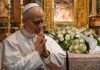
















Pope Leo XIV will open the academic year at the Pontifical Lateran University, highlighting its role in shaping the Church and society.
Newsroom (13/11/2025 Gaudium Press ) On November 14, the Pontifical Lateran University, a cornerstone of Catholic intellectual tradition since its founding in 1773 by Pope Clement XIV, will mark the start of its academic year with a momentous occasion: a visit from Pope Leo XIV. The traditional “Dies Academicus” ceremony, which signals the official opening of university activities each autumn, will carry profound significance this year as the pontiff graces the event, underscoring the institution’s unique bond with the papacy and its mission to shape the future of the Church and society.
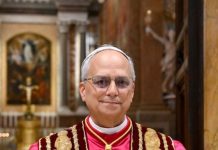
Archbishop Alfonso Amarante, the rector of the Lateran University and the only pontifical university rector directly appointed by the pope, described the visit as a testament to the enduring relationship between the Holy See and the institution often referred to as “the pope’s university.” In an interview with ACI Prensa, CNA’s Spanish-language news partner, Amarante emphasized the pontiff’s commitment to education as a cornerstone for peace and hope. “The pope is very clear that formation is the future of the Church,” he said. “His visit will be a very important moment for the entire university community and also a sign of the pontiff’s commitment to education as a path to peace and hope.”
The Pontifical Lateran University, with its 250-year legacy, holds a singular place among Catholic academic institutions. Established following the closure of the Roman College to ensure the continued formation of Roman clergy, the university has evolved into a global center for theological, philosophical, and legal scholarship. Its current headquarters, inaugurated by Pope Pius XI on November 3, 1937, reflects the Vatican’s enduring investment in its mission. Pius XI also designated the Lateran as the first university to implement reforms for Catholic higher education, a legacy that continues to shape its academic rigor.
“This is his home, according to the statutes,” Amarante noted, referencing the university’s formal designation as the pope’s own. The institution’s deep ties to the Apostolic See have been reinforced by successive pontiffs, from Pius XI to John XXIII, and notably by Pope Paul VI, who taught at the Lateran before his election to the papacy. “It has always been the place of formation for the Petrine magisterium,” Amarante said, highlighting the university’s role in preparing clergy and laity to serve the Church’s universal mission.
Pope Leo XIV’s presence at the Dies Academicus marks a historic first, as no modern pope has attended the academic year’s opening ceremony. Amarante described the gesture as “full of meaning,” reflecting the pontiff’s prioritization of education for both clergy and laypeople. The university’s diverse academic offerings—spanning theology, philosophy, canon law, civil law, and a pioneering program in peace studies—embody its “dual soul” as a place of formation for the Church and society. “Here, philosophy, theology, and canon law are studied, but also civil law and a new discipline called peace studies, a kind of degree in politics with a focus on the subject of peace,” the rector explained.
The anticipation surrounding the pope’s visit has electrified the university’s 1,100 students, more than 40% of whom are laypeople, reflecting the institution’s broad mission. “There is a great deal of enthusiasm here,” Amarante said. “There is joy and hope. We trust that we will hear his words at the beginning of the academic year, not only to be encouraged in our work but also to receive guidance on where he wants us to make progress, on what we should focus on more.”
The visit also carries symbolic weight as a continuation of Pope Leo XIV’s broader educational outreach, notably his participation in the Jubilee of the World of Education. By choosing the Lateran as the starting point for his engagement with pontifical universities, the pontiff signals the institution’s pivotal role in advancing the Church’s intellectual and pastoral mission. “Certainly, he will also visit others in the future, but starting from here means recalling this special bond with his university and, at the same time, sending a message of hope to the world of education,” Amarante said.
As the Lateran University prepares to welcome Pope Leo XIV, the academic community stands poised to receive not only the pontiff’s blessing but also his vision for the future of Catholic education. In a world grappling with division and uncertainty, the pope’s presence offers a powerful reminder of the transformative potential of formation rooted in faith, reason, and a commitment to peace.
- Raju Hasmukh with files from CNA news
Related Images: