












Pope Leo XIV to declare St. John Henry Newman a Doctor of the Church Nov. 1 in ecumenical gesture honoring his Anglican and Catholic legacy.
Newsroom (31/10/2025, Gaudium Press )Pope Leo XIV’s forthcoming recognition of St. John Henry Newman as a doctor of the church will serve as a profound ecumenical celebration, honoring the enduring excellence and relevance of Newman’s teachings across his Anglican and Roman Catholic phases, according to a central figure in the declaration’s preparation.
Anglican Archbishop Stephen Cottrell of York, the Church of England’s senior prelate, is set to head an Anglican delegation at the Nov. 1 proclamation ceremony in the Vatican.
Father George Bowen, a priest at the London Oratory and the official postulator for Newman’s elevation, briefed journalists on Oct. 30 about the rigorous process and its broader significance.
Newman will become the 38th doctor of the church, a title that Bowen emphasized transcends mere intellectual prowess. “It’s not about being intelligent. It’s not about being bright,” he said. “It’s about saying something timeless about the church’s teaching, putting into words something eminent, something that stands out.”
Bowen directed the assembly of a 600-page positio—a detailed position paper submitted to the Vatican—detailing Newman’s qualifications. The effort commenced shortly after his 2019 canonization and garnered endorsements from bishops’ conferences, individual bishops, and notably numerous Anglicans, Bowen noted.
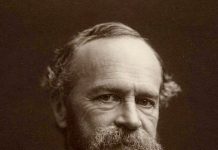
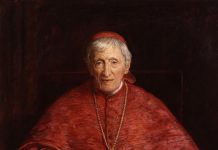
Born in London on Feb. 21, 1801, Newman was ordained an Anglican priest, converted to Catholicism in 1845, elevated to cardinal by Pope Leo XIII in 1879, and died in 1890.
“Newman’s journey really began as a nominal Christian, baptized Christian who suddenly found faith in the Church of England through the influence of schoolteachers,” Bowen explained. Newman remained acutely aware that half his life unfolded within Anglicanism, a heritage he carried into Catholicism. “He always recognized as a Catholic that he brought with him all that he had learned about Christ” as an Anglican.
Thus, Newman emerges as a pivotal ecumenical bridge, owing his faith foundation to the Church of England, Bowen said. In later years, the saint republished his Anglican-era works with fresh prefaces and minor annotations, affirming, in essence, “I’m proud of all this stuff.”
Anglican Father William Lamb, vicar of Oxford’s University Church of St. Mary the Virgin—where Newman served as vicar from 1828 to 1843—attended both the 2019 canonization and the upcoming proclamation.
“No one can stand at the altar or preach from the pulpit from which he preached and be unaware of his legacy,” Lamb told Catholic News Service on Oct. 30.
“In recognizing St. John Henry Newman as a doctor of the universal church,” he added, “Pope Leo has made a significant and gracious ecumenical gesture in acknowledging the influence of this Anglican patrimony.”
Following King Charles III’s recent Vatican visit, which featured joint prayer with the pope in the Sistine Chapel, Lamb expressed hope for advancing unity. “I continue to pray for positive ecumenical relations and an ever-greater commitment to seek the gift of unity in a world which is so often fractured and estranged.”
Newman and the Oxford Movement have profoundly influenced St. Mary’s spirituality, Lamb said. “Every Sunday when we celebrate the Eucharist, we use a chalice that Newman gave to St. Mary’s when he was the vicar.”
His impact extends further: As a tutor at Oriel College, Newman helped reform Oxford’s tutorial system, a cornerstone of its educational model. “We celebrate not only his legacy as a theologian but also his contribution to the world of higher education,” Lamb noted. “His ‘Idea of a University’ remains a key point of reference for the debate about both the value and the future of higher education.”
- Raju Hasmukh with files from UCA News
Related Images: