















The Pope emphasized his desire to bridge divides within the American Catholic Church while steering clear of partisan entanglements
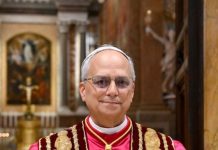
Newsroom (19/09/2025, Gaudium Press ) In a candid interview with Crux Now, Pope Leo XIV, the first pontiff from the United States, addressed the geopolitical implications of his American heritage, his approach to U.S. politics, and the potential for dialogue with President Donald Trump. Speaking from the Apostolic Palace on September 19, 2025, the pope emphasized his desire to bridge divides within the American Catholic Church while steering clear of partisan entanglements, all while upholding core Gospel values like human dignity.
The conversation, conducted amid ongoing global tensions and domestic U.S. debates over immigration, economic policy, and church-state relations, highlighted Leo XIV’s unique position as a native of the U.S. – a perspective he believes could foster greater understanding between the Vatican and American bishops. “First of all, I hope that it will make a difference eventually with the bishops in the United States,” the pope said, acknowledging historical frictions in the U.S. episcopacy’s relationship with politics. He referenced past criticisms leveled at his predecessor, Pope Francis, who was often accused of misunderstanding American realities. “The fact that I am American means, among other things, people can’t say, like they did about Francis, ‘he doesn’t understand the United States, he just doesn’t see what’s going on’. I think that’s significant in this case.”
Leo XIV, who ascended to the papacy following Francis’s death, has quickly established himself as a figure attuned to both spiritual and worldly affairs. Born in the Midwest and ordained in the Archdiocese of Chicago, his election marked a historic shift, drawing parallels to John Paul II’s Polish roots during the Cold War. Yet, the pope was clear in delineating his role: “I don’t plan to get involved in partisan politics. That’s not what the Church is about.” Instead, he pledged to champion “real Gospel issues” that transcend political divides, urging lawmakers on both sides to heed calls for compassion and justice.
A key moment in the interview came when the pope recounted a recent discussion with U.S. Vice President JD Vance – notably, without having met President Trump directly. “One of the last conversations I had with the Vice President of the United States – I have not had direct conversations with or have not met the President – I talked about human dignity and how important that is for all people, wherever you’re born,” Leo XIV explained. He expressed concern over certain U.S. policies, though he refrained from specifics, opting instead to advocate for respectful dialogue. “Hopefully to find ways to respect human beings and the way we treat them in the policies and choices we make. Obviously, there’s some things going on in the States that are of concern. We continue to look for ways to at least respond and raise some of the questions that need to be asked.”
The exchange turned to President Trump, whose third non-consecutive term has continued to polarize global opinion since his 2024 reelection. Trump, a figure whose policies on immigration, trade, and international relations have often clashed with Catholic social teaching, remains a “phenomenon” that world leaders grapple with, as the interviewer noted. When asked if his American background might afford him a “better shot” at engaging Trump, Leo XIV demurred, stressing the primacy of local church leadership. “Not necessarily. I think that it would be much more appropriate for the leadership in the Church within the United States to engage him, quite seriously,” he said. “I would say that about any government.”
Drawing on Francis’s legacy, the pope praised his predecessor’s 2023 apostolic letter on immigrant treatment, which galvanized some U.S. bishops to speak out boldly. “Something that Francis did towards the end of his pontificate, which I think was very significant, was the letter he wrote about the issue of the treatment of immigrants. I was very happy to see how the American bishops picked that up, and some of them were courageous enough to go with that,” Leo XIV recalled. He endorsed this decentralized approach: “I think that approach, in general, is a better approach, that I would engage with the bishops primarily.”
Trump’s recent public comments about the pope added a layer of intrigue to the discussion. The president remarked that meeting Leo XIV was not on his agenda, quipping, “but his brother’s a nice guy” – a reference to the pope’s sibling, who has been vocal in U.S. political circles and has met Trump personally. Leo XIV responded with characteristic equanimity: “President Trump made a statement last week about [how] he didn’t have it on his agenda to want to meet me, and then he said, ‘but his brother’s a nice guy’, and that’s fine. One of my brothers has met him and has been very outspoken about his political viewpoints.”
Despite the apparent snub, the pope left the door open for future engagement, particularly on shared priorities. “But if or when there were specific issues that, if it were possible to engage with him, I would have no problem doing so,” he affirmed. Acknowledging Trump’s occasional emphasis on global peace, Leo XIV added, “I think there are others who are doing that role fine, and he makes his choices, who he listens to and who he doesn’t listen to. But to continue to raise some of the issues, especially about questions of human dignity, of promoting peace in the world, which he at times has made clear he wants to do, in those efforts I would want to support him.”
The pope’s remarks underscore the delicate balance the Vatican must strike with superpowers like the United States, where economic interests often overshadow humanitarian concerns. “The United States is a power player on the world level, we have to recognize that, and sometimes decisions are made more based on economics than on human dignity and human support,” he observed. Yet, he insisted on the Church’s prophetic role: “But [we have to] continue to challenge and to raise some questions and to see the best way to do that.”
By leveraging his American identity to bolster episcopal confidence while deferring direct political interventions, the pope aims to amplify the Church’s voice on global stages without alienating key stakeholders. Whether this strategy fosters meaningful change in U.S. policy remains to be seen, but Leo XIV’s words offer a glimpse into a papacy defined by dialogue, dignity, and discretion.
- Raju Hasmukh with files from Crux Now
Related Images: