
















Leo XIV referred twice, in the same speech, to the term “Synod of Bishops,” and not only to “Synod.”
Editorial (01/07/2025, Gaudium Press) – On June 26, Pope Leo XIV met with the members of the Ordinary Council of the General Secretariat of the Synod of Bishops, one of the most emblematic—though discreet—gestures since the beginning of his pontificate.
The meeting, widely reported on the Vatican News website, was marked by a short but content-rich and meaningful speech. In just a few words, Leo XIV gave a conceptual shift to the recent trajectory of synodality in the Church. More than that: he gave the term a solid ecclesiological foundation, restoring the role of the bishops and offering a clear definition of what, until then, had been vaguely referred to as a process or journey.
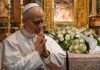
“I am pleased to take this opportunity to share an idea that I consider central and then listen to you,” said the Pope to the members of the synodal body. The Pontiff, who visited the chapel of the Vatican office, then stated:
“Pope Francis gave a new impulse to the Synod of Bishops, inspired by Pope Saint Paul VI. And the legacy he left us seems to me, above all, this: that synodality is a style, an attitude that helps us to be Church, promoting authentic experiences of participation and communion.”
The mention of Francis was courteous, but it served as a preamble to a turning point: unlike his predecessor, Leo gave a more objective definition to a concept that for years had remained deliberately ambiguous.
Veteran analyst Philip Lawler, in an article published on the Catholic Culture website, correctly pointed out that Leo XIV referred twice in the same speech to the term “Synod of Bishops”, and not just “Synod.” This verbal choice breaks with the trend inaugurated by the Curia reform in 2022, when the then “General Secretariat of the Synod of Bishops” was renamed simply the “General Secretariat of the Synod.” That change seemed to indicate an openness to the protagonism of the laity, who began participating in synodal assemblies with voting rights. However, Leo XIV’s insistence on using the full phrase was echoed by all official Vatican channels and by attentive observers: the explicit reference to bishops returned to the official lexicon.
Pope Leo Defines Synodality
Leo XIV’s speech, therefore, did what Francis—even as the architect of the contemporary synodal process—had avoided: offering a categorical definition of synodality. Until now, neither the International Theological Commission nor the Secretariat of the Synod had elaborated a definitive formulation—perhaps out of fear of limiting the fluidity that had been promoted as a virtue. Leo, with his rigorous formation in Canon Law and a doctoral thesis precisely on the role of authority in consecrated life, chose the opposite path: to bring clarity, restore form, and return security to the faithful.
As Lawler noted, the precise language of the new Pope should not be interpreted as accidental.
“It was not accidental,” wrote the American journalist, “that the new Pontiff spoke twice about the Synod of Bishops. The inclusion of laypeople in the synodal process may have been emphasized in recent years, but Pope Leo insists that the bishops remain the principal agents of Church governance and doctrine.”
Indeed, Leo himself emphasized in his speech that synodality must promote communion, but always in harmony with the role of the Episcopal College and the Successor of Peter.
The gesture of visiting the Secretariat and speaking with its members takes on even greater significance considering that the Pope did it at the start of his pontificate. The timing and language indicate a clear intention to redirect the course of the synodal process. Under Leo’s governance, synodality is not abolished—but neither is it an undefined idea. It is now a style subordinated to hierarchical communion, not an ecclesial sociological experiment.
Bishops: teach, sanctify, govern
The effect of this speech is twofold: on one hand, it calms the concerns of many faithful who feared a weakening of episcopal authority; on the other, it provides the synodal process with a clearer and more functional framework. The Pope left it implicit—but no less forceful—that synodality must be an instrument of unity, not ambiguity. By doing so, he reaffirms that the governance of the Church remains in line with Catholic tradition, with the bishops in communion with the Pope, exercising their mission to teach, sanctify, and govern.
For those with ears to hear, the message is clear: Leo XIV does not intend to erase his predecessor’s steps, but he will not hesitate to reposition them when necessary. With his solid canonical formation and clear vision of authority, he is unlikely to succumb to the temptation to horizontalize the Church. On the contrary, with him, synodality promises to find its axis—not an ecclesial democracy, but an ordered participation under the authority of those to whom Christ entrusted the mission of shepherding His flock.
By Rafael Tavares
Compiled by Gustavo Kralj
Related Images: