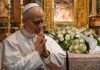




















Pope Leo XIV is presented with lambs on St. Agnes’ feast, preserving the ancient Roman tradition used to craft the pallia for new archbishops.
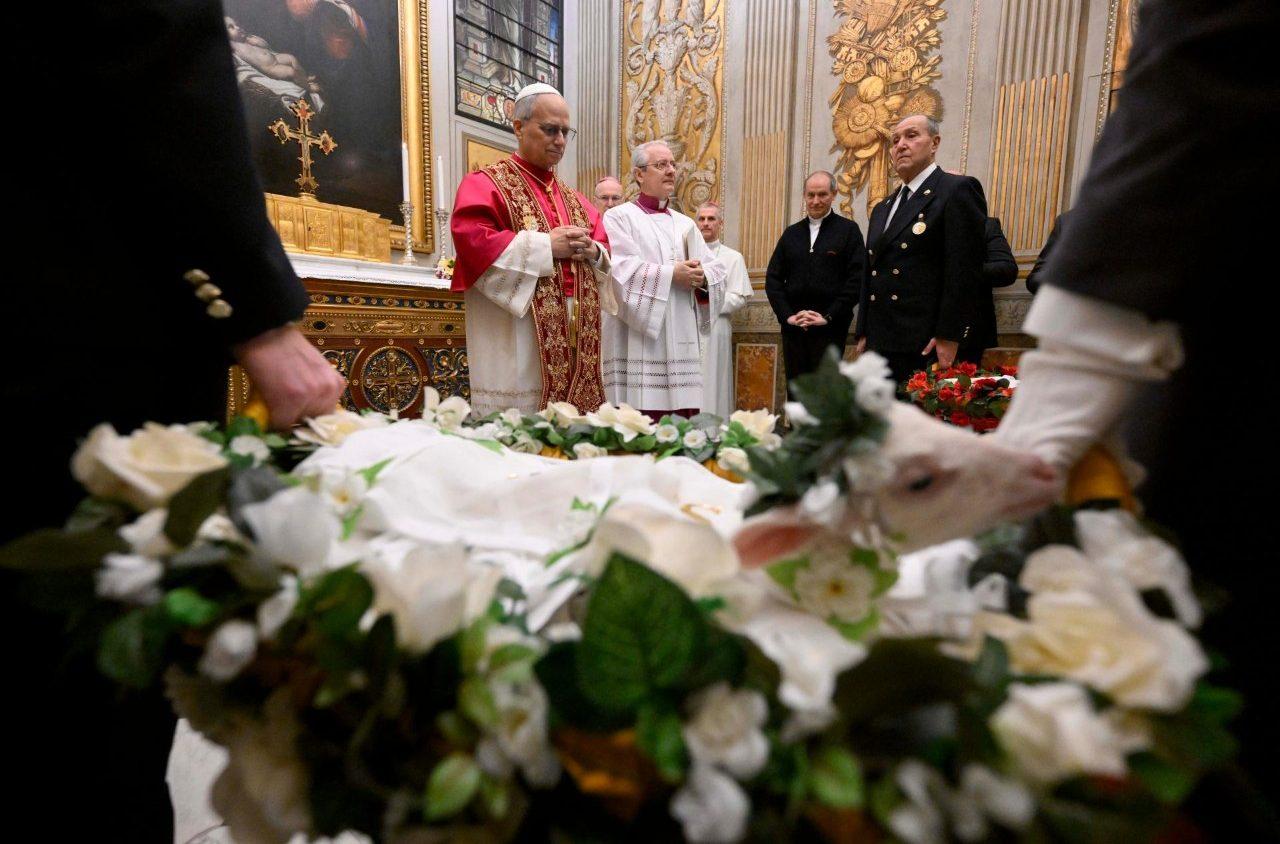
Newsroom (21/01/2026 Gaudium Press ) On Wednesday, January 21, inside the Vatican’s historic Urban VIII Chapel, Pope Leo XIV was presented with two white lambs in honor of the liturgical feast of St. Agnes of Rome. The ritual, one of the most enduring customs of the Roman Church, traces its origins back more than 1,400 years and serves as a living symbol of purity, martyrdom, and continuity within Catholic tradition.
Following the presentation, the lambs were taken to the Basilica of St. Agnes Outside the Walls in northern Rome—where the young fourth-century martyr is buried—for blessing. The feast of St. Agnes has long been linked with this gesture of devotion, reflecting both the story of the saint’s life and the Church’s ancient connection to pastoral imagery.
The wool from these lambs carries sacred significance: it will be used to create the pallia, narrow bands of white wool adorned with six black crosses. These insignia are worn by the Pope and the Metropolitan Archbishops as a mark of honor and authority. The pallium is imposed each year on June 29, during the Solemnity of Saints Peter and Paul, symbolizing unity and shared responsibility between the pontiff and the archbishops in shepherding the Church.
Echoes of Antiquity
References to the blessing of lambs on St. Agnes’ feast appear as early as the sixth century, intertwined with legends about the young martyr. According to tradition, St. Agnes’ parents once saw her in a vision after her death, surrounded by virgins and holding a pure white lamb—an image that became emblematic of innocence and steadfast faith.
For centuries, the ritual carried a practical dimension as well. Historical records show that two lambs were once delivered as a form of “rent” from the monks of the Basilica of St. Agnes Outside the Walls to the clergy of the Basilica of St. John Lateran. The Lateran Chapter would then present the animals to the Pope for blessing—a symbolic exchange binding two of Rome’s most storied basilicas.
During much of the modern era, the lambs were raised at a Trappist farm near the Abbey of the Three Fountains in southern Rome. After being shown to the Pope, they were taken to the Basilica of St. Cecilia in Trastevere, where Benedictine nuns sheared them during Holy Week. Their wool was then spun and woven into the ceremonial pallia destined for new archbishops.
A Tradition Lives On
Although the practice has evolved—Trappists no longer maintain the sheep farm, and the blessing ceremony has been adapted—the essence of the custom remains intact. The Benedictine nuns of St. Cecilia’s continue to shear the lambs today, preserving a link between ancient devotion and modern liturgical practice.
For Pope Leo XIV and the global Catholic community, the presentation of the lambs once again underscores how living faith is anchored in tradition. The gentle creatures, blessed and consecrated on the feast of St. Agnes, remain reminders of sacrifice, purity, and the enduring continuity of the Church through the ages.
- Raju Hasmukh with files from Vatican News
Related Images: