


















Newsroom (09/02/2025 10:29 AM, Gaudium Press)
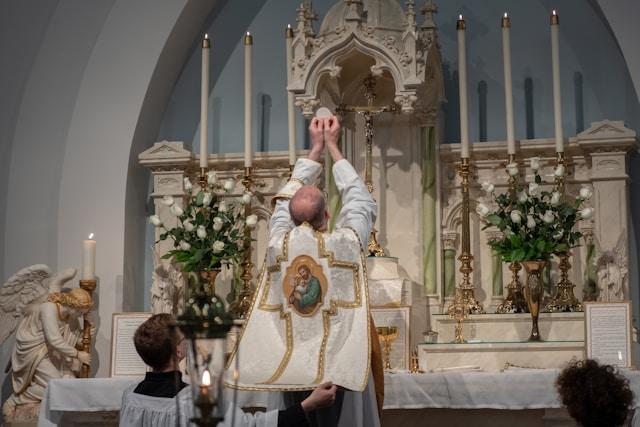
In an analysis published in the National Catholic Register, editor Jonathan Liedl highlighted an interesting phenomenon: since Pope Leo XIV was elected on May 8, 2025, the conversation around the Traditional Latin Mass (TLM) has shifted. Although this change does not indicate a formal decree by the new Pope, it reveals more about his governing style than about any imminent liturgical changes. While Francis had imposed an atmosphere of containment and silence, Leo XIV seems to open space for dialogue, consultation, and even criticism.
Liedl notes that Francis’s Traditionis Custodes (2021) remains fully intact—no new documents or relaxed restrictions have been published. Yet cardinals and bishops who never publicly spoke out under Francis are now doing so. Notable names include Cardinal Kurt Koch, Cardinal William Goh, and U.S. bishops like Earl Fernandes and Paul Reed—all expressing some degree of pastoral sympathy or admiration for the spiritual richness of the TLM.
Bishop Earl Fernandes of Columbus emphasized in an August 25 interview with Catholic World Report that his TLM celebrations, begun in 2007, were not ideological but pastoral—meeting faithful “who sought beauty and spiritual depth.” He declared, “We wanted to offer the Mass in response to a pastoral need of the people. It is a beautiful part of the Church’s tradition.”
Even more poignant was Auxiliary Bishop Paul Reed of Boston, who shared on social media July 2 that he “cried” celebrating the old liturgy for the first time. This reveals that the experience of liturgical beauty can transcend ideology—hardly a reaction likely during the previous pontificate.
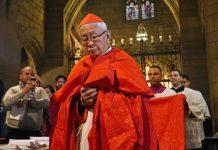
Cardinal Goh of Singapore stated in May that he “sees no reason to prevent the faithful from choosing the old rite,” affirming that those attending it “are not doing anything wrong or sinful.” Meanwhile, Cardinal Koch expressed hope that Leo XIV will show openness to the ancient liturgy—but cautioned against fostering “false hopes.”
As Liedl observes, even if figures like Burke or Müller have openly opposed Traditionis Custodes, the striking development is that moderate or previously silent bishops are now speaking out. This suggests that Leo XIV, even without changing the law, has altered the climate.
Still, it’s premature to conclude that Leo XIV is favouring liberalization. Bishops continue to restrict the TLM—Bishop Edward Weisenburger in Detroit has limited it to four non-parish venues, while Bishop Michael Martin in Charlotte plans to confine it to a single chapel—with a $700,000 project. These restrictions, enacted under Leo XIV, indicate ongoing complexity. Had the Pope signaled strong approval, such costly limitations would likely not proceed.
Liedl’s analysis underscores that the difference lies not in legal direction but in governing style. Leo XIV governs by listening, being patient, consultative, and open to discernment—a more synodal approach compared to Francis’s centralizing style.
Even figures close to the previous pontificate recognize the shift. Cardinal Michael Czerny, SJ—a Francis collaborator—remarked that Leo XIV could be “even more inclusive and approachable” than his predecessor—a telling endorsement.
For TLM faithful, this new environment is itself a relief. While restrictions remain, advocates can now speak, argue, conduct studies, and offer testimony without instant reprisal.
The private audience given to Cardinal Raymond Burke on August 25 cannot be dismissed. Under Francis, Burke had been marginalized—even stripped of his cardinal’s income. Just being heard and given audience under Leo XIV is a powerful symbol: critics of Traditionis Custodes are not silenced. Notably, this is not tantamount to endorsing their positions, but signals willingness to listen.
The horizon remains open. The TLM touches sensitive issues today: doctrinal continuity, Vatican II interpretation, liturgical unity and diversity. The Pope knows a rushed decision could deepen divisions—but he cannot ignore the youth rediscovering identity and vocations in the old rite.
Jonathan Liedl sums it well: while supporters of the ancient liturgy may not receive exactly what they want yet, they can be assured of one thing: they will be heard. And being heard in Rome is often the first step toward being heeded.
by Rafael Tavares
Compiled by Gustavo Kralj
Related Images: