












Pope Leo XIV proclaims St. John Henry Newman a Doctor of the Church during All Saints’ Mass, urging educators to combat nihilism
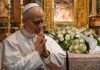
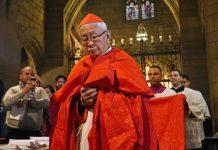
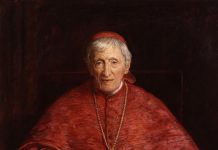
Newsroom (01/11/2025, Gaudium Press ) Pope Leo XIV proclaimed 19th-century convert and theologian St. John Henry Newman a Doctor of the Church on Saturday, blending spiritual elevation with a clarion call for educators worldwide to foster hope amid modern despair.
The declaration, delivered during a Holy Mass marking All Saints’ Day and the Jubilee of the World of Education, also named Newman—alongside the medieval scholastic St. Thomas Aquinas—as co-patron of the Catholic Church’s educational endeavors. An estimated 50,000 pilgrims, educators, and youth from over 100 countries filled the square, waving banners in multiple languages and applauding as the pontiff invoked Newman’s legacy as a beacon for “new generations whose hearts thirst for the infinite.”
“Newman’s impressive spiritual and cultural stature will surely serve as an inspiration,” Pope Leo XIV said in his homily, drawing on the ancient Latin motto per aspera ad astra—through difficulties to the stars—to frame education as a journey of resilient discovery. The event, live-streamed in eight languages including Arabic, German, English, Spanish, French, Italian, Polish, and Portuguese, underscored the Vatican’s push to reinvigorate global Catholic schooling in an era of cultural fragmentation.
At its core, the pope’s 20-minute address wove Newman’s life into a broader meditation on the Beatitudes from the Gospel of Matthew, portraying them not merely as moral imperatives but as “the teaching par excellence” from Jesus, the “Educator par excellence.” Schools and universities, he argued, should function as “laboratories of prophecy,” where the Gospel is both heard and enacted, transforming abstract knowledge into lived hope.
“Responding to today’s challenges may sometimes seem beyond our capabilities, but this is not the case,” the pope declared, directly challenging the “encircling gloom of nihilism” that he described as contemporary culture’s “most dangerous malady.” Echoing his predecessor Pope Francis’s warnings during a 2024 address to the Dicastery for Culture and Education, Leo XIV invoked Newman‘s iconic hymn “Lead, Kindly Light” as a metaphor for guidance through uncertainty: “Lead, Kindly Light, amid th’encircling gloom, Lead Thou me on.”
The task of education is precisely to offer this Kindly Light to those who might otherwise remain imprisoned by the particularly insidious shadows of pessimism and fear.
The pontiff reserved sharp praise—and pointed critique—for educators, imploring them to “shine today like stars in the world” by prioritizing service to the marginalized. He highlighted the prophetic power of “Christian love,” quoting from apostolic exhortation Dilexi Te: “It works miracles.” Yet, he warned against complacency in systems that undervalue the vulnerable, posing rhetorical questions that cut to the heart of social equity: “Does this mean that the less gifted are not human beings? Or that the weak do not have the same dignity as ourselves?”
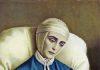
Newman’s elevation carries particular weight in educational circles. The English cardinal, who died in 1890 and was canonized by Pope Francis in 2019, penned seminal works like The Idea of a University, advocating for holistic formation that integrates faith, reason, and personal vocation. Pope Leo XIV spotlighted a passage from Newman’s Meditations and Devotions: “God has created me to do Him some definite service… I have my mission.” This, he said, encapsulates the “mystery of the dignity of every human person,” urging schools—even informal or street-based ones—to nurture each individual’s unique contribution, especially among the poor and excluded.
The ceremony also evoked the Book of Revelation’s vision of a “great multitude” from every nation standing before the Lamb, a image the pope linked to education’s role in building a “civilization of dialogue and peace.” In a nod to interfaith and intercultural outreach, he called on institutions to reflect this diversity, ensuring no one is left in the “shadows of pessimism and fear.”
Reflecting on holiness as education’s ultimate aim, Leo XIV channeled Pope Benedict XVI’s 2010 beatification homily in Britain, where Newman was beatified: “What God wants most of all for each one of you is that you should become holy.” This universal call, rooted in the Second Vatican Council’s Lumen Gentium, positions Catholic education as a pathway to sainthood for all, not just the elite.
The proclamation caps a year-long Jubilee focused on education, launched amid global debates over AI’s role in learning, youth mental health crises, and declining enrollment in faith-based schools. Vatican officials say Newman’s doctoral status—joining 37 others, including recent additions like St. Hildegard of Bingen—aims to counter secular skepticism by elevating intellectual rigor within the faith tradition.
Pope Leo XIV concluded with a prayer invoking St. Augustine, a figure Newman revered: We are “fellow students who have one Teacher, whose school is on earth and whose chair is in heaven.” As the faithful dispersed into Rome’s twilight, the message lingered—a charge to illuminate the stars amid the gloom.
- Raju Hasmukh with files from Vatican.va
Related Images: