













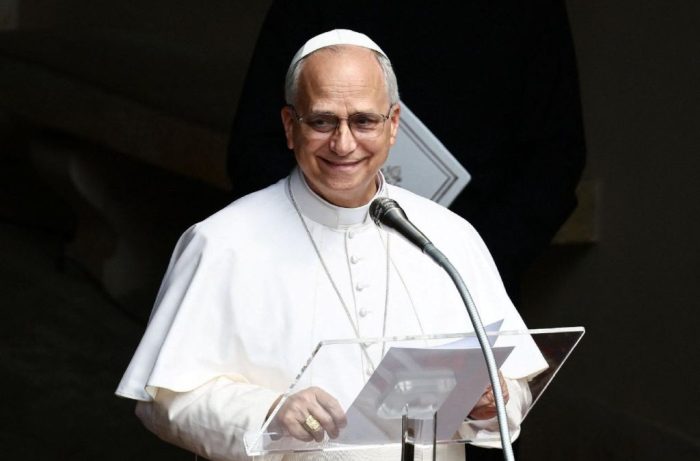
Pope Leo XIV urges filmmakers to defend beauty, slowness, and human dignity against algorithms, calling cinema an “art of the Spirit” in Vatican address.
Newsroom (17/11/2025 Gaudium Press ) In a rare and deeply poetic encounter with the global film community, Pope Leo XIV on Saturday described cinema as a “young, dreamlike and somewhat restless art form” that remains uniquely capable of igniting hope in an age dominated by digital immediacy and algorithmic repetition.
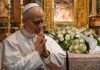
Speaking in the historic Clementine Hall to hundreds of directors, actors, producers, and technicians gathered from around the world, the pontiff marked the approaching 130th anniversary of cinema—dating from the Lumière brothers’ first public screening in Paris on 28 December 1895—and positioned the seventh art as an essential pilgrimage of the imagination during the 2025 Jubilee Year.
“Entering a cinema is like crossing a threshold,” Pope Leo XIV said. “In the darkness and silence, vision becomes sharper, the heart opens up and the mind becomes receptive to things not yet imagined.” He contrasted the deliberate concentration required by cinematic storytelling with the “constant flow of information” on ever-present digital screens, insisting that authentic cinema is “much more than just a screen; it is an intersection of desires, memories and questions.”
The Pope issued a passionate defense of physical cinemas as “the beating hearts of our communities,” warning that their widespread closure represents a cultural crisis. “Cinemas are experiencing a troubling decline,” he noted, urging public institutions to cooperate in preserving their social value.
In a direct challenge to streaming-era economics, he cautioned against “the logic of algorithms” that privileges predictability over possibility. “Defend slowness when it serves a purpose, silence when it speaks and difference when it is evocative,” he urged. “Beauty is not just a means of escape; it is above all an invocation.”
Echoing Pope Saint Paul VI’s 1965 appeal that “this world in which we live needs beauty in order not to sink into despair,” Leo XIV renewed the Church’s friendship with artists and explicitly invited filmmakers “to make cinema an art of the Spirit,” quoting both pioneering director David Wark Griffith and the Gospel of John: “The wind blows where it chooses… So it is with everyone who is born of the Spirit” (Jn 3:8).
The pontiff encouraged the industry not to shy away from humanity’s wounds—violence, poverty, exile, loneliness, addiction, and forgotten wars—but to engage them with dignity rather than exploitation. “Good cinema does not exploit pain; it recognizes and explores it,” he said, praising cinema’s power to educate the audience’s gaze without didacticism and to recover “the authenticity of imagery” in service of human dignity.
In a touching acknowledgment of the collaborative nature of filmmaking, Pope Leo XIV listed dozens of behind-the-camera professions—from electricians and makeup artists to runners and special-effects technicians—emphasizing that “a film would be impossible without the quiet dedication of hundreds of other professionals.” He hailed this collective effort as a counter-witness to “an age of exaggerated and confrontational personalities.”
Concluding his 20-minute address, the Pope imparted his blessing on the assembled artists and their loved ones, praying that their work continue as “a meeting place and a home for those seeking meaning and a language of peace,” never losing “its capacity to amaze and even continue to offer us a glimpse, however small, of the mystery of God.”
The audience, which included prominent figures from Europe, North and South America, Asia, and Africa, responded with sustained applause. The encounter—organized ahead of the Jubilee Year’s emphasis on hope—underscored the Vatican’s ongoing esteem for cinema as a modern areopagus where faith and culture intersect.
Saturday’s address is only the latest in a long line of papal engagements with the film world, but observers noted its unusually urgent tone regarding the medium’s cultural survival and its explicit spiritual commissioning of filmmakers as “artisans of hope” in turbulent times.
- Raju Hasmukh
Related Images: