
















Pope Leo XIV urged the faithful to embrace their missionary calling and become “laborers” in the divine harvest.
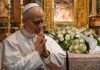
Newsroom (07July 2025, Gaudium Press )Pope Leo XIV delivered a profound and heartfelt Angelus address on Sunday, July 6, 2025, urging the faithful to embrace their missionary calling and become “laborers” in the divine harvest. Drawing from the Gospel of Luke (10:1-12, 17-20), the pontiff wove a message of universal hope, emphasizing the Church’s role in responding to humanity’s deep yearning for truth, justice, and eternal life. His words resonated with the thousands gathered in the square, including pilgrims from across Italy, Poland, Ukraine, and beyond, who braved the intense Roman heat to hear his reflections and pass through the Holy Doors during this Jubilee Year.
A Universal Mission for All Peoples
The Pope began by reflecting on the Gospel passage, which recounts Jesus sending out seventy-two disciples to proclaim the Kingdom of God. He highlighted the symbolic significance of the number seventy-two, noting that it represents the universality of the Gospel’s message. “This symbolic number indicates that the hope of the Gospel is meant for all peoples, for such is the breadth of God’s heart and the abundance of his harvest,” he said. The pontiff underscored that God’s work in the world is ongoing, sowing seeds of love and salvation in the hearts of all humanity, regardless of time or place.
Yet, the Pope pointed out a sobering reality: while the harvest is plentiful, the laborers are few. Quoting Jesus’ words from the Gospel, “The harvest is plentiful, but the laborers are few; therefore ask the Lord of the harvest to send out laborers into his harvest” (Lk 10:2), he called on the faithful to pray for more individuals willing to dedicate themselves to God’s mission. He described the modern world as a field ripe with potential, where people, despite being “overwhelmed by so many other things,” continue to seek a deeper meaning, justice, and the promise of eternal life.
A Call for Authentic Witnesses
Pope Leo XIV’s address was not merely a reflection on scripture but a clarion call for authentic Christian witness. He cautioned against a superficial approach to faith, describing “intermittent Christians” who engage in religious activities sporadically or treat faith as an “external label.” Instead, he urged the faithful to become “loving disciples” who bear witness to the Kingdom of God in every aspect of their lives—within families, workplaces, schools, and communities, particularly among those in need.
The pontiff emphasized that this mission does not require elaborate strategies or “theoretical ideas about pastoral plans.” Rather, it begins with a personal relationship with God through prayer and dialogue. “Priority must be given to our relationship with the Lord and to cultivating our dialogue with him,” he said. “In this way, he will make us his laborers and send us into the field of the world to bear witness to his Kingdom.” By rooting their mission in prayer, Christians can become joyful laborers, sharing the Gospel’s transformative message with others.
The Pope invoked the Blessed Virgin Mary as a model of missionary zeal, citing her “generous ‘yes’ to participating in the work of salvation.” He encouraged the faithful to seek her intercession and guidance in following Christ’s path, so they too might become “joyful laborers in God’s Kingdom.”
A Message of Solidarity and Peace
Following the Angelus prayer, Pope Leo XIV extended warm greetings to the diverse groups of pilgrims gathered in Saint Peter’s Square. He acknowledged the courage of those who had traveled to Rome during the intense summer heat to participate in the Jubilee Year’s spiritual offerings, particularly the pilgrimage through the Holy Doors. Among those he greeted were the Franciscan Missionary Sisters of the Sacred Heart, pupils and parents from Strzyzow School and faithful from Legnica in Poland, a Greek Catholic group from Ukraine, and pilgrims from various Italian communities, including Romano di Lombardia, Melia, Sassari, and the Latin American community from the Archdiocese of Florence.
In a poignant moment, the Pope turned his attention to a recent tragedy in the United States, expressing “sincere condolences” to the families who lost loved ones, particularly young girls, in a devastating flood at a summer camp along the Guadalupe River in Texas. “We pray for them,” he said, his voice carrying a tone of deep compassion.
The pontiff also addressed the global yearning for peace, describing it as “the sorrowful cry of those torn apart by war.” He called on the faithful to pray for world leaders, asking that God “touch the hearts and inspire the minds of those who govern, that the violence of weapons be replaced by the pursuit of dialogue.” This plea for peace underscored his broader message of hope and reconciliation, reflecting the Church’s role as a beacon of unity in a fractured world.
A Time for Rest and Renewal
In a lighter moment, Pope Leo XIV announced his plans to travel to Castel Gandolfo that afternoon for a brief period of rest. The papal summer residence, nestled in the Alban Hills, has long served as a retreat for pontiffs seeking respite from the demands of their ministry. The Pope expressed his hope that all people might find time for rest and renewal during the summer months, noting that such moments restore “both body and spirit.”
A Timeless Message in a Modern World
Pope Leo XIV’s Angelus address was a powerful reminder of the Church’s enduring mission in a rapidly changing world. By drawing on the Gospel’s call to labor in God’s harvest, he challenged the faithful to move beyond complacency and embrace their role as active witnesses to the Kingdom of God. His emphasis on prayer, authentic discipleship, and solidarity with those suffering—whether from natural disasters or the ravages of war—offered a vision of faith that is both deeply personal and profoundly universal.
- Raju Hasmukh with files from Vatican News
Related Images: