













As Pope Leo XIV emphasizes the importance of interreligious dialogue and diplomacy, reports indicate a continued decline in religious liberty in Russia.
Newsroom (05/06/2025 08:45 , Gaudium Press)The U.S. International Religious Freedom Commission (USCIRF) has documented that in Russia the government is increasing the use of blasphemy laws to suppress freedom of expression. Meanwhile, a Russian-born scholar said that even theological dissent within the Russian Orthodox Church is being stifled.
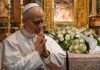
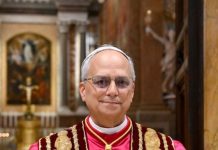
In May, Pope Leo urged Vatican-accredited diplomats to prioritize interreligious dialogue as a means of fostering peace. This morning the Pope spoke with Putin and asked the latter to make a gesture to show he is serious about peace with Ukraine.
He stressed that such dialogue requires “full respect for religious freedom in every country, since religious experience is an essential dimension of the human person.”
‘Intensified’ Enforcement of Blasphemy Laws
However, just a month earlier, USCIRF reported that Russia had escalated its enforcement of laws targeting “perceived offensive expression toward religion, religious texts, and religious leaders.” The commission defines blasphemy as “the act of insulting or showing contempt or lack of reverence for God or sacred things” but notes that international human rights law protects individuals’ rights to express beliefs—even those others may find blasphemous.
According to USCIRF, these laws protect individuals, not “religious feelings, figures or symbols from behavior or speech considered blasphemous.” The commission warned that prosecuting offensive speech violates both freedom of religion and freedom of expression under international law.
Laws Used to Enforce Political Compliance
In Russia, criminal and civil blasphemy laws have been weaponized to ensure compliance with President Vladimir Putin’s government. The Kremlin has leveraged the country’s Russian Orthodox identity and so-called “traditional values” to rally against Western influence.
“For years, President Putin has championed his interpretation of ‘traditional values’ to oppose the West on human rights and justify his authoritarian practices, which include systematic, ongoing, and egregious violations of religious freedom,” USCIRF stated.
The use of blasphemy laws has accelerated since Russia’s full-scale invasion of Ukraine in 2022, building on aggression that began in 2014.
Self-Censorship and Fear
Dmitry Dubrovskiy, a researcher at Charles University in Prague, said that Russia’s blasphemy laws function not only through direct prosecutions but also by instilling fear.
“It’s not so important how many people are being fined or prosecuted—what is much more important is how many people are prevented from doing something because they’re afraid of being prosecuted,” said Dubrovskiy, who was declared a “foreign agent” in Russia in 2022 and left the country.
He explained that prosecutions send a message that certain groups are “second-rate humans” while reinforcing the Russian Orthodox Church’s untouchable status. Although not formally designated as the state church, it holds unparalleled authority.
Russian Orthodox Church Favored, Other Christians Targeted
Open Doors International’s 2025 World Watch List described a climate of “dictatorial paranoia” in Russia, where the government favors the Russian Orthodox Church while persecuting other religious groups.
“The government continues to favor the Russian Orthodox Church at the expense of other Christian groups,” the report stated. “Jehovah’s Witnesses have been banned since 2017.” Since the Ukraine war began, state surveillance has intensified, particularly targeting non-Orthodox Christians.
New restrictions are constantly introduced, and local communities often oppose Protestant evangelism. In October, the Russian government proposed banning religious services in residential buildings.
Dissent Within the Russian Orthodox Church Silenced
Priests who oppose the war in Ukraine—even on religious grounds—face expulsion or imprisonment. Hieromonk Ioann Kurmoyarov was sentenced to three years in prison in 2023 for sharing “fake news” about the Russian military after criticizing the invasion on YouTube.
Dubrovskiy noted that theological debate within the Russian Orthodox Church is effectively forbidden. “All the Russian (Orthodox) priests who have ever criticized the church are being excommunicated or expelled,” he said. The church demands absolute adherence to the patriarch’s directives.
Persecution Extends to Muslims and Occupied Ukraine
Russia’s Muslim minority, comprising nearly 11% of the population, also faces persecution, particularly in regions with Islamic militant activity. Christians from Muslim backgrounds endure hostility from their communities.

In Russian-occupied Ukraine, religious repression is severe. Authorities have destroyed churches, seized properties, and imprisoned, tortured, or killed clergy. In Zaporizhzhia, the Ukrainian Greek Catholic Church, the Knights of Columbus, and Caritas were banned. Two UGCC priests, Fathers Ivan Levitsky and Bohdan Geleta, were abducted and tortured before being released in June 2024 through Vatican mediation.
Orthodoxy as Cultural Identity, Not Deep Faith
Despite the government’s aggressive promotion of Orthodoxy, Dubrovskiy noted that most Russians are not deeply religious.
“A substantial amount of Russians definitely consider their Orthodoxy as a cultural identity,” he said, estimating that only “approximately 3-7% of the Russian population regularly visit a church.”
OSV News has requested comment from Archbishop Giovanni d’Aniello, the apostolic nuncio to Russia, regarding the status of religious freedom in the country.
- Raju Hasmukh with files from OSV News
Related Images: