









His story began amid poverty and threats. Today, from Rome, Pope Leo XIV still carries a Peruvian heart.
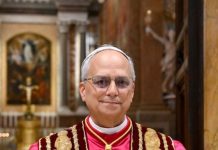
Newsroom (06/05/2025 11:10, Gaudium Press) – As the one-month mark of Pope Leo XIV’s election approaches, new stories continue to emerge that illustrate the human and pastoral face of the new Pontiff—a man shaped by his time in Peru, his dedication to the poor, and his testimony in the face of hardship.
One of the most striking testimonies comes from Fr. John J. Lydon, an Augustinian priest and missionary, who worked alongside Robert Prevost for a decade in Trujillo and knew him from their university days at Villanova.
In an interview with Aid to the Church in Need, Fr. Lydon affirmed that Pope Leo XIV “will listen to the cry of the suffering Church.” Indeed, Prevost has always stood by those who suffer, especially during his time as pastor of Santa Rita Parish in Trujillo.
There, Fr. Lydon recalls, Prevost was not only a capable administrator but also deeply committed to serving others. The parish was located in a vulnerable area where poor people were often treated with indignity. But Prevost offered something different—a new experience of human dignity. “The poor were always mistreated by the authorities. He, on the other hand, gave them dignity,” his friend says.
This social commitment runs deep, and it’s no surprise that the Pope chose the name Leo XIV: “The previous Leo was the one who issued the first document on Catholic Social Teaching concerning the rights and dignity of workers.”
Not afraid of violence
Danger was no stranger in Prevost’s life. In the 1990s, while serving in Trujillo, terrorism by the Shining Path (Sendero Luminoso) was at its peak. “They threatened us and our parish, and even the episcopal headquarters in the north, where bombs were planted,” Lydon recalls. Despite the fear, they did not flee. Although the Midwest Augustinian Province in Chicago considered evacuating the group, “we felt it was better to stay and plan how to accompany the people in this Way of the Cross, rather than leave and make them feel abandoned.”
The same courage marked his response during the pandemic. According to Fr. José-Antonio Jacinto, who worked with him in Chiclayo, “During the El Niño floods, he showed initiative and strong leadership. Also during the pandemic—he was the first to open churches in Peru, showing great bravery.”
A Peruvian heart
The story of Robert Prevost—the young American who would one day become Pope Leo XIV—began in northern Peru, amid dust, poverty, and fear. He arrived in Piura with little Spanish, many dreams, and a willing heart. In Chulucanas, he celebrated Mass in villages without electricity, traveled by horseback or on foot, and cared for children with creative strategies like sports, outings, and games. “He got us out of routine and away from bad influences,” recalls Héctor Camacho, then a young altar server. “He came with little Spanish and big dreams. But he had something. People sought him out. They wanted to be near him.”
“They gave us 24 hours to leave or be killed,” recounts Fidel Alvarado, who was a seminarian in Chulucanas. But the bond with the people proved stronger than fear. “They had walked with them, eaten in their homes, felt their pain. They couldn’t leave.”
Faded photos of the young priest are still kept in those communities. The Bishop of Chulucanas, Msgr. Cristóbal Mejía, shows the simple room where Prevost lived and the old vehicle he used to reach remote towns. “He went to bed at eleven and woke up at five to pray,” he recounts.
Later in Trujillo, Prevost became judicial vicar, seminary professor, and parish priest. Over time, his Spanish became fluent, his commitment deepened, and in 2015, he became a naturalized Peruvian citizen.
Fr. Oscar Murillo Villanueva of Trujillo recalls him as someone who “suffered with the people. He never remained silent in the face of massacres, government negligence, or floods.” He was never indifferent to injustice.
His firmness was matched by an approachable, joyful character. José William Rivadeneyra, a teacher and former seminarian, recalls fondly: “He had an unmatched sense of humor.” Yet he was also strict—he expelled students caught cheating without hesitation.
In moments of sorrow, he showed calm. When his mother passed away, Camacho recalls seeing him pack his bags quietly. “I cried for him, but he was at peace, as if he knew she was already in God’s hands.” Years later, Camacho asked permission to name his daughter after the priest’s mother, Mildred. Not only did Prevost agree—he became her godfather. Today, Mildred Camacho treasures letters from the now-Pope, where he wrote about his missions and always ended with: “Keep me in your prayers, as I keep you in mine.”
From Chiclayo to Rome
The election of Robert Prevost as Leo XIV is not only the culmination of a life of service—it is the recognition of a testimony that began in humble villages and worn-out streets. Today, as the Successor of Peter, he has not forgotten Peru.
Compiled by Gustavo Kralj with information from Infobae and Religión en Libertad
Related Images: