












Polish bishops condemn “unjust and harmful” attempts to smear St. John Paul II in his homeland, defending the Pope who helped topple communism and shaped modern Poland.
Newsroom (25/11/2025 Gaudium Press ) In a rare and emotionally charged public intervention, the Catholic bishops of Poland have issued a formal denunciation of what they describe as persistent, unjust, and deeply damaging efforts to discredit Saint John Paul II in the very country that once revered him as its greatest son.
The statement, approved unanimously during the 403rd Plenary Assembly of the Polish Bishops’ Conference on November 22 at the Marian shrine of Jasna Góra, expresses the prelates’ “sadness” at the “continued attempts to discredit the authority of Saint John Paul II” that keep resurfacing in Polish public life. The bishops call these campaigns not merely mistaken but deliberately “harmful,” especially when directed against a figure to whom, they insist, “not only the Church and our Nation, but also the whole world owes so much.”
The document arrives at a moment when Poland, almost alone among formerly Catholic nations of Europe, still displays a vivid public presence of faith in schools, media, and politics. For a growing segment of the country’s progressive commentariat and political class, that stubborn religiosity has a single, convenient culprit: the long papacy of Karol Wojtyła. In recent years, selected revelations about mishandled abuse cases during his pontificate—many of them already examined and contextualized—have been weaponized in Polish media and parliamentary debates to paint the late Pope as complicit in systemic failure, or worse.
The bishops push back hard. They place John Paul II among the small handful of truly transformative figures who have “contributed to shaping Polish history” across every dimension—social, political, cultural, and religious. His teaching, they write, “clearly and consistently brings the spiritual richness and light of the Good News,” while defending “true freedom, dignity and the right to life of each person” and upholding “the incalculable value of marriage and the family.”
More pointedly, the prelates remind their countrymen of the Pope’s role as “an expressive voice for the poor, the persecuted, the discriminated against, the wounded, and the enslaved.” They credit his pontificate with helping “numerous peoples regain their freedom” and leading countless individuals to faith, hope, and personal conversion.
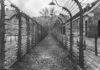
The statement does not shy away from the geopolitical subtext that many Poles believe animates parts of the current campaign. John Paul II, the bishops note, “contributed enormously to the fall of communism and the restoration of unity in Europe.” That historic achievement, once celebrated across the political spectrum, appears for some critics today to be an original sin: the moral reinforcement of a Polish national identity that refuses to dissolve quietly into post-Christian secular Europe.
In an echo of Scripture that will resonate painfully with Polish Catholics, the bishops quote Jesus’ own words about the prophet scorned in his native place: “Only in his own country, among his relatives and in his own house can a prophet be so despised” (Mark 6:4).
The document closes with gratitude to all—journalists, scholars, ordinary believers—who continue “to ensure respect for the teaching and legacy, as well as for the honor of the good name of Saint John Paul II, one of the greatest Poles in the history of our homeland.”
Signed by every bishop present at the Jasna Góra assembly, the text amounts to something more than a routine conference communiqué. It is a collective act of institutional memory at a time when parts of Poland’s elite seem determined to rewrite that memory. Whether the bishops’ words will quiet the controversy or simply mark the next phase of a deepening culture-war trench remains, for now, an open question. What is no longer in doubt is where the Polish episcopate stands: firmly, unapologetically, and publicly alongside the Pope who, half a century ago, helped bring the walls of communism tumbling down—and who still casts a very long shadow over the nation he left behind.
- Raju Hasmukh with files from Infocatholica
Related Images: