










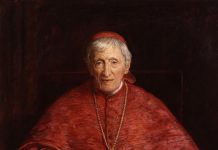
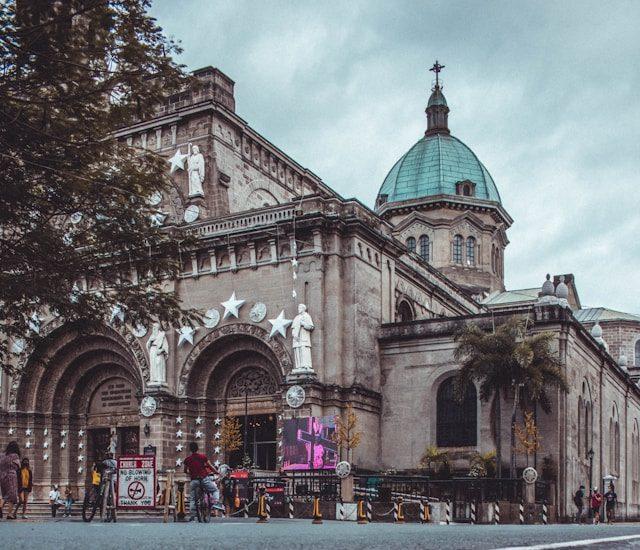
Manila Archbishop Advincula calls Filipinos to resist “modern-day Herods” amid massive flood control corruption scandal; bishops emphasize humility and stubborn hope.
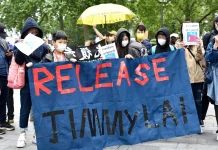
Newsroom (29/12/2025 Gaudium Press) As the Philippines grapples with its most severe corruption scandal in decades, involving billions of pesos allegedly misappropriated in flood control projects, the Catholic Church has emerged as a leading voice in nationwide protests, intensifying an already charged political atmosphere marked by a bitter rift between President Ferdinand Marcos Jr. and Vice President Sara Duterte.
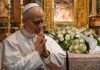
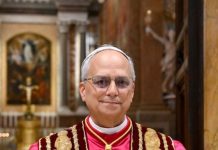
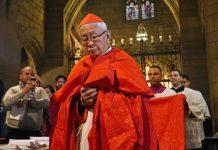
In a pointed Christmas message delivered on December 25, Cardinal Jose Advincula, the 73-year-old archbishop of Manila, urged Filipinos to confront what he described as “modern-day Herods” — figures embodying tyranny and the abuse of power. Drawing a parallel to the biblical King Herod, who sought to eliminate the infant Jesus out of fear and obsession with control, Advincula warned against societal tendencies that prioritize wealth and power over humility and trust.
The cardinal highlighted a specific liturgical gesture during Christmas Mass: the act of kneeling when proclaiming the words “He was made flesh” in the profession of faith. He lamented that this moment is often “rushed, done almost absent-mindedly, sometimes even forgotten,” despite its profound significance.
“This Christmas, let us take this simple ritual as a message and a reminder, and make room for it amid our many preoccupations, for it is the very heart and center of our celebration of the Lord’s Nativity,” Advincula said.
He argued that without genuine humility — symbolized by kneeling — Christmas risks becoming “shallow and empty.” Imitating Herod, he explained, occurs when “we no longer know how to kneel in humility, and instead worship and bow before other gods.”
Directly addressing the ongoing corruption crisis, Advincula posed a rhetorical question: “If obsession with wealth and intoxication with power rule our society, how can we ever set right our distorted systems and the unceasing abuse of public trust?”
His call to action was unequivocal: “Let us resist the Herods who mercilessly destroy our future. Let us journey toward Bethlehem. Let us kneel before the Redeemer — Emmanuel, the Star, the light of our salvation and our peace.”
The scandal, which has sparked widespread demonstrations organized in part by the Church, unfolded against the backdrop of deteriorating relations between Marcos and Duterte, once electoral allies from two of the nation’s most influential political dynasties.
Echoing themes of resilience amid adversity, Cardinal Pablo Virgilio David, the 66-year-old bishop of Kalookan and former president of the Catholic Bishops’ Conference of the Philippines, offered his own reflections on the 2025 Jubilee Year of Hope, proclaimed by the late Pope Francis.
David acknowledged the stark disconnect between the jubilee’s theme and the nation’s realities, stating that for many Filipinos, “2025 did not feel like a year of hope at all” due to persistent national challenges.
“And yet — if we listen carefully — this is precisely where hope must be located,” he said.
Quoting French philosopher Gabriel Marcel, David distinguished true hope from mere optimism: “True hope is born in the very moment when despair seems most logical — like light that shines brightest not at noon, but at midnight.”
A longtime advocate for human rights, David pointed to concrete manifestations of hope in 2025: “in journalists who refused silence, in citizens who kept watch, in voters who surprised the powerful, in families who refused to forget their dead, in a people who, despite exhaustion, still ask: Can we be better than this?”
He described hope as “fragile” yet “stubborn,” suggesting that its discomforting nature explains why the year may not have felt hopeful. “Perhaps 2025 did not feel like a Year of Hope because hope, when it is real, is never comfortable,” David said. “It demands vigilance, memory, moral courage. And the refusal to surrender our future to cynicism.”
Together, the messages from Advincula and David underscore the Philippine Catholic hierarchy’s role in navigating the intersection of faith, morality, and public accountability during a period of profound national turmoil.
- Raju Hasmukh with files form Crux Now
Related Images: