























According to the prelate, the government plays a “central role” in feeding the addiction, especially among the country’s poor and vulnerable.
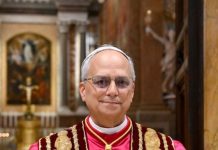
Newsroom (17/07/2025, Gaudium Press ) Cardinal Pablo Virgilio David, Bishop of Kalookan and president of the Catholic Bishops’ Conference of the Philippines (CBCP), has issued a scathing rebuke of the government’s role in promoting online gambling, labeling it a “scourge” that preys on the nation’s poor and vulnerable. In a powerful homily delivered during Sunday Mass at Kalookan Cathedral, the cardinal accused state agencies, particularly the Philippine Amusement and Gaming Corporation (PAGCOR), of fueling a growing addiction crisis by legalizing and expanding digital gambling platforms.
“What is truly painful,” Cardinal David said, “is when government agencies themselves, like PAGCOR, lead the way in making this kind of victimization possible by legalizing online gambling.” He described the internet as a “digital highway” where countless Filipinos, especially the marginalized, fall victim to exploitation—not only by scammers and predators but also through state-sponsored gambling platforms that operate under the guise of economic progress.
The cardinal’s remarks follow a recent CBCP pastoral letter, issued on July 8, which decried the rapid rise of online gambling as a “deep and widespread moral crisis.” The bishops called for an outright ban on all forms of online gambling and urged stricter regulation of digital payment systems that enable easy access to these platforms. The letter emphasized the need for parishes to address the issue as a public health crisis, advocating for education, legislation, and treatment to support affected individuals and families.
Cardinal David highlighted how new technologies have transformed gambling from an elite pastime confined to casinos into a pervasive threat accessible 24/7 via smartphones. “Now, the casino is in everyone’s pocket,” he warned. “Even mothers desperate for extra income get drawn in. They start with a few pesos, then risk hundreds or thousands.” He noted that online gambling transactions, often masked as digital wallet payments, have made the problem both widespread and difficult to detect.
The cardinal also criticized the government’s justification for promoting gambling—generating revenue for public spending. He argued that these funds are often funneled into politically motivated aid programs, serving as tools for consolidating power rather than addressing social needs. “We fail to see the real culprit: a government that grants licenses and expands online gambling platforms just to earn revenue for public spending—spending that often becomes a tool for political power,” he said.
Data underscores the scale of the crisis. In 2024, online gambling revenue in the Philippines soared to 154 billion pesos (approximately US$2.7 billion), a 165% increase from the previous year. Surveys reveal that 66% of Filipinos aged 18 to 24 engage in gambling, while 57% of those aged 41 to 55 access online platforms two to three times a week. On average, 70% of gamblers spend around 1,000 pesos weekly, with 20% wagering up to 3,000 pesos.
In his homily, Cardinal David urged the faithful to resist the normalization of gambling culture and to show compassion for those trapped by addiction. “The Word opens our eyes to see the hidden victims on these digital highways,” he said. “It urges us to take concrete steps to help these vulnerable ones whom society often ignores.”
The CBCP’s pastoral letter echoed this call, imploring Catholics to prioritize the welfare of individuals and families. “Let us safeguard our relationships,” the bishops declared, framing gambling not only as a moral failing but as a societal challenge requiring collective action.
As the debate over online gambling intensifies, Cardinal David’s words serve as both a spiritual exhortation and a bold challenge to the government’s complicity in a crisis that threatens the nation’s most vulnerable.
- Raju Hasmukh with files from asianews.it
Related Images: