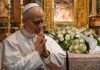



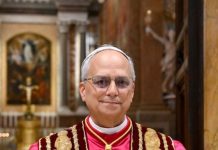









Pope Leo XIV honored Sts Peter and Paul, emphasizing their legacy as pillars of the Church, while calling for a renewed commitment to unity and a dynamic faith.
Newsroom, June 29, 2025, Gaudium Press – In a stirring homily delivered during Mass at St. Peter’s Basilica, Pope Leo XIV honored Saints Peter and Paul, emphasizing their legacy as pillars of the Church and patrons of Rome. Speaking to a congregation that included archbishops receiving the Pallium and a delegation from the Ecumenical Patriarchate, the Holy Father called for a renewed commitment to ecclesial communion and a vibrant, dynamic faith.
Reflecting on the solemnity of Saints Peter and Paul, Pope Leo XIV highlighted two central themes drawn from the apostles’ lives: ecclesial communion and the vitality of faith. He described the apostles’ shared martyrdom as a testament to their unity in Christ, despite their differing backgrounds and approaches to evangelization. “Peter and Paul were both ready to lay down their lives for the sake of the Gospel,” he said, referencing their imprisonment and ultimate sacrifice as recounted in Acts 12:1-11 and 2 Timothy 4:6-8, 17-18.
The Holy Father noted the distinct paths of the two apostles—Peter, a Galilean fisherman who followed Jesus immediately, and Paul, a highly educated Pharisee who initially persecuted Christians before his conversion. Their differences led to tensions, as seen in Paul’s confrontation with Peter in Galatians 2:11 and their debates at the Council of Jerusalem. Yet, Pope Leo stressed, these differences did not fracture their unity. Quoting St. Augustine, he remarked, “The feast of the two Apostles is celebrated on one day. They too were one.”
This unity in diversity, or concordia apostolorum, serves as a model for the Church today, the Pope said. He urged Catholics to embrace ecclesial communion as a “unison of voices and personalities” that respects individual freedom while fostering fraternity. “The whole Church needs fraternity,” he emphasized, calling for unity in relationships among laypeople, priests, bishops, and the Pope, as well as in pastoral care, ecumenical dialogue, and engagement with the world.
Turning to the vitality of faith, Pope Leo XIV challenged the faithful to avoid a “tired and stagnant faith” and to respond to Jesus’ question in Matthew 16:15: “Who do you say that I am?” He encouraged ongoing discernment to keep faith dynamic and relevant, asking, “Who is Jesus Christ for us today? What place does he occupy in our lives and in the life of the Church?” This reflection, he said, is essential to prevent Christian identity from becoming “a relic of the past,” a concern often raised by his predecessor, Pope Francis.
Addressing the Church in Rome specifically, the Holy Father called it to be “a sign of unity and communion, a Church on fire with vibrant faith.” He greeted the archbishops receiving the Pallium, a symbol of their pastoral responsibility and communion with the Bishop of Rome, and encouraged them to build unity in their local Churches. He also extended warm greetings to the Synod of the Ukrainian Greek Catholic Church, praying for peace in Ukraine, and to the Delegation of the Ecumenical Patriarchate, sent by Ecumenical Patriarch Bartholomew.
Pope Leo XIV concluded by invoking the intercession of Saints Peter and Paul, urging the faithful to walk together in faith and communion. The homily, delivered on the solemnity of Rome’s patron saints, underscored the enduring relevance of their witness for the Church and the world.
- Raju Hasmukh with files from vatican.va
Related Images: