
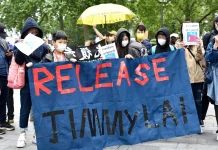























Nuns arrested in Chhattisgarh on false conversion charges spark outrage. CBCI, Rahul Gandhi condemn rising attacks on Christians, urge action to protect minority rights.
Newsroom (28/07/2025, Gaudium Press )The arrest of two Catholic nuns from Kerala at Durg Railway Station in Chhattisgarh on July 25, 2025, has ignited widespread condemnation and protests, with the Catholic Bishops’ Conference of India (CBCI) and political leaders decrying the incident as part of a broader pattern of harassment against religious minorities. The nuns, Sister Vandana Francis of Udayagiri Parish in Thalassery and Sister Preethi Mary of Elavoor Parish in Angamaly, both members of the Assisi Sisters of Mary Immaculate (ASMI) and employed at Fatima Hospital in Agra, were detained on charges of human trafficking and forced religious conversion. The case has raised serious concerns about the misuse of anti-conversion laws and the safety of religious women in India.
Details of the Incident
The nuns were accompanying three young women, aged 19 to 22, and an adult tribal man, Sukhman Mandavi, from Narayanpur in the Diocese of Jagdalpur, Chhattisgarh, to Agra, where the women were set to begin employment as kitchen helpers at a Catholic-run hospital. Reports confirm the group had written parental consent and valid identification documents, and the women were already Christians. However, a Travelling Ticket Examiner (TTE) at Durg Railway Station questioned the group, reportedly over the lack of platform tickets. The situation escalated when the TTE allegedly alerted members of Bajrang Dal, a Hindu nationalist youth group affiliated with the Vishwa Hindu Parishad (VHP).
Bajrang Dal activists arrived at the station, accused the nuns of attempting forced religious conversions, and subjected them to what the CBCI described as a “public trial” marked by harassment and offensive language. A local resident, Ravi Nigam of Bhilai, filed a complaint alleging the nuns were trafficking the girls for conversion purposes, leading to their arrest by the Government Railway Police (GRP). The FIR was filed under Section 4 of the Chhattisgarh Freedom of Religion Act, 1968, which addresses unlawful religious conversions, and sections of the Bharatiya Nyaya Sanhita related to human trafficking. The nuns and Mandavi were remanded to judicial custody until August 8, 2025, while the three women were placed under the supervision of the Women’s Welfare Committee in Durg.
CBCI spokesperson Father Robinson Rodrigues alleged that the women were coerced into changing their statements to claim they were taken against their will, a claim echoed by Sister Asha Paul, secretary of the CBCI Council for Women. The CBCI has called the case “fabricated” and “malicious,” asserting that the police acted under pressure from Hindutva groups.
Broader Context of Harassment
The CBCI condemned the arrests as part of a “worrying wave” of targeted attacks on Christian nuns, citing a growing pattern of harassment, false accusations, and fabricated cases. The organization noted that nuns are increasingly followed by “social disrupters” who incite crowds and use offensive language at public places like railway stations, posing threats to their dignity and safety. The Syro-Malabar Church, to which the nuns belong, published a sharply worded editorial in its mouthpiece, Deepika, titled “Nuns not captive, but Constitution,” alleging that the arrests reflect a political and communal campaign backed by the ruling Bharatiya Janata Party (BJP) and right-wing groups.
The incident is not isolated. According to the United Christian Forum (UCF), 834 attacks on Christians were reported in India in 2024, with 378 incidents in the first half of 2025 alone, averaging two attacks per day. Chhattisgarh, where Christians make up less than 2% of the population, accounted for 47 of 161 violent incidents against Christians from January to March 2024, as per a USCIRF report. Anti-conversion laws in 12 of India’s 28 states, including Chhattisgarh, have been criticized for being used to target religious minorities, with penalties ranging from fines to life imprisonment.
Political and Religious Response
The arrests have sparked bipartisan outrage in Kerala, where Christians constitute about 20% of the population. Kerala Chief Minister Pinarayi Vijayan wrote to Prime Minister Narendra Modi, demanding urgent intervention. Opposition leader Rahul Gandhi, in a post on X, called the arrests “BJP-RSS mob rule” and part of a “systematic persecution of minorities,” with United Democratic Front (UDF) MPs, including Congress general secretary K.C. Venugopal, staging protests outside Parliament in New Delhi. Venugopal wrote to Union Home Minister Amit Shah and Chhattisgarh Chief Minister Vishnu Deo Sai, condemning the “blatant miscarriage of justice.” CPI(M) MP John Brittas labeled the arrests a “disgrace” and a misuse of law to target minorities.
The Indian Union Muslim League and Kerala Congress (M) also condemned the incident, with leaders like Sadik Ali Shihab Thangal and Jose K. Mani urging unity against attacks on minorities. Conversely, VHP Kerala general secretary Anil Vilayil justified the arrests, alleging the presence of an underage tribal woman among the group, a claim disputed by the CBCI, which confirmed all women were adults.
Calls for Action and Legal Developments
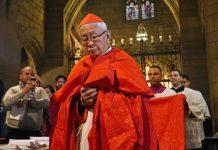
The CBCI has appealed to Modi and Shah for immediate intervention, urging the Chhattisgarh government to protect minority rights. The organization is reportedly preparing to file a bail plea for the nuns on July 28, 2025. Cardinal Oswald Gracias, former Archbishop of Agra, defended the nuns’ service to society, calling their treatment an “aggression on women” that tarnishes India’s image.
Meanwhile, Chhattisgarh Chief Minister Vishnu Deo Sai announced plans to introduce a stricter Anti-Conversion Bill in the next Assembly session, citing “rising communal anxieties.” The announcement, made at a Hindu Jagran program in Raipur, followed calls from over 250 religious and civic representatives to curb alleged forced conversions. Critics argue this move could further embolden vigilante groups like Bajrang Dal, exacerbating tensions in the BJP-ruled state.
Ongoing Concerns
The arrests have heightened fears among Christian clergy, with some advising nuns to avoid wearing religious attire in public to evade targeting. The CBCI and Syro-Malabar Church have vowed to continue advocating for justice, with the former pledging to raise the issue on all appropriate platforms. As the case remains under investigation, it has reignited debates over religious freedom and the treatment of minorities in India, with calls for stronger constitutional protections growing louder.
- Raju Hasmukh with files from UCAN News, The Time of India, The Hindustan Times,
Related Images: