














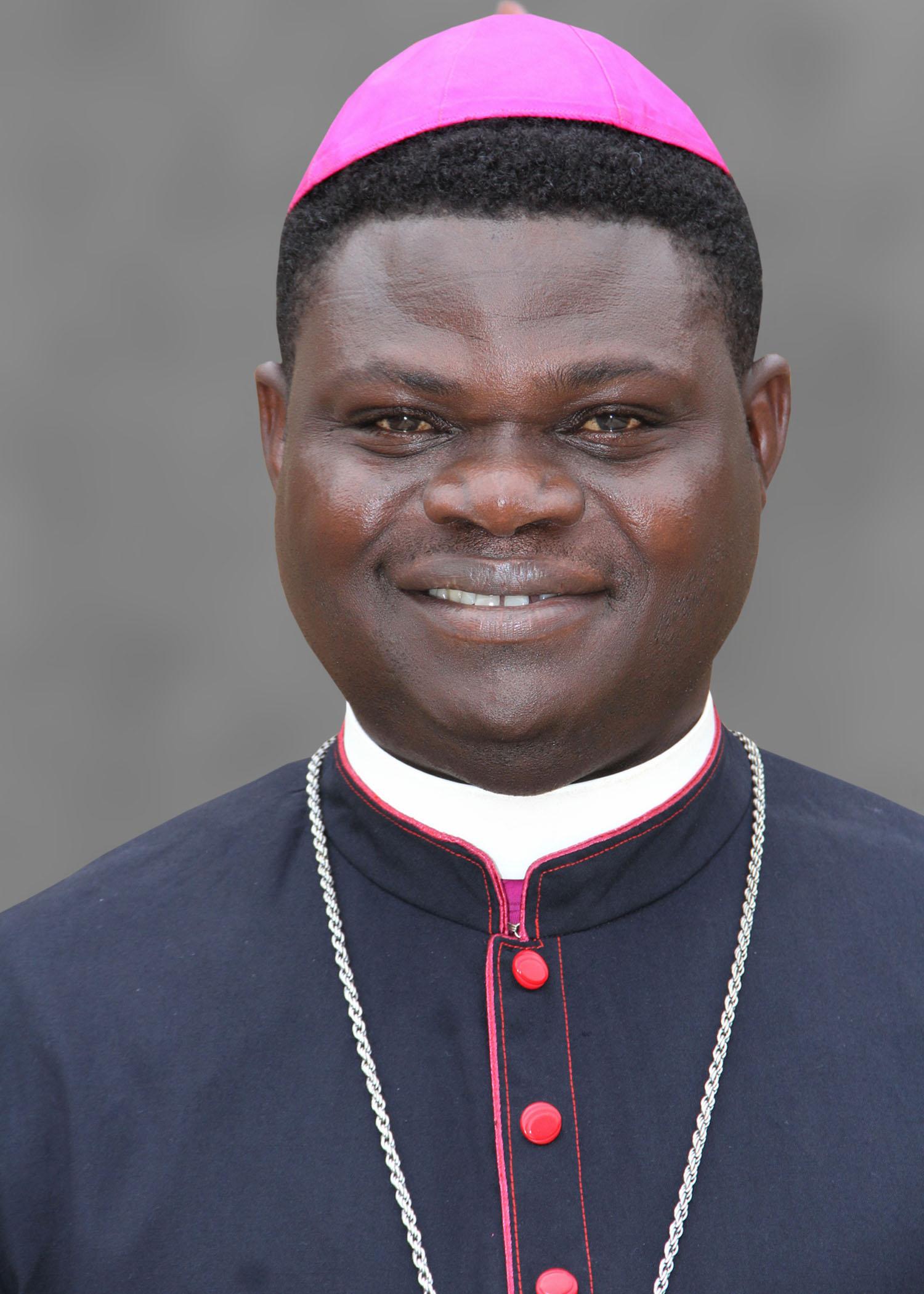
Bishop Wilfred Anagbe warns of a silent genocide in Nigeria’s Middle Belt, urging global action amid worsening anti-Christian violence.
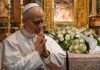
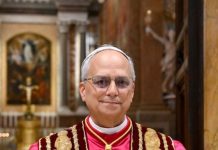
Newsroom (21/01/2026 Gaudium Press) In the heart of Nigeria’s Middle Belt, a region once known for its rich agricultural lands and interethnic coexistence, a deep and terrifying wound continues to spread. Bishop Wilfred Chikpa Anagbe of Makurdi has again raised his voice, warning of what he calls a “genocide of Christians” in central Nigeria. His latest interview, published on January 19, 2026, in the Italian Catholic daily Avvenire, is not a new alarm but a continuation of a years-long plea to an international community that, he says, has refused to listen.
For Anagbe, whose diocese lies in Benue State, the epicenter of the Middle Belt’s turmoil, the violence is not random. “The actions of several armed groups, including Boko Haram, all have the same agenda,” he insists. “It includes the kidnapping, rape, and murder of Christians.”
This new warning echoes the message he delivered in past years — particularly in a 2025 interview with the Italian agency Servizio Informazione Religiosa (SIR) — when he called the crisis a “silent genocide,” lamenting Europe’s political correctness and indifference. “If we ignore this crisis, we will witness another genocide,” he cautioned at the time.
A Pattern of Systematic Violence
Since 2015, Bishop Anagbe has witnessed much of his diocese disappear into ashes. Twenty-one rural parishes have become inaccessible following attacks by militants he identifies as Fulani terrorists—raiders who hunt villagers house by house, torch churches, and clear entire communities from their land. According to the bishop, these attacks are not conflicts over climate or pasture, as some international analysts claim. “In what country do people kill because of climate change?” he asks pointedly.
That sinister pattern took a grim turn in 2018, when massacres in Benue State — including one at a funeral in the village of Mbalom, where sixteen people including two priests were murdered — marked a threshold moment. The violence never abated. Amnesty International reported that 2,600 people, mostly women and children, were killed in Benue between January 2023 and February 2024. Then, in June 2025, came the horror of Yelwata: more than 200 villagers burned alive. “They were doused with gasoline and set on fire, torn from life like animals. That is genocide,” Anagbe declared after the massacre.
Lives in Ruin
The human toll across Makurdi’s displacement camps is staggering. Established in 2001, these shelters now house tens of thousands of survivors, though scarcely anyone has the means to rebuild. “The situation is intolerable,” the bishop says. Hunger, disease, and loss of work have eroded the social fabric. He recounts scenes that wrench the conscience—children forced into prostitution, families so desperate they sold one child to feed others.
For Anagbe, the crisis is not only material but spiritual. “We must heal the trauma,” he explains, describing the diocese’s modest efforts to provide counseling, food, and pastoral care amid scant resources. His appeals for help now reach far beyond the Church, aiming at governments, NGOs, and international agencies that have, so far, offered little beyond words.
A Crisis Beyond Borders
Data collected by the NGO Open Doors underscores the bishop’s warnings. In 2024, more than 3,100 Christians were killed and over 2,000 kidnapped in Nigeria alone. Globally, of the 4,476 Christians killed for their faith from October 2023 to September 2024, nearly 70% were Nigerian.
These figures reflect a national landscape dominated by violence from multiple fronts — extremists linked to Boko Haram, armed herdsmen militias, and other fragmented groups united by what the bishop calls “a jihad shrouded in many names.” Such convergence, he argues, reveals a campaign that reaches beyond politics or ethnicity: “They all have the same agenda.”
A Global Plea
In private moments, Anagbe finds solace in the words of Pope Leo XIV, who has repeatedly spoken about the plight of persecuted Christians in Africa. “His words comforted me. I know we are not alone,” Anagbe said in 2025. Yet comfort is not enough. His message to the international community remains stark: “It is time for the world to rise up.”
After years of warnings, and with the specter of another genocide hanging over Nigeria’s Middle Belt, Bishop Wilfred Anagbe refuses to be silent. His testimony stands as both accusation and appeal — a reminder that in the world’s indifference, violence finds its most fertile ground.
- Raju Hasmukh with files from Tribune Chretienne
Related Images: