








Nicaragua frees political prisoners after U.S. pressure. Caracas turmoil triggers fear in Managua, raising new hopes for democracy.
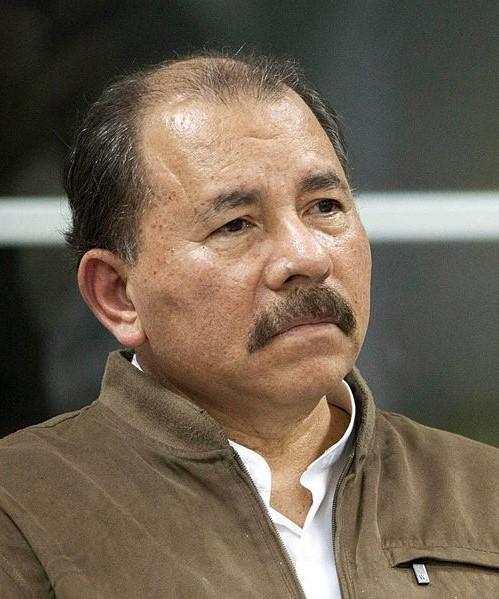
Newsroom (11/01/2026 Gaudium Press ) On January 10, Nicaragua’s authoritarian regime announced the release of “dozens” of detainees—its most sweeping liberation of prisoners in recent months. The decision, arriving on the 19th anniversary of Daniel Ortega and Rosario Murillo’s rule, followed unusual diplomatic pressure from the United States and reverberations from Venezuela’s own political upheaval.
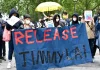
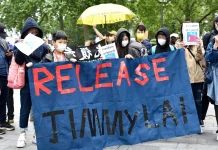
In a terse statement, the Nicaraguan Ministry of the Interior declared that “dozens of people who were in the National Penitentiary System return to their homes and families.” Officials gave no names or specific numbers, but family confirmations revealed that at least seven known opposition figures—among them Jessica Palacios, Mauricio Alonso, and evangelical pastor Rudy Palaces—had been released.
Independent outlets Divergentes and La Prensa suggested that around thirty political prisoners were freed, though other reports cite slightly lower figures. For a government accustomed to opacity, even this limited disclosure represented an unexpected shift.
U.S. Influence and Venezuela’s Shadow
The move came one day after the U.S. Embassy in Managua publicly drew parallels between Nicaragua and Venezuela. On January 9, Washington applauded Caracas’s decision to free a large group of political prisoners, then pointedly noted that “more than 60 people remain unjustly detained or missing in Nicaragua.” The message, posted on X alongside a statement by former U.S. President Donald Trump, implied that peace is only possible where freedom exists.
For exiled former Nicaraguan ambassador to the OAS, Arturo McFields Yescas, the timing was no coincidence. “What happened in Venezuela has unleashed fear in tyranny and hope in the people,” he told ACI Prensa. He described how a seemingly routine embassy statement “caused almost 30% of Nicaragua’s prisoners to be released,” suggesting that even limited diplomatic pressure can prompt real change.
McFields argued that Trump’s remarks—translated and circulated in Spanish—were more than symbolic. “President Trump’s words were shown to be accompanied by actions,” he said. “If a simple statement can achieve this, what could a declaration at the highest level do? There is leverage to use, and we must demand total freedom for all prisoners.”
Tyranny Shaken, Hope Rekindled
While Ortega and Murillo’s government publicly marked its nineteenth anniversary, the mood among exiles and opposition supporters was one of cautious optimism. “There is now a silent hope,” McFields observed, “that dictators can fall at any moment.” He described how images of Venezuela’s Nicolás Maduro—“arrested and humiliated”—have “penetrated deeply into the regime” in Managua. Despite official solidarity with Caracas, the Nicaraguan government has conspicuously avoided mentioning Trump or the United States.
The U.S. State Department’s Office of Western Hemisphere Affairs echoed these sentiments on Saturday. “Today, the brutal Murillo-Ortega dictatorship ‘celebrates’ 19 years of what should have been a five-year democratic mandate,” its post read, reminding that “Nicaraguans voted for a president in 2006, not a dynasty for life.”
McFields framed the moment as both symbolic and historic. “After nineteen years of illegality, persecution of the church, confiscation of temples, and destruction of faith, what happened today fills us with immense, immeasurable joy,” he said.
A Symbolic Restoration
Amid the political tremors, Managua also witnessed a quieter act of renewal. The Archdiocese of Managua announced that Cardinal Leopoldo José Brenes had received the completed restoration of the famed mural of the Risen Christ in the Santo Domingo de Guzmán parish.
The restoration—supervised by national authorities after the image’s collapse in December 2024—reinforced and cleaned a structure that had stood since 1968 and survived the 1972 earthquake. Though its fall caused no injuries, its resurrection carries a symbolic weight not lost on many Nicaraguans: a gesture of endurance amid a landscape of repression and fragile hope.
As Ortega’s Nicaragua tentatively bends under foreign pressure, the restored Christ mural stands as both artifact and metaphor—a country yearning to rise, even after decades of controlled silence.
- Raju Hasmukh with files from ACI Prensa
Related Images: