























The Catholic Church warns that AI technologies must remain servants of human dignity, not tools for corporate or governmental overreach
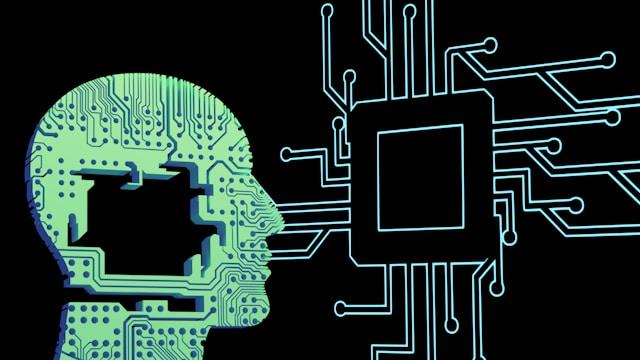
Newsroom (08/09/2025, Gaudium Press )In a display reminiscent of science fiction, Elon Musk’s Neuralink has unveiled a future where brain-computer interfaces could revolutionize human communication, promising data streams thousands, perhaps millions, of times faster than current methods. The technology, already implanted in seven clinical-trial patients with ALS or spinal injuries, enables thought-driven tasks like typing, browsing, and playing chess. Musk envisions this as a stepping stone to a 2028 commercial rollout, fundamentally redefining “what it means to be human.” Yet, this bold vision raises profound anthropological questions for the Catholic Church, which insists that technology must serve the integral development of the human person.
Neuralink’s Ambitious Leap
Founded in 2016, Neuralink develops coin-sized brain implants that allow users to control devices through thought alone. In a July 2025 update video, Musk showcased the technology’s medical potential, aiding patients with paralysis, while outlining a grander goal: “conceptual telepathy” to vastly accelerate human communication. “Your ability to communicate is limited by how fast you can talk or type,” Musk said, proposing that Neuralink could unlock unprecedented cognitive bandwidth to rival artificial intelligence.
Musk’s rhetoric extends beyond utility, touching existential questions. “You are your brain,” he asserted, suggesting consciousness is reducible to neural activity—a claim that has sparked debate among Catholic ethicists who see it as a materialist oversimplification.
A Catholic Critique
The Catholic Church, guided by Pope Leo XIV, has cautiously engaged with emerging technologies. In a message to an AI conference at the Vatican this summer, the Pope praised AI’s potential for healthcare and scientific discovery but warned of its risks to humanity’s grasp of truth and beauty. Neuralink’s vision, which blends human cognition with AI, amplifies these concerns.
Steven Umbrello, managing director at the Institute for Ethics and Emerging Technologies and a research fellow at the University of Turin, told the Register that Musk’s claim—“you are your brain”—is “typical materialist nonsense.” He argued that reducing personhood to neural activity ignores consciousness, intentionality, and moral responsibility. “Catholic philosophy distinguishes the soul’s subjective interiority from the body’s mechanisms,” Umbrello said. “Neuralink’s approach risks flattening the human person into data, eroding moral categories like responsibility, love, and suffering.”
Umbrello emphasized the Church’s anthropology, rooted in the human person as imago Dei (image of God), which transcends utility. Similarly, in 2023, the National Catholic Bioethics Center (NCBC) flagged Neuralink’s ambitions. NCBC senior fellow Joseph Meaney wrote that while aiding the brain-injured is laudable, Musk’s pursuit of a “superhuman” through AI integration threatens the sacred inviolability of the person. “There is no anti-science agenda in the Church’s caution,” Meaney noted, “but ethical considerations must guide technology’s use.”
Secular Concerns Echo Catholic Caution
Secular bioethicists share similar reservations. Arthur Caplan, a leading bioethicist advising the United Nations and World Health Organization, criticized Neuralink’s approach. “There are legitimate efforts to study brain modulation, but Neuralink is not peer-reviewed,” he told the Register. Caplan argued that Neuralink’s large-scale brain implants leap too far beyond current science, which focuses on stimulating small neural clusters. He also decried its minimal regulatory framework, insisting that brain manipulation demands rigorous oversight.
Caplan highlighted a broader issue: bioethics struggles to keep pace with rapid technological advances. “The science is getting way ahead of where ethicists are thinking, and the law lags even further,” he said.
A Broader Digital Horizon
Neuralink is not alone in pushing cognitive frontiers. OpenAI is reportedly investing in Merge Labs, a Neuralink competitor, while Apple has patented brain-scanning Airpods. In 2023, the University of Texas developed an AI system decoding brain activity into language with 72% accuracy, and Meta reconstructed visual thoughts from brainwaves. In 2024, REMspace achieved dream-state idea transfer between individuals. These advancements, coupled with exponential increases in data processing, signal a societal transformation at breakneck speed.
The Church warns that such technologies must remain servants of human dignity, not tools for corporate or governmental overreach. Umbrello stressed that the Church must resist narratives that reduce humanity to material processes. “Musk’s vision is materialist and progressivist,” he said. “The Church offers a sacramental, relational view of the person, oriented toward communion—a Trinitarian rebuttal.”
A Call to Discernment
Pope Leo XIV, speaking at a youth festival in Medjugorje, reminded pilgrims that “no algorithm will ever replace a hug, a look, an encounter—not with God, not with our friends, not with our family.” As Neuralink and similar technologies advance, the Church is tasked with steering their development to uphold the mystery of the human person, ensuring that the future remains humane rather than dystopian.
- Raju Hasmukh with files from National Catholic Register
Related Images: