
















As Nepal navigates this fragile transition, Father Bogati noted the lingering “period of uncertainty and latent tension.” amidst glimmers of hope for renewal in a democracy
Newsroom (18/09/2025, Gaudium Press ) A week after Gen Z-led protests erupted into deadly chaos, torching government buildings and forcing the resignation of Prime Minister KP Sharma Oli, Catholic Church officials in Nepal are voicing cautious optimism and fervent prayers for a swift return to normalcy.
The unrest, which claimed 73 lives and injured over 2,000, began on Sept. 8 as a peaceful demonstration against a government ban on social media—a measure widely seen as an attempt to stifle criticism of entrenched corruption and soaring youth unemployment. Security forces’ crackdown the following day, killing 19 protesters including students, ignited nationwide fury. Arsonists targeted symbols of power: Parliament, the prime minister’s office, the Supreme Court, ministerial residences, and even the iconic Hilton Hotel, Kathmandu’s tallest skyscraper.
Fires spread beyond the capital, accompanied by looting of businesses and malls. Three police officers were among the dead, and chaos enabled a mass prison breakout, with more than 13,500 inmates fleeing two dozen facilities—though police reported that about 5,000 had been recaptured or surrendered by Sept. 17.
In a rapid response, Oli resigned amid the turmoil. The army imposed a curfew, and dialogue between military leaders, the president’s office, and protesters paved the way for the Sept. 12 appointment of 73-year-old Sushila Karki, Nepal’s first female chief justice, as interim prime minister. Karki, tasked with steering the country through a six-month transition to elections next year, has declared the victims “martyrs” and pledged one million rupees (about $7,500) in reparations to each family. She has also promised state honors at their cremations and vowed to address demands for a corruption-free future.
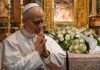
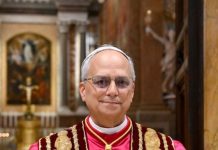
Catholic leaders, representing a minority community of nearly 10,000 faithful in a nation of 30 million where Hinduism predominates, have welcomed Karki’s leadership while decrying the violence. “We are glad the stunning turmoil subsided as fast as it erupted. Now, we have simmering peace. We are praying for our nation to return to full normalcy at the earliest,” Father Silas Bogati, apostolic administrator of the Vicariate of Nepal, said in an interview Tuesday from the bishop’s residence in a Kathmandu suburb.
Appointed in January after Bishop Paul Simick’s transfer to India’s Diocese of Bagdogra, Bogati expressed confidence in Karki, citing her past defense of Catholic clergy and sisters in court cases under Nepal’s penal code, which criminalizes religious conversion—a provision rights groups say is often misused by hardliners to harass Christians. “We as a Catholic community have confidence in Sushila Karki… We have a good opinion of her and trust in her work in the coming months to act in accordance with the rule of law and the democratic principles of justice and legality,” Bogati told the Vatican’s Fides news service on Sept. 16.
He described the Gen Z movement as “a good and beneficial phenomenon for the nation, as long as it remains on the path of peace and justice,” but warned against further street demonstrations by political parties that could reignite violence. “The position of the Catholic Church in Nepal is clear: We say ‘no’ to any form of violence and work for a peaceful development of the situation, hoping for a good government that can effectively combat one of the scourges afflicting the country: corruption.”
The protests exposed deep-seated frustrations in a country where a fifth of 15- to 24-year-olds are unemployed, according to World Bank data, and GDP per capita hovers at just $1,447. “What began as a peaceful protest by our youth—Nepal’s digital generation—against the government’s callous disregard for their aspirations has spiraled into a national upheaval,” said Josh Niraula, a Kathmandu-based former secretary of Caritas Asia. “Nepal’s Gen Z never intended their call for justice to plunge the nation into chaos, but their movement has exposed the rot within our political system. This is a pivotal moment for Nepal’s fragile democracy, one that demands not only prayers and solidarity but also a collective resolve to rebuild a system that serves all Nepalis. We stand at a crossroads between anarchy and renewal.”
The upheaval has disrupted daily life and the economy. Tourism, already down 30% in peak season, faces further blows from the chaos. Personal stories underscore the human toll: Chirendra Satyal, a prominent Catholic convert from a family of Hindu priests baptized in 1980 by Jesuit Father Edward le Jolly—spiritual director to St. Teresa of Calcutta—canceled his daughter’s elaborate destination wedding, settling for a simple chapel blessing at the bishop’s residence. “We were even fearful while going for the marriage blessing from the city in the morning as curfew could have been reimposed any time. Seeing torched buildings, charred vehicles and strewn glass on the roads was scary,” Satyal recounted.
Similarly, the 65th anniversary profession of Sister Monique Niraula of the Sisters of St. Joseph of Cluny, planned for Sept. 19 at Assumption Church—the largest in Nepal, serving 25% of the country’s Catholics—was scrapped. “Given the ongoing chaos and uncertainty, it’s difficult to predict when the country will return to peace. It may take a few more months to gauge the situation accurately,” said Father Lalit Tudu, vicar at Assumption Church. “Nonetheless, we continue to pray for peace and integrity in the country, hoping for a return to stability and normalcy.”
On Sept. 17, Nepal marked a national day of mourning, with flags at half-mast and thousands joining street prayers and candlelit vigils for the 73 victims. Declared a public holiday by the interim government, the day honored “those who lost their lives during the protests,” according to the Ministry of Home Affairs. Streets, bustling again after the unrest, were quieter, though some shops like 17-year-old Lokesh Tamang’s gift store in Kathmandu stayed open to recoup losses.
“Everyone is sad about what happened, the loss of lives—all young people like us,” said 22-year-old shopkeeper Pooja Shrestha. “Things have improved now, and we hope the new government will bring the changes we need.”
Hami Nepal, a key protest organizer, echoed the sentiment on social media: “The changes we are witnessing today would not be possible without the courage and sacrifice of those who gave their lives during the protests.”
Police spokesman Binod Kharel confirmed the death toll stood at 73, including officers and escapees from the prison breaks. “So far, about 5,000 prisoners who had absconded have returned to the prisons, many voluntarily,” he said on Sept. 17.
As Nepal navigates this fragile transition, Father Bogati noted the lingering “period of uncertainty and latent tension.” Yet, amid the ashes of torched institutions, there are glimmers of hope for renewal in a democracy long plagued by elitism and graft.
- Raju Hasmukh with files from NC Register and UCA News
Related Images: