











In a candid revelation, Benedict XVI’s former secretary shares Vatican secrets, from hidden homily recordings to miracle testimonies and his view on Pope Leo XIV.
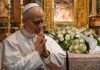
Newsroom (16/12/2025 Gaudium Press ) In the shadowed corridors of the Vatican, where history and holiness intertwine, few figures have navigated the intricacies of papal power as intimately as Monsignor Georg Gänswein. Once the trusted right-hand man to Pope Benedict XVI, Gänswein found himself unceremoniously “expelled” from the Holy See by Pope Francis, a move that sent ripples through ecclesiastical circles. Now, serving as an Apostolic Nuncio far from the Eternal City, Gänswein opens up about his tumultuous journey, the hidden treasures of Benedict’s final years, and his impressions of the new pontificate under Pope Leo XIV.
These days, Gänswein harbors a quiet longing for Rome. He had hoped to reside in Casa Santa Marta, the modest Vatican guesthouse where Pope Francis spent his entire reign—and where he ultimately passed away. But in the waning years of the Bergoglian era, Gänswein was viewed as an adversary, an “undesirable guest” whose presence stirred unease. Today, with a new era dawning, that stigma has lifted, allowing him to reflect on a chapter marked by exile, reconciliation, and revelations that peel back the Vatican’s veiled layers.
Gänswein’s path back to favor began in the shadow of grief. Following Benedict XVI’s funeral, Pope Francis decreed that Gänswein return immediately to his native diocese of Freiburg. Unusually for the secretary of a deceased pontiff, no new role was assigned—a decision that even distant observers deemed “excessively harsh.” For a year, Gänswein languished in inactivity, a stark contrast to his decades of service. Then, on December 31, 2023, the first anniversary of Benedict’s death, he traveled to Rome for Masses at the Altar of the Chair of St. Peter and near the late pope’s tomb in the Vatican Grottoes.
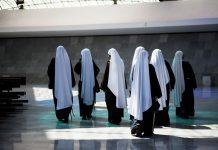
It was one of the Memores Domini—the dedicated lay nuns who tended to Joseph Ratzinger throughout his pontificate and until his end—who suggested he seek an audience with Francis. Initially hesitant, given his brief stay, Gänswein reconsidered overnight and made the request. To his surprise, it was granted swiftly, and he arrived accompanied by the four Memores. The meeting unfolded with disarming directness. “How is Freiburg?” the Pope inquired. Gänswein’s response was unflinchingly honest: “What a pity, Holiness. After all these years of intense activity, doing nothing hurts my heart, soul, and spirit.”
Francis promised to reflect on the matter, asking only for a brief report to the Secretariat of State. Gänswein complied, and months later, word came: The Pope had decided to appoint him to a Nunciature, the Vatican’s diplomatic outpost. Gänswein downplays the term “reconciliation” as perhaps overstated, but the gesture marked a turning point, restoring purpose to a man adrift.
Accepting the role was no small feat. Gänswein lacked formal training from the Ecclesiastical Academy, the crucible for Holy See diplomats; his expertise lay in canon law. Yet, his credentials were forged in the fire of high-stakes service: seven years at Benedict’s side as pontiff, followed by nine as Prefect of the Papal Household. “I had the opportunity to meet almost all the great figures of the world and understand the dynamics of international diplomacy,” he reflects. With “joy and spirit of service,” he embraced the challenge, stepping into a world of global negotiations far removed from Vatican intrigue.
But Gänswein’s revelations extend beyond his personal odyssey, delving into the private sanctum of Benedict’s retirement. From 2013, after his historic resignation, until late 2018—when his voice began to falter—the Pope Emeritus continued to preach within the confines of the Mater Ecclesiae Monastery. There, surrounded by Gänswein and the Memores, Benedict delivered what may have been his most profound homilies and sermons, often on Sundays, sometimes alone, other times for guests.
Unbeknownst to Benedict, these moments were preserved in secret. “We considered it appropriate to record them, but Benedict XVI never knew it,” Gänswein admits. Motivated by a desire to safeguard these “wonderful homilies” and “moving sermons” from oblivion, the group captured them weekly. The Memores transcribed them meticulously, archiving the words in files. When Father Federico Lombardi, president of the Ratzinger Foundation, learned of the recordings, he inquired about their future. Gänswein’s response was deferential: “Tell me what you want to do with them,” entrusting the decision to the foundation dedicated to Benedict’s legacy.
Music, too, wove through Benedict’s life like a sacred thread, a passion Gänswein witnessed firsthand. From childhood, Joseph Ratzinger inhaled the essence of Mozart, growing up in a home where instruments filled the air. His brother, Georg, excelled as an organist and choir director, while Joseph favored the piano, playing it until his strength waned. For Benedict, sacred music represented the pinnacle of expression—”the most appropriate, noble, and solemn form” to celebrate faith’s mysteries. He revered it as he did the liturgy’s sacrality, viewing both as profound acts of love and respect for the divine.
Reminiscing on the prophetic nature of Benedict’s writings Gänswein states “Just to give one example, in 1958 he wrote an article in a German theology journal with the title “The New Pagans”: it’s a clear interpretation of the slow and inexorable de-Christianization of Europe, which, reread more than sixty-five years later, seems to describe the current situation. Joseph Ratzinger was a prophetic man throughout his life; he had the gift of anticipating social and cultural changes like few others.”
Gänswein’s disclosures take a more mystical turn when discussing Benedict’s potential sanctity. In recent times, he has been inundated with emails and letters from around the globe, detailing “miraculous events” attributed to prayers invoking the late pope. These accounts are “very detailed and precise,” arriving unsolicited and prompting Gänswein to archive them personally. Contacting the Dicastery for the Causes of Saints, he learned no canonical process is underway, leaving him to gather the material independently.
Church protocol, he notes wisely, mandates a five-year wait post-death before initiating such proceedings—unless the Supreme Pontiff wills otherwise. Exceptions exist, as with John Paul II, whose cause Benedict himself expedited at the request of Cardinal Stanislaus Dziwisz, Wojtyla’s longtime secretary. Gänswein, having lived alongside the then-Prefect for the Doctrine of the Faith, bore “direct witness to the holiness of John Paul II,” a testament that underscores his own role in papal history.
Amid these reflections, a palpable nostalgia emerges. Gänswein misses Rome deeply, feeling “Romanized” after years immersed in its rhythms. Memories of places, people, and friends tug at him, yet his diplomatic duties—merely three hours by flight—permit returns only for official summons or papal audiences. The Eternal City’s pull remains strong, a reminder of a life once centered in its sacred heart.
Finally, Gänswein’s gaze turns to the present, offering insights into Pope Leo XIV. From the moment Leo appeared on St. Peter’s central loggia for his inaugural address and Urbi et Orbi blessing, Gänswein sensed a shift. The visual and acoustic impressions diverged markedly from the preceding twelve years—positively so. “Immediately it became evident that something had really changed,” he observes. In these initial seven months, Leo has radiated “serenity and peace,” restoring “the centrality of Christ” to the forefront of papal homilies and teachings.
Through Gänswein’s lens, the Vatican emerges not as a monolith of mystery but as a living tapestry of human frailty, divine inspiration, and enduring legacy. His story, laced with secrets once whispered in monastic halls, now invites the world to ponder the Holy See’s hidden depths—and the men who guard its gates. The full interview can be read here
- Raju Hasmukh with files from https://www.iltempo.it/
Related Images: