














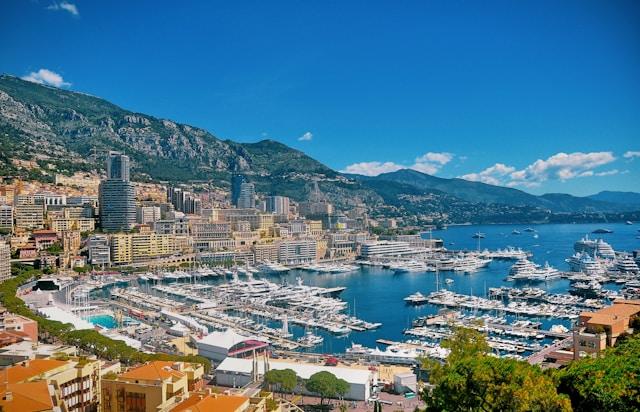
On 19 November, Monaco celebrates its National Day with a solemn Mass, reaffirming Article 9 of the Constitution that declares Catholicism the state religion.
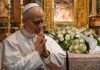
Newsroom (20/11/2025 Gaudium Press ) While most European nations mark their national days with military parades or secular ceremonies, the Principality of Monaco begins its official holiday with a centuries-old act of worship: a solemn Te Deum Mass in the Cathedral of Our Lady Immaculate. On Wednesday 19 November, Prince Albert II, the Princely Family, government officials and hundreds of citizens gathered once again to give thanks for the protection granted to the sovereign and the nation – a ritual that remains the emotional and spiritual heart of the festivities.
At the core of this uniquely religious celebration stands Article 9 of Monaco’s 1962 Constitution, which declares: “The Catholic, Apostolic and Roman religion is the religion of the State.” In an era when few European countries retain an established church – and even fewer enshrine it constitutionally – Monaco’s provision is not ceremonial window-dressing but a living expression of historical identity.
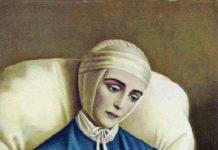
The Christian imprint on the territory predates the Grimaldi dynasty by centuries. Tradition holds that the relics of Saint Devota, a Corsican martyr killed around 303 AD, washed ashore in what is now Monaco, instantly transforming the Gaumates valley into a place of pilgrimage. By the eleventh century the Church of Saint Devota was already documented, and the area fell under the spiritual authority of the Abbey of Saint-Pons and later the Bishop of Nice.
When François Grimaldi seized the fortress in 1297 disguised as a Franciscan monk – an episode immortalised in the principality’s coat of arms – he was continuing a Guelph tradition of loyalty to the Papacy against the Ghibelline Holy Roman Empire. In 1247 Pope Innocent IV had already authorised a chapel on the Rock, and throughout the Middle Ages Monaco’s rulers took part in crusades, hosted papal legates and cultivated popular devotions.
The Renaissance and Baroque periods saw princes make frequent pilgrimages to Rome and fund religious art, while the devastating plague of 1631 sparked a wave of new confraternities. After the turmoil of the French Revolution, the 19th century restored full ecclesiastical autonomy: Monaco became an abbey nullius and, in 1887, a diocese directly subject to the Holy See – a status it retains today as the Archdiocese of Monaco.
This privileged relationship is reflected in everyday life. Official statistics from 2013 show 82.5 per cent of the resident population identifies as Catholic. The principality maintains a cathedral, six parish churches, several chapels, contemplative orders and active youth movements. Catholic education remains prominent, led by the Institution François d’Assise – Nicolas Barré.
Annual traditions – the burning of Saint Devota’s symbolic boat on 26 January, the dramatic Good Friday Procession of the Dead Christ, midsummer Saint John bonfires and the pilgrimage to Notre-Dame de Laghet – are not treated as folklore but as integral elements of national heritage, protected in part by Article 9.
Prince Albert II’s decision to retain 19 November – the feast of Saint Rainier, a 14th-century hermit venerated as patron of the dynasty – rather than adopt a more neutral date, underscores continuity with his predecessors. The Mass of Thanksgiving, followed by the singing of the Te Deum and a prayer for the sovereign and the Principality, publicly reaffirms the bond between throne, altar and people.
In a Europe increasingly marked by secularisation, Monaco presents a distinctive model: a modern constitutional monarchy whose coherence and identity continue to draw strength from a 1,700-year Catholic heritage. For the Grimaldis and their subjects, 19 November is far more than a bank holiday – it is a national act of faith.
- Raju Hasmukh with files from Tribune Chretienne
Related Images: