





















UNESCO recognizes Mexico City’s Iztapalapa Way of the Cross as Cultural Heritage, celebrating faith, unity, and a centuries-old tradition.
Newsroom (15/12/2025 Gaudium Press ) In a historic decision, the United Nations Educational, Scientific, and Cultural Organization (UNESCO) has inscribed the annual representation of the Way of the Cross in Mexico City’s Iztapalapa sector on its prestigious list of Intangible Cultural Heritage of Humanity. The announcement, made during a UNESCO meeting in New Delhi, India, marks a significant moment for the community, affirming the global cultural value of a tradition rooted in faith, resilience, and collective identity.
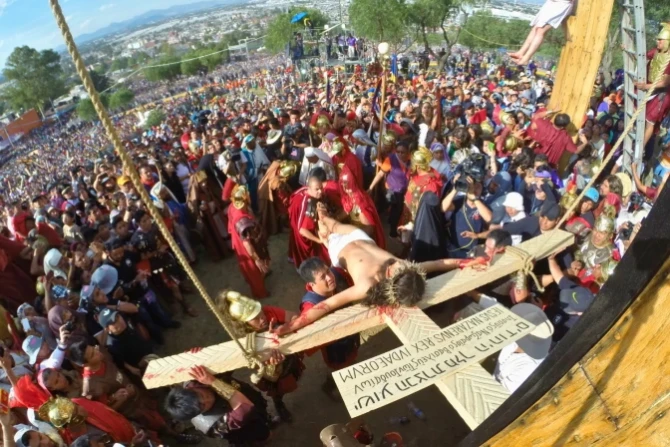
Each Holy Week, the streets of Iztapalapa transform into a vivid stage for the reenactment of the passion, death, and resurrection of Jesus Christ. Far more than a theatrical performance, this centuries-old ritual draws approximately 2 million participants and spectators annually, as it did in 2025, uniting believers and visitors in a shared expression of devotion. For the residents of Iztapalapa, the UNESCO designation is both a point of pride and a call to preserve a practice that has shaped their community for generations.
Edaly Quiroz, deputy director of Mexico’s National Institute of Anthropology and History, spoke at the UNESCO event, emphasizing the deeper significance of the tradition. “Holy Week in Iztapalapa is not merely a theatrical performance but a manifestation of unity, faith, and resilience that brings together thousands of people in a collective exercise of memory, identity, and participation,” she said. Her words reflect the event’s role as a cultural cornerstone, one that transcends religious boundaries to resonate with diverse audiences.
The Iztapalapa Way of the Cross traces its origins to a remarkable story of divine intervention and communal gratitude. According to Juan Pablo Serrano, custodian of the revered image of the Lord of the Little Cave housed in the Iztapalapa Cathedral, the tradition is inseparable from the history of this sacred icon. In 1687, an image of Christ, en route from Oaxaca to Mexico City for restoration, was briefly placed in a cave on the Hill of the Star. When the carriers attempted to continue their journey, they found the image immovable—a sign, Serrano explained, that “the image representing Christ in the tomb wanted to remain there.” This event sparked a unique devotion centered on the cave, laying the foundation for the community’s spiritual identity.
The tradition of reenacting the Stations of the Cross emerged more decisively in 1833, amid a devastating cholera epidemic. As the death toll mounted, the people of Iztapalapa carried the Lord of the Little Cave in a solemn procession, praying for Christ’s intercession. After days of fervent prayer, the plague subsided, an outcome the community interpreted as a miracle. In gratitude, they vowed to commemorate Christ’s passion annually, a promise that has endured and flourished over nearly two centuries.
Today, the Iztapalapa Way of the Cross is a vibrant spectacle of faith and culture, blending elaborate costumes, music, and performances with moments of profound reverence. The event draws participants from across Mexico and beyond, including non-Catholics who, as Serrano noted, are often moved by the experience. “When drawn by the representation, [visitors] visit the image, visit the church, and experience a true reflection in their hearts and a real conversion,” he told ACI Prensa. For Serrano, the tradition serves as both catechesis and evangelization, offering spiritual nourishment to all who encounter it.
UNESCO’s recognition places the Iztapalapa Way of the Cross alongside other global treasures, such as India’s Durga Puja and Japan’s Noh theater, on its Intangible Cultural Heritage list. The organization describes these elements as “practices, knowledge, and expressions that communities recognize as part of their cultural identity,” underscoring the importance of safeguarding them for future generations. For Iztapalapa’s residents, this honor amplifies their responsibility to maintain the authenticity and spiritual depth of the celebration.
Serrano expressed profound joy at the designation, a sentiment echoed throughout the community. “It’s something we always boast about with pride and honor,” he said. Yet, he also emphasized the weight of the new status, which calls for renewed commitment to ensuring the tradition remains a heartfelt offering to God. As Iztapalapa prepares for future Holy Weeks, the UNESCO recognition serves as both a celebration of the past and a beacon for the future, illuminating the enduring power of faith, unity, and cultural heritage.
- Raju Hasmukh with files from CNA and ACI Prensa
Related Images: