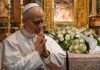





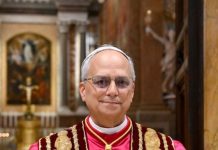



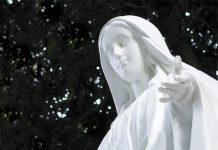











For the Holy Father, creation groans because the human heart has turned away from the Creator. The Earth is not only the dwelling of all—it is a vandalized altar, an icon of divine judgment.
Newsroom (July 24, 2025 16:53, Gaudium Press) The Mass for the Care of Creation, celebrated on July 9 at Borgo Laudato Si’, revealed a new tone in the Church’s approach to ecology. In his homily, Pope Leo XIV declared that “our mission to care for creation, to foster peace and reconciliation, is Jesus’ own mission, the mission that the Lord entrusts to us” and lamented that “we hear the cry of the earth and we hear the cry of the poor… Our indignation is his indignation; our work is his work”
According to his message, the Church is called to speak prophetically even if that means opposing the destructive power of worldly “princes.” He underscored the unbreakable covenant between Creator and creatures, inspiring our intellects “so that evil may turn into good, injustice into justice, and greed to communion”
Pope Leo’s words mark not merely a continuation but a theological recalibration in the Vatican’s ecological discourse. While Pope Francis framed environmental concern within the language of social and global dialogue—via Laudato si’—Pope Leo grounds the ecological crisis in sin. For him, creation groans because the human heart has departed from the Creator; the Earth is not just a home, but an altar violated, an icon of divine judgment. In his message for the 2025 World Day of Prayer for the Care of Creation, he wrote that when injustice, violence, and greed fuel ecological devastation, this is “not what God had in mind when he entrusted creation to humanity”
Unlike the prior pontificate’s emphasis on institutions and international diplomacy, Leo XIV insists that “salvation of the planet is first and foremost salvation of the sinner.” Environmental justice, he affirms, is not an abstract ideal but a duty born of faith, bridging theology, spirituality, and moral responsibility”
This theological shift has drawn mixed reactions: progressive Catholic outlets lament a “theological retreat,” while more conservative audiences welcome the return to doctrinal clarity and spiritual urgency.
Leão XIV’s ecological message is thus not only an ethical summons but a prophetic call: not to rely on political or technical fixes alone, but to seek conversion, penance, and soul‑renewal. For him, the crisis began in the heart—and perhaps the solution lies not in UN assemblies, but in confessionals and communion.
By Rafael Taveres, Gaudium Press
Compiled by Gustavo Kralj
Related Images: