






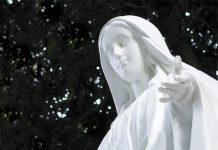







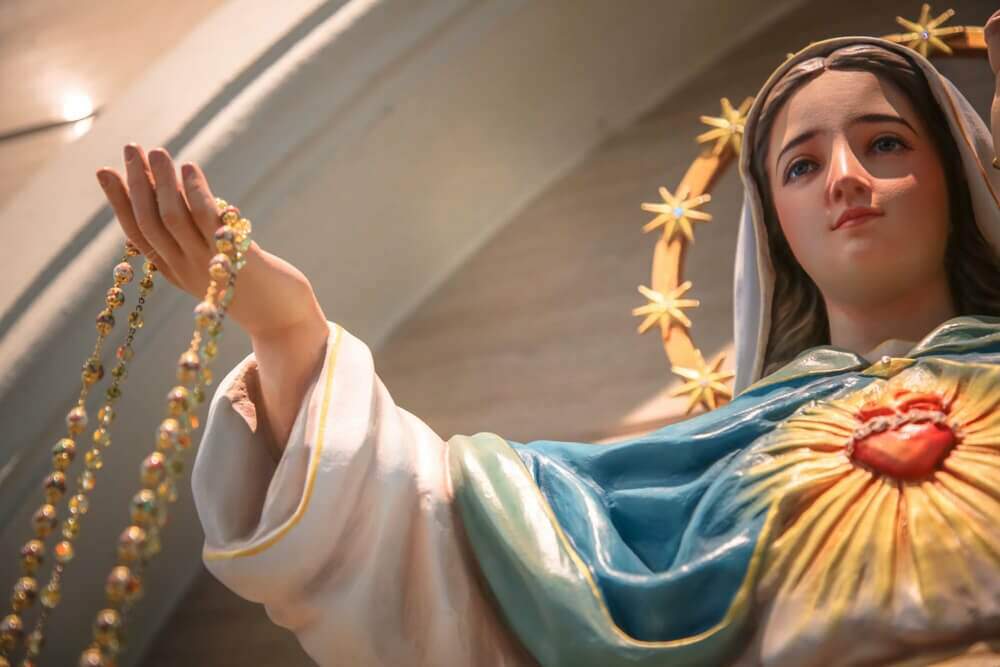
Cardinal Fernández calls Mary the “Mother of Evangelization,” explaining how she brings Christ, treasures the Gospel, and connects it to believers’ lives.
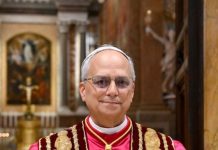
Newsroom (15/12/2025 Gaudium Press ) In a December 12, 2026, conference addressed to Latin American priests, nuns, and seminarians studying in Rome, Cardinal Víctor Manuel Fernández, Prefect of the Dicastery for the Doctrine of the Faith, presented Mary not merely as the Star of Evangelization but as its true Mother. Drawing exclusively from Scripture and the Church’s magisterium, the cardinal offered a profound theological reflection on why the Virgin Mary occupies this singular place in the work of proclaiming the Gospel.
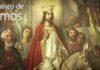
The cardinal began with the Visitation narrative in Luke 1:39-45, where Elizabeth, filled with the Holy Spirit, greets Mary with reverence and praise. Elizabeth’s words — “Blessed are you among women, and blessed is the fruit of your womb” — acknowledge Mary and Christ as inseparable. Her humble question, “Who am I that the mother of my Lord should come to me?” and her blessing of Mary’s faith reveal the Spirit’s action. For Cardinal Fernández, this scene illustrates a timeless truth: when Mary approaches, Christ approaches, and the Holy Spirit overflows.
This dynamic, he noted, continues today, especially in Latin American popular piety. When an image of Mary visits a home, accompanies the sick, or draws pilgrims to a shrine, she brings Jesus, and from Him the Spirit flows. Mary, inseparable from her Son, maternally delivers Christ to those she encounters.
Cardinal Fernández then highlighted Mary’s unique relationship with the Gospel itself. Twice in Luke’s Gospel (2:19, 51), Mary is described as treasuring and pondering all things in her heart. She becomes, in the cardinal’s words, “that living and luminous book” containing the complete story of Jesus — from Incarnation to Resurrection, including the hidden years in Nazareth that no written Gospel records. The most complete Gospel, he asserted, resides in Mary’s heart.
Yet Mary’s heart holds more than Christ’s story. Revelation 12 presents her as mother not only of the child who rules all nations but also of “the rest of her children.” For Mary, Jesus and the Church are inseparable. She contemplates each believer’s life — every joy, sorrow, doubt, and moment from conception onward — with the same maternal attention. Quoting the words spoken to St. Juan Diego, Cardinal Fernández reminded his audience: “Am I not here, I who have the honor of being your mother? […] Are you not in my lap, in the embrace of my arms?”
This intimate knowledge allows Mary to connect the Gospel directly to individual lives. She alone can illuminate personal histories in the light of Christ’s saving mysteries, offering understanding deeper than any human confidant. In prayer, when words fail or memories fade, Mary reads the unspoken in the context of the Gospel she treasures.
The cardinal described another mysterious form of evangelization: the wordless transmission of the Gospel through Mary’s maternal face. Simple believers, without formal study, encounter Christ’s mysteries reflected in her image. Drawing from the recent document Mater Populi Fidelis, he explained how the poor and suffering see in Mary’s countenance the seeking Father of Luke 15, the compassionate Christ who lifts the fallen, the crucified Lord, and the risen Savior who offers hope.
This mystagogical encounter, the cardinal stressed, does not distance believers from God but reveals His closeness. Mary is no closer to us than the Father, Son, or Holy Spirit; rather, her maternal face makes God’s tenderness, mercy, and compassion — precisely as the Gospel presents them — transparently visible to human hearts.
Cardinal Fernández also addressed Mary’s role as “Mother of Grace.” While only Christ merits sanctifying grace, God freely chooses to grant actual graces in response to Mary’s maternal intercession. Through her prayers and the “words, images, and encouragements” she conveys, Mary helps believers open their hearts to the Holy Spirit’s promptings, disposing them for justification or growth in holiness. Her presence at Pentecost, steadfast in prayer with the apostles, continues this maternal accompaniment.
The cardinal emphasized Mary’s solidarity with the poor and suffering, making her uniquely approachable. Latin American believers recognize in her the woman of Nazareth who knew poverty, migration, anxiety, and piercing sorrow. She walks shoulder to shoulder with the marginalized, allowing them to trust her and receive the Gospel without fear.
While affirming Mary’s unique collaboration in redemption — described in Mater Populi Fidelis as the “first and greatest collaborator in the work of Redemption and grace” — Cardinal Fernández carefully distinguished her role from Christ’s. Salvation comes through Christ alone (Acts 4:12). Popular piety expresses devotion through affectionate titles like “Mamita,” not technical terms that risk confusion.
Mary’s evangelizing mission, the cardinal continued, embraces integral human promotion. Her haste to aid Elizabeth, her intervention at Cana (“They have no wine”), and her Magnificat’s praise for God who lifts the lowly and fills the hungry reveal a heart concerned with both spiritual and material needs.
Concluding with insights from Pope Francis, Cardinal Fernández recalled descriptions of Mary as restless, journeying, and joy-filled — a young woman whose presence helped birth a missionary Church at Pentecost. At the cross, Christ gave humanity a mother because He “does not want us to walk without a mother.” In moments of failure, Mary carries us without judgment, needing few words to understand our struggles.
In Mary’s maternal embrace, Cardinal Fernández concluded, the Church finds its most tender and effective evangelizer — the Mother who brings Christ, illuminates the Gospel, and accompanies every believer toward the fullness of grace.
- Raju Hasmukh with files from Vatican.va
Related Images: