














As the days shorten, some considerations on the Light which vanquished the darkness.
Newsdesk (05/11/2025 10:12, Gaudium Press) Jesus’ presence disturbed the peace for the wayward Jews. Theirs was not “the tranquillity of order”—as St. Augustine defined true peace—but the stagnation in disorder, which allowed them to live dissociated from God without remorse of conscience.
This is why Christ provoked such hatred. They did not hate Him for some defect or evil—which could not exist in the God-Man—but because He was the supreme Good. The mystery of human iniquity goes deep! And this hatred grew until it reached an exploding point. By bribery and false witness, His enemies achieved what they had not managed by defamation. As a climax, satan entered into the heart of the most detestable of men, leading him to deliver the Master over to the henchmen with a kiss. Our Lord offered him one last invitation to conversion, expressed in this mild reproach: “Judas, would you betray the Son of Man with a kiss?” (Lk 22:48).
This vile uprising, set in motion largely by those who had most benefitted from the Saviour, culminated in the deicide; the most grievous crime in history.
The episode upon which the entire Catholic religion is founded
The Gospels record four passages in which Our Saviour makes this prevision to the Apostles with absolute clarity: the Son of Man will be rejected by the elders, scribes and high priests, He will suffer many torments, He will die, but on the third day He will rise again (cf. Mt 16:2; 20:19; Mk 8:31; Lk 9:22). This divine prophecy was completely fulfilled. And we see His infinite perfection shine even in setting the time period—“on the third day.”
As St. Thomas teaches, it was fitting that Jesus’ Resurrection take place on the third day; that is, after remaining in the sepulchre for a prudent interval. On one hand, to confirm our faith in His divinity, it was necessary that He rise soon after. But on the other hand, if the Resurrection had taken place immediately after His death, some might raise doubts as to whether He had in fact died. Thus, “to show forth the excellence of Christ’s power, it was fitting that He should rise on the third day.” Even in this detail, the objective of God the Father is evident: to give His Divine Son the greatest possible glory.
The Catholic Faith is based on the authenticity of the Resurrection of the God-Man. The Apostles teaches: “If Christ has not been raised, then our preaching is in vain and your faith is in vain” (1 Cor 15:14). For us, this is a compelling motive for hope, because seeing Christ risen—head of the Mystical Body of which we are all members—, we also await our resurrection one day with Him.
Closed doors are no barrier
The way in which Our Lord entered the closed room and showed Himself to the Apostles also elicits our admiration (cf. Lk 24:36-43). The Angelic Doctor explains: “not by miracle but from its glorified condition, entered in among the disciples while the doors were shut, thus existing with another body in the same place.” And a little further on he adds, citing St. Augustine: “Closed doors were no obstacle to the substance of a Body wherein was the Godhead; for truly He could enter in by doors not open, in whose Birth His Mother’s virginity remained inviolate.”
Beyond the theological aspect, this fact has a symbolic significance. Just as there are no material walls capable of impeding Our Lord’s passage—for He passes through without destroying them—, there are no barriers that can prevent the action of grace in souls. Grace opens for us the way to the truth, making true happiness possible on this earth; a happiness not born of sin, but of stability, austerity and sanctity.
St. Thomas saw and believed
Much has been said, perhaps even to exaggeration, on St. Thomas’ reluctance in believing the Resurrection of Jesus. However, on every side we find examples of incredulity far graver than his. It is true that, upon hearing the news of the Resurrection from the Apostles, his reaction was inflexible: I will not believe if I do not see and touch His wounds. Nevertheless, when the Master appeared the second time, with him present, he saw and believed perhaps even before touching.
The fact that there was an Apostle with vacillating faith is providential: his demand for concrete proofs serves as an aid to souls of little faith, who have existed and will exist semper et ubique. St. Thomas saw and believed. How many today see and do not believe?
An exclusive glory for the Son of God
Analyzing the life of Jesus—from His birth until His Ascension into Heaven—there is nothing that fails to awaken admiration; everything inspires this noble sentiment. Inevitably, then, although Our Lord was the object of the Pharisee’s criminal hatred, He was also greatly beloved.
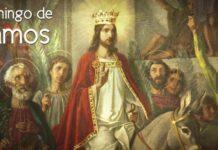
We find eloquent proof of this love in the multitudes that followed Him and sometimes pressed in so closely that it became necessary to take measures for His protection. Further proof is the fact that thousands of people followed Him into the desert, without the least concern for their sustenance, being thoroughly enchanted with His words. Finally, in His triumphant entrance into Jerusalem, He was preceded and followed by an enthusiastic multitude proclaiming: “Hosanna to the Son of David!” (Mt 21:9).
There is a particular form of glory in these manifestations of love; the Son of God incarnate had this glory in a measure that no creature has ever received, or will receive in future centuries.
The only authentic glory
Men of old understood the admirable moral values implied by this short word. Moved by the desire for glory, great historic figures expended enormous efforts. However, this word has lost much of its meaning today.
For some, glory consists in being esteemed by others, in following the dictates and spirit of the world; for others, it means having a great fortune, or achieving any form of celebrity. To such persons, the expression of the Apostle is applicable: “their god is their belly” (cf. Phil 3:19).
True glory, however, does not consist in the possession of material goods, and still less in the fleeting and superficial prestige among men, whose esteem depends on their own egoistic interests. Rather, it is the image of the only authentic glory: the glory of God in the highest.
The splendour of this Light inaugurated a magnificent dawn
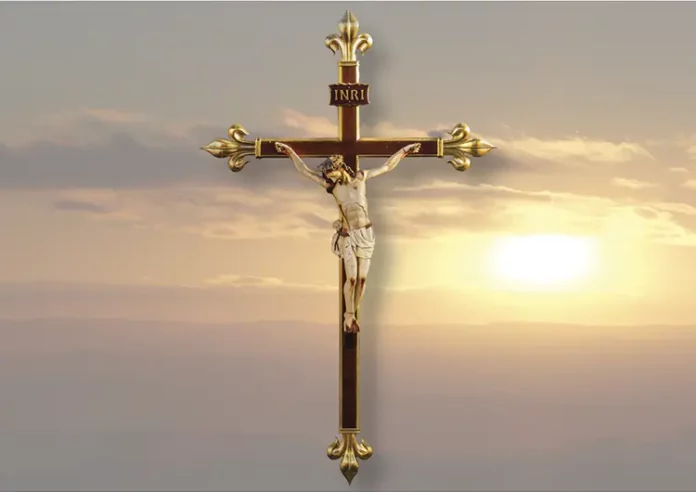
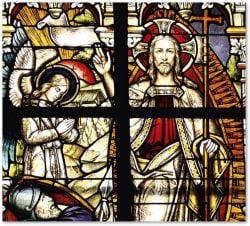
This is the glory that Our Lord Jesus Christ conquered in His Resurrection. The ropes with which they bound Him, the scourges, thorns, nails, the lance of the Roman soldier, the stone that closed the sepulchre—all of this was of no avail, except to highlight the power by which He reduced the bonds of death to nothing and triumphantly emerged from the tomb guarded by armed men. Nothing could detain Him.
He is the Light that vanquished the darkness and triumphed over sin. His victory laid the foundation for a new order based on faith, and it will bring about the advent of the Reign of Christ on earth. This Light will continue to shine for all ages.
Text extracted, with adaptations, from Heralds of the Gospel Magazine No. 78, April 2014. By Fr. Leandro Ribeiro, EP.
The post Light Vanquished the Darkness! appeared first on Gaudium Press.
Compiled by Roberta MacEwan
Related Images: