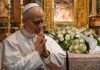







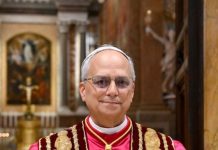














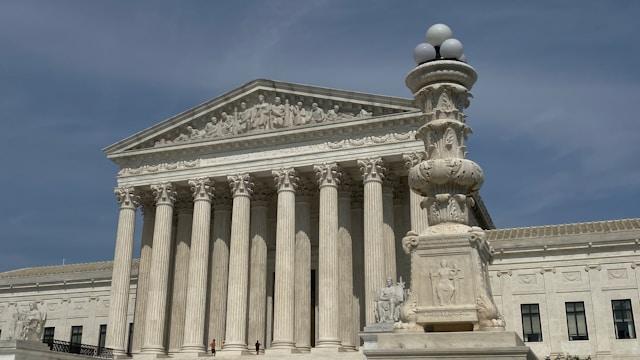
U.S. Supreme Court Justice Samuel A. Alito Jr. joined a global gathering of legal minds to celebrate the Jubilee of Justice, a landmark event uniting judges, lawyers, prosecutors, law professors, and canon lawyers from over 100 nations.
Newsroom (22/09/2025, Gaudium Press ) In a frescoed hall of the Vatican’s Palazzo della Cancelleria, U.S. Supreme Court Justice Samuel A. Alito Jr. joined a global gathering of legal minds to celebrate the Jubilee of Justice, a landmark event uniting judges, lawyers, prosecutors, law professors, and canon lawyers from over 100 nations. The occasion, marked by an audience with Pope Leo XIV, underscored the interplay of faith, mercy, and the rule of law in shaping a just society.
A Pontiff’s Vision for Justice
Pope Leo XIV, a canon law scholar, set the tone for the jubilee with a stirring address in St. Peter’s Square. He urged legal professionals to pursue a “higher justice” rooted in the Gospel, one that integrates mercy as its guiding principle. “Justice is indispensable for societal order, but it must transcend legalism to embrace human dignity and the common good,” the Pope declared, quoting Scripture’s call to “love justice and avoid evil.”
He defined justice as “the constant and firm will to render to God and our neighbor what is their due,” blending reason and faith to foster harmony and respect for individual rights. Emphasizing forgiveness, Pope Leo argued that evangelical justice reshapes legal systems toward reconciliation, not merely punishment. “The power of forgiveness is intrinsic to the commandment of love,” he said, challenging attendees to repair the consequences of evil while upholding accountability.
The Pope also addressed global inequities, noting that many nations “hunger and thirst for justice” amid inhumane conditions. Quoting St. Augustine, he warned, “Without justice, the State cannot be governed.” He called for a justice that serves both humanity and God, urging legal professionals to act with wisdom, love, and mercy.
Alito on Religious Liberty and Mercy
In the evening, Justice Alito engaged in a public conversation with Msgr. Laurence Spiteri, a Los Angeles priest and Roman Rota judge, introduced by U.S. Ambassador to the Holy See, Brian F. Burch. Alito, a Catholic appointed to the Supreme Court in 2005 by President George W. Bush, was lauded for his defense of religious freedom.
Echoing Pope Francis, Alito highlighted the global persecution of Christians, stating, “Religious liberty is embattled today.” While acknowledging threats to religious freedom in the U.S. and Western Europe, he emphasized that these pale in comparison to terrorist attacks on Christians in regions like Nigeria or countries where Christianity is barely tolerated. “The situation in America is serious, but it’s far worse elsewhere,” he said.
On Pope Leo’s call for mercy in justice, Alito agreed, noting that mercy should be woven into the drafting, enforcement, and sentencing phases of law. “Mercy is integral to justice,” he said, advocating for laws that balance accountability with compassion.
The Supreme Court’s Composition and Role of Precedent
Addressing questions about the Supreme Court’s structure, Alito defended its nine-member composition, arguing that it ensures diverse perspectives. “The framers intended a multimember body,” he said, noting that nine justices bring varied backgrounds, fostering rigorous debate. “When people of good faith talk civilly and rationally, the results are better than one person deciding alone,” he added, emphasizing that disagreements among justices remain professional, never personal.
On the role of precedent, Alito drew parallels between the Church’s reliance on Scripture and tradition and the Court’s use of past rulings. While the Church’s authority stems from God, he noted, the Court’s derives from the Constitution. Both, however, benefit from the “wisdom of decisions developed over time.” Precedent, he argued, provides stability and equality under the law but is not “absolutely binding,” allowing society to correct past mistakes.
A Call to Heal and Reconcile
The Jubilee of Justice, blending Catholic teachings with legal principles, underscored a shared commitment to justice that heals rather than divides. Pope Leo’s vision of a justice animated by mercy resonated with Alito’s reflections on religious liberty and the law’s role in upholding human dignity. Together, their messages challenged the global legal community to pursue justice that not only judges but restores and reconciles.
- Raju Hasmukh with files from Vatican News and OSV
Related Images: