












The commemoration of these new martyrs invites Christians worldwide to reflect on the enduring power of hope during the Jubilee year.
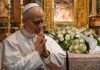
Newsroom (09/09/2025, Gaudium Press ) In a Jubilee Year dedicated to hope, Pope Leo XIV will join Christian leaders in honoring “new martyrs and witnesses of the faith” — those whose lives radiated hope and who died steadfast in their trust in God’s eternal embrace. Archbishop Fabio Fabene, secretary of the Vatican Dicastery for the Causes of Saints, announced the initiative at a press conference on September 8, emphasizing the ecumenical significance of the commemoration.
“Pope Leo hopes the blood of these martyrs will be seeds of peace, reconciliation, fraternity, and love,” Archbishop Fabene told reporters, echoing the pontiff’s vision for the Jubilee 2025.
Following the precedent set by St. John Paul II during the Holy Year 2000, Pope Leo will preside over an ecumenical prayer service on September 14, the feast of the Exaltation of the Cross, at Rome’s Basilica of St. Paul Outside the Walls. The service will honor Catholics, Orthodox, Anglicans, and Protestants who gave their lives for their faith between 2000 and 2025.
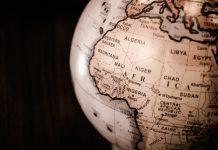
In 2023, Pope Francis established a commission to compile a catalogue of Christians martyred for confessing Christ and witnessing to His Gospel over the past 25 years. Andrea Riccardi, historian and vice president of the commission, revealed that the catalogue documents 1,624 Christians, with names submitted by bishops’ conferences, religious orders, and nunciatures worldwide. The breakdown includes 643 martyrs in Africa, 357 in Asia and Oceania, 304 in North and South America, 277 in the Middle East and North Africa, and 43 in Europe, with 110 European missionaries killed on other continents.
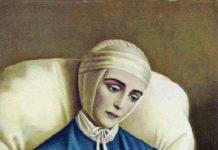
Riccardi, founder of the lay Community of Sant’Egidio, highlighted the diversity of these martyrs, whose hope-inspired lives often shone in regions marked by ethnic conflict, religious persecution, organized crime, or systemic injustice. One such figure is Sister Dorothy Stang, a U.S. Sister of Notre Dame de Namur, assassinated in 2005 in the Brazilian Amazon for defending the land rights of Indigenous peoples and poor farmers.
Archbishop Fabene noted that the Vatican is carefully considering whether to publish the catalogue’s names, citing potential risks to Christians still living and ministering in volatile regions. “They set the anchor of their hope in God, not in the world,” he said. “They hoped in the Lord, and their reward will be eternal life.”
Msgr. Marco Gnavi, commission secretary, added that the martyrs’ hope-filled lives brought light to their communities, often in contexts of profound suffering. “Their hope was the motif of their lives before their deaths, inspiring hope in others,” he said.
Father Angelo Romano, a commission member and official at the Dicastery for the Causes of Saints, clarified to Catholic News Service that the catalogue is not part of the formal process for recognizing martyrdom in sainthood causes, though some individuals listed already have causes underway, and others may follow. He also explained that the 2025 prayer service could not be held at the Colosseum, as St. John Paul II’s 2000 commemoration was, due to ongoing archaeological excavations limiting space.
Father Romano urged Catholics to view modern martyrdom not as a sign of Christianity under siege but as a call to solidarity. “Persecution means going to Mass is a risk, praying is a risk, practicing charity in the name of faith is a serious risk,” he said. “A society that may be aggressive toward the Christian faith is one thing; persecution is another.”
He cautioned against reducing martyrdom to mere numbers. “Theologically, we must be careful not to focus too much on quantity, because even one martyr is immense — a reason for reflection for the whole church,” he said. In a world plagued by violence, Father Romano emphasized, martyrs embody nonviolent hope. “A martyr chooses not to respond to evil with evil, not to respond to hatred with hatred, but with love.”
As the Jubilee Year unfolds, the commemoration of these new martyrs invites Christians worldwide to reflect on the enduring power of hope, rooted in faith, to transform even the darkest corners of the world.
- Raju Hasmukh with files from OSV News
Related Images: