











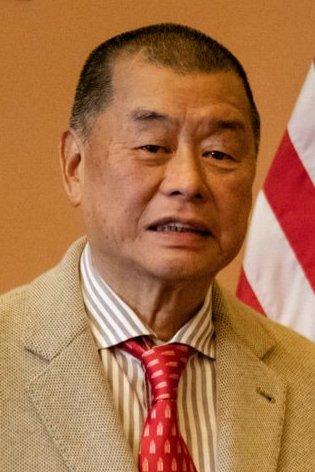
Jimmy Lai legal team argues strict literal reading of national security law prohibits sanction calls against authorities, not individual officials
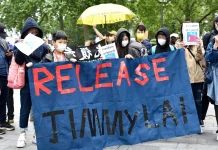
Newsroom (25/08/2025, Gaudium Press) In a closely watched trial at Hong Kong’s West Kowloon Court, the legal battle of Jimmy Lai Chee-ying, the Catholic founder of the now-defunct Apple Daily tabloid, has raised profound questions about justice, freedom, and the interpretation of Hong Kong’s national security law. The case, which resumed on Monday, saw Lai’s defense team clash with judicial authorities over the scope and intent of the Beijing-imposed legislation, highlighting tensions between individual rights and state authority—a conflict that resonates deeply with Catholic teachings on human dignity and the pursuit of truth.
Lai, detained since December 2020, faces charges of conspiring to collude with foreign forces and publishing seditious materials. Prosecutors allege that between April 2019 and June 2021, Lai used his media platform to advocate for international sanctions against Chinese officials and to incite public discontent against the government. The defense, led by Senior Counsel Robert Pang Yiu-hung, argued for a strict, literal interpretation of the national security law, asserting that it prohibits calls for sanctions against state authorities but not individual officials. This distinction, Pang contended, aligns with the law’s purpose of protecting national security rather than shielding individual interests.
However, Mr. Justice Alex Lee Wan-tang challenged this reading, suggesting that Beijing’s intent was likely broader—to counter all forms of foreign interference, including actions like the 2019 U.S. Hong Kong Human Rights and Democracy Act, which authorized sanctions against Chinese officials. This judicial push for a purposive interpretation underscores a critical tension: the balance between legal precision and the state’s expansive view of security. From a Catholic perspective, this debate evokes the principle of subsidiarity, which emphasizes the protection of individual and communal rights against overreach by higher authorities. The Church teaches that laws should serve the common good, not suppress legitimate expressions of conscience or truth-seeking, as Lai’s media work arguably sought to do.
The trial also exposed inconsistencies in the prosecution’s case, particularly regarding the testimony of former Apple Daily publisher Cheung Kim-hung, a defendant-turned-prosecution-witness. Cheung claimed Lai controlled the tabloid’s editorial decisions, yet this contradicted his 2021 bail application, where he stated that senior management, including Lai, had no role in editorial policy. The defense seized on this discrepancy, with Pang arguing that Cheung’s conflicting statements undermine his credibility. Madam Justice Esther Toh Lye-ping, however, suggested that Cheung’s earlier statement might have been strategically worded to support his bail bid, raising questions about truthfulness in legal proceedings. For Catholics, this moment recalls the Eighth Commandment’s call to bear truthful witness, as well as the Church’s emphasis on integrity in public life.
Lai’s case is more than a legal dispute; it is a test of Hong Kong’s commitment to freedom of expression and the press, values deeply rooted in Catholic social teaching. The Catechism of the Catholic Church (CCC 2494) affirms the media’s role in fostering truth and accountability, provided it respects human dignity and the common good. Lai, a convert to Catholicism, has long framed his media work as a mission to uphold truth and justice in a city facing increasing authoritarian pressures. His detention and trial, occurring against the backdrop of Hong Kong’s eroding autonomy, challenge the global Church to reflect on its role in advocating for those persecuted for their convictions.
As the defense continues its closing arguments, the outcome of Lai’s trial will carry profound implications for Hong Kong’s legal landscape and the broader struggle for human rights. Catholics worldwide are called to pray for Lai and others facing similar trials, invoking the intercession of St. John Paul II, a champion of freedom against oppressive regimes. The Church’s teaching on the dignity of the human person (CCC 1700) reminds us that justice must never be subordinated to political expediency. In Hong Kong, where the cross of persecution looms large, Lai’s case stands as a clarion call for solidarity with those who bear witness to truth in the face of adversity.
- Raju Hasmukh with files from South China Morning Post
Related Images: