






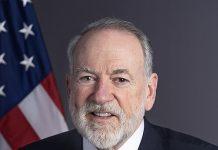





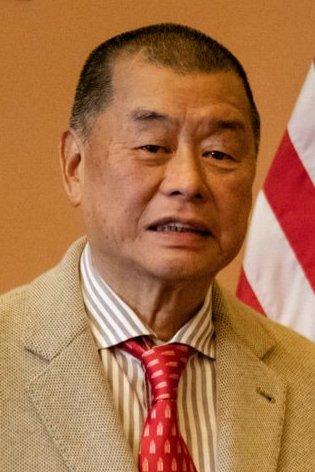
Madam Justice Esther Toh Lye-ping, one of the High Court judges in the trial of Jimmy Lai dismissed the defense’s argument that anti-China remarks were protected under freedom of expression
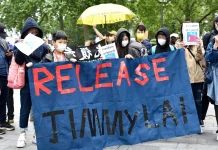
Newsroom (22/08/2025, Gaudium Press )In a pivotal moment for Hong Kong’s embattled press freedom, Madam Justice Esther Toh Lye-ping, one of three presiding High Court judges in the national security trial of Catholic businessman and media tycoon Jimmy Lai Chee-ying, dismissed the defense’s argument that Lai’s anti-China remarks were protected under freedom of expression. The ruling, delivered on Friday at West Kowloon Court, underscored the judiciary’s stance that even fundamental rights have boundaries, drawing parallels to crackdowns on pro-Palestinian protests in the UK and US.
Lai, the 77-year-old founder of the now-defunct Apple Daily tabloid, faces charges of collusion with foreign forces and conspiracy to publish seditious materials. His defense, led by Senior Counsel Robert Pang Yiu-hung, argued that Lai’s statements—made during a November 2020 episode of his online program Live Chat with Jimmy Lai—were figurative expressions of dissent against Chinese President Xi Jinping’s policies. In the broadcast, Lai described Xi as attempting to “eliminate” the Hong Kong people and warned that China could “change the world” if not countered by global action. Pang contended that such remarks, while provocative, were within Lai’s rights and not meant to be taken literally.
The defense further characterized Lai’s critique of Hong Kong’s police as “lawless” as hyperbolic yet constructive, aimed at addressing allegations of excessive force during the 2019 anti-government protests. However, the bench, including Justices Alex Lee Wan-tang and Susana D’Almada Remedios, remained unconvinced. Justice Toh sharply rebuked the defense’s “la-di-da” reliance on freedom of expression, emphasizing that such rights are not absolute. “In the US, people freely expressed their views on Palestine; they were arrested. People in England expressed their views on Palestine; they were arrested,” Toh said, highlighting varying governmental tolerances for dissent. She noted that Lai’s program, accessible globally via Apple Daily’s digital platforms, was far from the defense’s analogy of “an old man speaking at a dim sum lunch.”
The trial, which probes Lai’s actions between April 2019 and June 2021, centers on allegations that he used his media empire to incite foreign sanctions against China and foster public disaffection toward Hong Kong authorities. Prosecutors argue that Lai’s resolve to push anti-China measures persisted even after the 2020 national security law criminalized such actions. They point to his financial support for the “Fight for Freedom, Stand with Hong Kong” lobbying group as evidence of collusion with foreign entities.
Pang countered that Lai’s preference for Western democratic values and his criticism of the Communist Party should not be misconstrued as criminal intent. He invoked the sacred duty of the press to spark discourse, citing a 2019 Apple Daily article that explored the motivations of radical protesters from the “Dragon Slaying Brigade.” In a society rooted in truth and justice, Pang argued, journalists must be free to engage even with controversial figures. Yet Justice Toh challenged this, noting the prosecution’s claim that Apple Daily operated with a deliberate bias against the government at Lai’s direction. Justice Lee referenced a prior sedition ruling, affirming that restrictions on free speech do not inherently violate human rights.
For Hong Kong’s Catholic community, Lai’s trial carries profound spiritual weight. A devout convert, Lai has long framed his media work as a mission to uphold truth and dignity in the face of oppression. His detention since December 2020 has drawn global attention, with Catholic leaders and human rights advocates decrying the erosion of freedoms enshrined in Hong Kong’s Basic Law. As the trial unfolds, it raises questions not only about legal boundaries but also about the moral imperative to speak truth to power—a principle deeply rooted in Catholic social teaching.
The court’s rejection of Lai’s defense signals a narrowing space for dissent in Hong Kong, where the balance between security and liberty grows ever more precarious. As the case continues, the faithful are called to pray for justice, wisdom, and courage for all involved, trusting in God’s providence amid the storm.
- Raju Hasmukh with files from SCMP
Related Images: