
















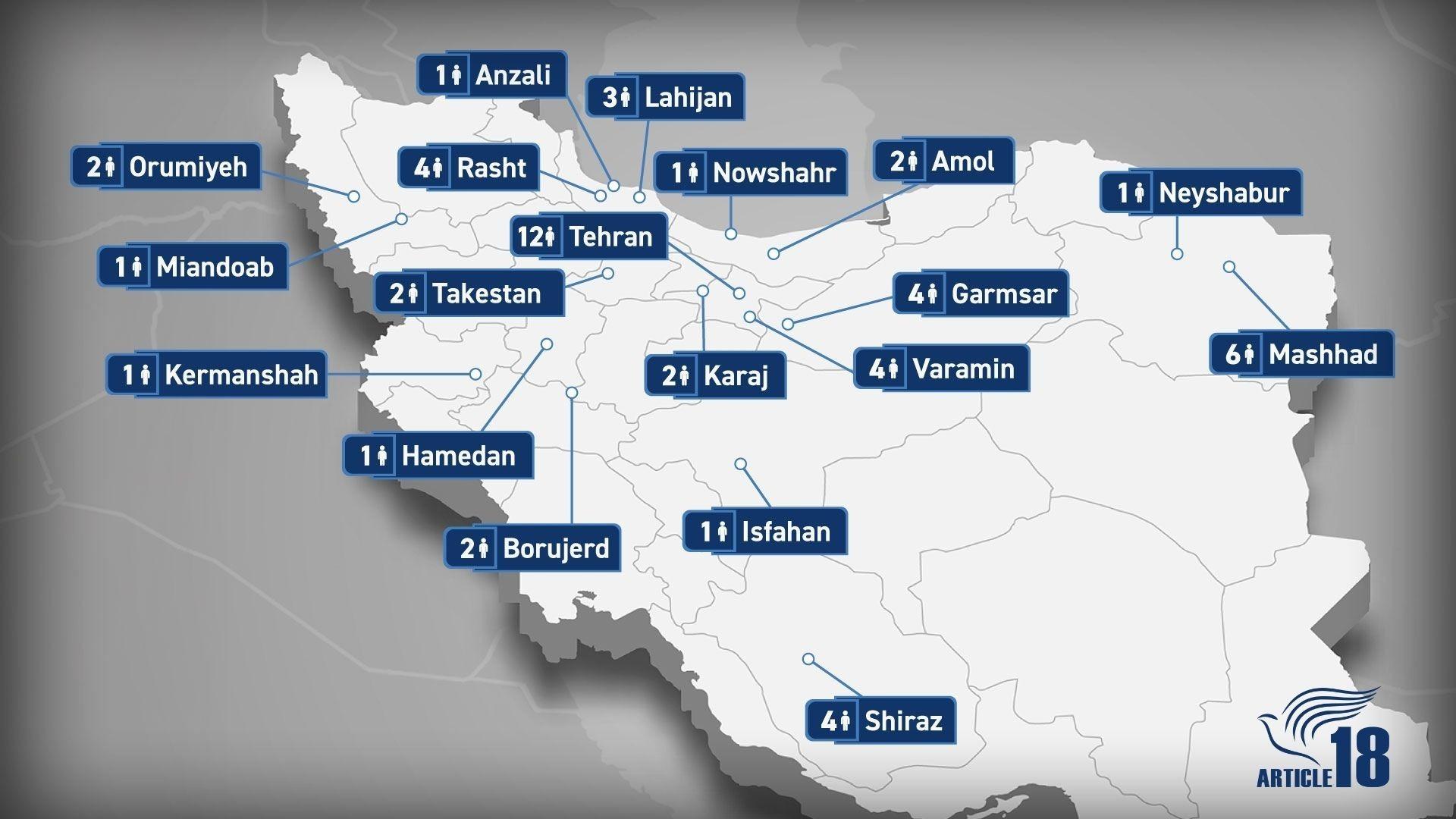
Iran Ministry of Intelligence (MOIS) has admitted to arresting over 50 Christians since the conclusion of the “12-day war” with Israel
Newsroom (20/08/2025, Gaudium Press )In a chilling escalation of religious persecution, Iran Ministry of Intelligence (MOIS) has admitted to arresting over 50 Christians since the conclusion of the “12-day war” with Israel. The arrests, announced as part of a broader crackdown on perceived internal threats, accuse these believers of engaging in activities “contrary to security” and possessing weapons. The charges, steeped in ambiguity, reflect a troubling pattern of targeting Iran’s Christian minority under the guise of national security.
The MOIS statement, issued in the wake of the conflict, detailed operations against Bahá’ís, Kurds, Baluchis, monarchists, and journalists accused of anti-regime activities. The Islamic Republic’s police further reported detaining at least 21,000 “suspects” during the military escalation with Israel, signaling a crescendo of internal repression. Among the Christians, the MOIS claimed to have “neutralized” 53 individuals labeled as “Mossad mercenaries,” allegedly trained abroad by churches in the United States and Israel under the pretext of the “Zionist Christian evangelical movement.”
A Distinction Rooted in Prejudice
According to experts at Article18, a platform dedicated to documenting religious freedom abuses in Iran, the regime’s rhetoric deliberately distinguishes between evangelical Christians—branded as “Zionists”—and the historic Armenian and Assyrian Christian communities. The latter, numbering fewer than 100,000, are recognized as a religious minority and permitted to worship in their native languages. However, they are barred from teaching in Persian or welcoming Iranian Muslims into their churches, a restriction that stifles evangelization and community outreach.
In contrast, Iran’s estimated 800,000 Christians—mostly converts from Islam—face systemic exclusion. Since the closure of Persian-language churches, these believers have no legal place of worship. Many turn to online services offered by foreign churches or clandestine gatherings, a necessity born of repression. Mansour Borji, director of Article18, explains: “Some of the recently arrested Christians attended a gathering in a neighboring country organized by a foreign church, as they are forbidden from such activities in Iran. Upon their return, they were detained.”
Borji dismisses the MOIS’s claims as “absurd,” arguing that the accusations of “anti-security” activities are a pretext to mask the intelligence services’ failures during the war with Israel. “These Christians sought spiritual guidance abroad because no such support exists at home,” he says. “The regime targets them as vulnerable scapegoats to deflect from its own shortcomings.”
A System Without Justice
The plight of Iran’s Christians is compounded by a judicial system devoid of fairness. Human rights lawyer Hossein Ahmadiniaz notes: “In Iran, there is no independent judiciary. Those arrested on security or ideological charges face torture, lack access to independent counsel, and are denied fair trials.” Of the 54 Christians arrested, at least 11 have been released on bail, but over 40 remain in detention, joining more than 60 others already imprisoned for their faith.
This wave of arrests underscores a broader regression in religious freedom, a trend exacerbated since the 2022 protests following the death of Mahsa Amini at the hands of Iran’s morality police. The U.S. Commission on International Religious Freedom has repeatedly called for Iran to be designated a “Country of Particular Concern” for its “systematic and egregious” violations of religious liberty.
A Faith Under Fire
For Iran’s Christians, the post-war crackdown is not merely a political maneuver but a profound assault on their faith. The regime’s labeling of Christians as “mercenaries” or “spies” for Israel reflects a deep-seated suspicion of religious minorities, particularly those perceived as aligned with Western or Jewish interests. Yet, as Borji emphasizes, “These are ordinary believers seeking to live out their faith in a climate of hostility.”
The Church, in its universal call to solidarity, is reminded of Christ’s words: “If they persecuted me, they will also persecute you” (John 15:20). Iran’s Christians, enduring imprisonment and slander, embody this truth. Their witness demands not only our prayers but also a global outcry for justice, urging the international community to hold Iran accountable for its violations of religious freedom.
- Raju Hasmukh with files from Asianews.it
Related Images:


