











A study reveals how Pakistan’s school curriculum embeds religious bias, marginalizing minority children and denying constitutional equality.
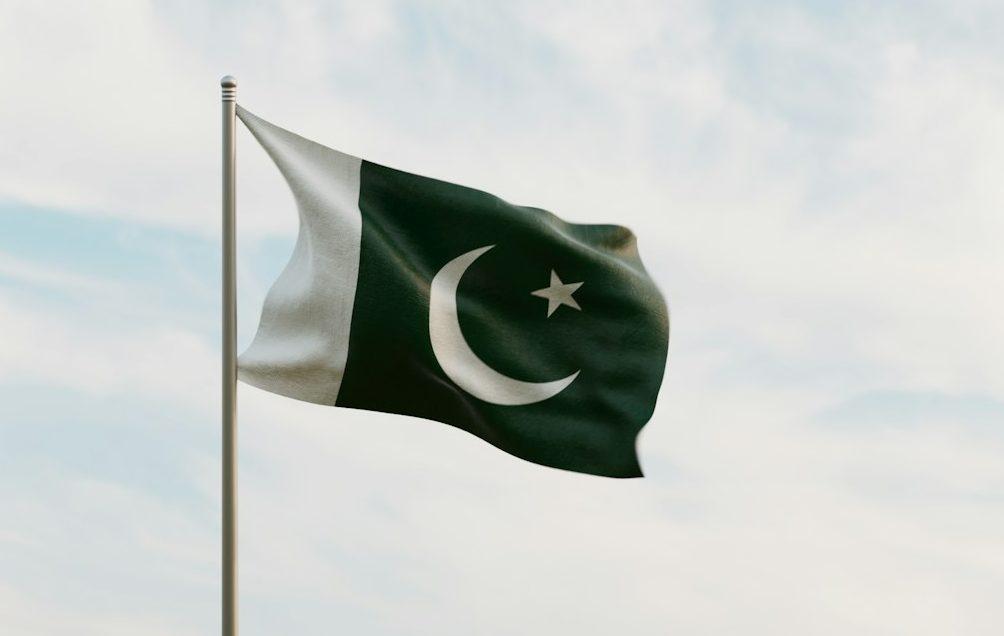
Newsroom (29/01/2026 Gaudium Press )Pakistan’s Constitution guarantees equal citizenship, religious freedom, and free, compulsory education for all children aged five to sixteen. Yet, for many students belonging to religious minorities, these rights remain aspirations rather than realities. A recent study by the Cecil & Iris Chaudhry Foundation (CICF) exposes how religious content—primarily Islamic teachings—has become entrenched in public-school textbooks across all four provinces, blurring the line between education and indoctrination.
“For me, studying Urdu was just like studying Islamiat,” said Kashan, a Christian student from Sialkot. “It was full of Islamic content and had no academic relevance as a language subject.” His experience, far from isolated, is part of a systemic problem that experts describe as a structural failure of neutrality within Pakistan’s education system.
“When religious content is inserted into compulsory subjects, education loses its neutrality,” said Nabila Feroze Bhatti, Programme Manager at Sanjog-Pakistan and member of a National Commission on the Rights of the Child (NCRC) working group. “For minority children, classrooms become spaces of exclusion rather than learning.”
Curriculum Contradictions
The CICF report outlines how Quranic verses, Islamic prayers, and religious narratives appear even in secular subjects such as English, Urdu, and Pakistan Studies—often without alternative material for non-Muslim students. As Bhatti observed, “This directly contradicts Article 22 of the Constitution. No student should be required to receive religious instruction relating to a religion other than their own, yet the curriculum violates this safeguard.”
Despite government promises, little has changed. In 2020, plans were announced to introduce textbooks representing seven minority religions, but the material never reached classrooms. “When alternatives are announced and never delivered, minority students are left with no real choice. That is exclusion by design,” Bhatti said.
Early Lessons in Exclusion
For many, discrimination begins in early childhood. Noor-e-Saher, a Christian from southern Punjab, recalled being forced to study Islamic Studies because her school had no teacher for minority students. “As a child, it was confusing and frightening,” she said. “I had to memorize Arabic verses I couldn’t understand. That feeling of fear stayed with me.”
By university, the consequences become more complex. One MPhil student explained how even higher education demands conformity to religious framing. “In exams, I knew that unless I linked my answers to Islam, I would barely clear the paper,” she said.
Bhatti warned that these patterns harm more than academic progress. “When education fails to remain religiously neutral, it affects children’s social, cultural, and economic well-being,” she said. “It undermines equality, dignity, and freedom of belief.”
Erased from the National Story
The CICF study also highlights a profound absence: religious minorities are nearly invisible in the nation’s official narrative. Textbooks frequently portray Hindus, Christians, and Sikhs as adversaries in the subcontinent’s history or omit their contributions altogether. “When minorities are erased from the curriculum, students are never taught how to understand or interact with people of other faiths,” Bhatti said. “This absence breeds ignorance and social hostility.”
For Naina, a Hindu student from Sindh, such ignorance translated into daily harassment. “My classmates asked why I didn’t wear a bindi or said I could never enter heaven unless I converted,” she recalled. “Education never taught them how to treat someone from a different religion.”
Parents, too, live with the fallout. “Even having Christian names can be problematic for my children,” said Neha John, a mother of two. “I’ve considered switching cities or even leaving the country to give them a life free from prejudice.”
Structural Discrimination and Lost Futures
At the university level, the system’s weaknesses become institutional barriers. One Christian graduate from Punjab University described how his degree remains pending because of unresolved grades in mandatory Quran courses. “For nearly 120 minority students, there is only one faculty member for the alternative subject. There is no proper system, no accountability,” he said. “The teacher insulted my religion in front of the class. I felt humiliated and powerless.”
Others recall similarly degrading experiences. “I was often provoked to debate my faith,” said Simon Akhtar from Nankana Sahib. “One teacher even gave me a book by Dr Zakir Naik and encouraged me to read it so we could discuss my conversion. I was told to stay silent at home.”
The emotional toll of such experiences builds over time, leaving students with a lingering sense of exclusion. “When I was in school, I always wondered why there wasn’t even a single hero belonging to a minority community,” said Waqas Saroya. “Now I fear my son will grow up believing he has no place in this country’s story.”
A Call for Reform
Bhatti summarized the deeper implications: “When Articles 20, 22, 25, 25A, 27, 36, and 38 are ignored in practice, minority children are denied not just education, but equal citizenship.”
The CICF study concludes with an urgent recommendation: unless Pakistan reforms its curriculum to restore religious neutrality and inclusive representation, it will continue to educate generations of children under a system that marginalizes rather than empowers them. For many minority students, the classroom will remain a space not of learning—but of erasure.
- Raju Hasmukh with files from UCA News
Related Images: