














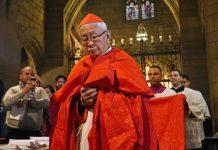

Cardinal Ambongo warns that inequality, corruption, and exploitation of Africa’s resources fuel coups and instability across the continent.
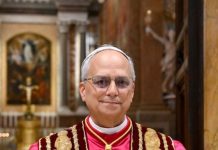
Newsroom (11/01/2026 Gaudium Press ) In a sobering reflection on the crises facing modern Africa, Fridolin Cardinal Ambongo, Archbishop of Kinshasa in the Democratic Republic of Congo, has sounded the alarm over the deep connection between inequality, corruption, and the continent’s recurring cycles of instability and coups d’état.
Speaking to Vatican News following the recent consistory in Rome, Cardinal Ambongo warned that despite some progress in states where democracy endures, “globally, in Africa, democracy is lagging behind, living together is lagging behind.” He stressed that the erosion of shared governance and the rise of power monopolies are not isolated African phenomena but part of “a global current which is now blowing over the whole world.”
Failed Governance and the Roots of Coups
Reflecting on the series of coups and attempted coups that punctuated 2025, the Cardinal described them as unmistakable symptoms of political and moral failure. “All these coups d’état clearly show that the exercise of power has gone wrong in Africa,” he said.
The perpetrators of such seizures of power, Ambongo argued, often emerge from the margins. “They are people who feel frustrated, who feel that the cake is shared between a small elite, a small group, and the majority has no access.” To end this vicious cycle, he added, Africa’s future depends on “a system of equitable redistribution of the wealth of our continent” and governance that protects the rights of all citizens “in a fair and just way.”
The Quest for Wealth and Power
Cardinal Ambongo, who also serves as president of the Symposium of Episcopal Conferences of Africa and Madagascar (SECAM), lamented what he sees as a moral decay in leadership. “We have the impression that more and more in our African countries… only the will of power matters today,” he said. According to the Archbishop, politics across the continent has become an arena for personal enrichment rather than public service.
“The powerful impose their will on the smallest,” he observed. “The only thing that matters is wealth.” This obsessive pursuit of wealth, he warned, often leaves the majority abandoned. “We are ready to go and get this wealth by resorting to any method,” he said, noting that the spoils are commonly used “first for ourselves, for the people of our family, for the people of our group.” The result is, he explained, “a kind of imbalance, of inequality between those who have, and those who have in Africa are generally those who are in power.”
Resource Exploitation and Global Interests
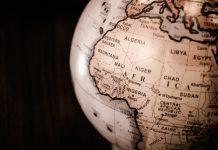
Ambongo also turned his attention to the issue of natural resources, identifying it as both a blessing and a curse. Africa, he said, continues to be viewed by external powers as an extraction site for “what they call today strategic minerals, for their industry, to allow them to dominate the world.”
Echoing Pope Francis’ earlier denunciation during his visit to Kinshasa, the Cardinal criticized the exploitative systems through which foreign interests—often with the complicity of local elites—extract wealth without benefiting local populations. “We sometimes use certain Africans to access the minerals, our resources, but only for their own interest, not for the interest of the global population,” he said. “As long as the system continues to function like this, we will always have war.”
A Call for Hope and Self-Reliance
Despite the stark diagnosis, Cardinal Ambongo’s message was not one of despair. The Capuchin prelate urged Africans to draw strength from their resilience and capacity for renewal. “We must reassure ourselves that we can change the course of history,” he said. “The future of this continent depends on you, depends on us.”
Amid widening inequality, political dysfunction, and international exploitation, Ambongo’s plea remains both moral and practical: equitable governance, shared prosperity, and faith in Africa’s ability to reclaim its destiny.
- Raju Hasmukh with files from ACi Africa
Related Images: