













At the Jimmy Lai trial, Hong Kong judge has accused the media of misleading the public about the controversial 2019 extradition bill
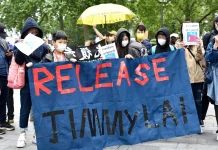
Newsroom (26/08/2025, Gaudium Press ) In a significant development in the national security trial of Catholic media tycoon Jimmy Lai Chee-ying, a Hong Kong judge has accused the media of misleading the public about the controversial 2019 extradition bill, which sparked widespread anti-government protests. The remarks, made during the trial at West Kowloon Court, highlight tensions between press freedom and judicial perceptions of media responsibility, raising profound questions about truth, public discourse, and the role of journalism in a polarized society.
Madam Justice Esther Toh Lye-ping, one of three presiding High Court judges, argued that the media created a “mistaken impression” of the extradition bill, which was later withdrawn amid public outcry. The bill, intended to allow the transfer of fugitives to mainland China and Taiwan, was portrayed by outlets like Lai’s now-defunct Apple Daily as a threat to Hong Kong’s autonomy, with claims that ordinary citizens could be swiftly extradited for trial. Toh countered that any transfer would have required a judicial process, underscoring that the public, not the government, was misled by such narratives.
This critique resonates with Catholic teachings on the moral responsibility of communication. The Catechism of the Catholic Church emphasizes that truth must guide public discourse (CCC 2488-2492), cautioning against misinformation that distorts justice or sows division. From this perspective, the judge’s remarks challenge media outlets to reflect on their duty to present facts accurately, particularly in matters of grave public consequence.
The defense, led by Robert Pang Yiu-hung SC, argued that Apple Daily’s critical coverage of the bill was not seditious but rather an exercise in fostering lawful public debate. Pang asserted that the newspaper aimed to expose government missteps and encourage dialogue, emphasizing that no absolute right or wrong exists in political matters. “You can’t simply have one side of views that the government is always right,” he told the court, defending the role of a free press in holding authority accountable.
However, Mr. Justice Alex Lee Wan-tang questioned whether Apple Daily’s approach constituted “rational” debate, noting that the outlet appeared to demand the bill’s outright withdrawal rather than proposing constructive improvements. This observation aligns with Catholic principles of prudence and charity in discourse, which call for reasoned dialogue aimed at the common good rather than inflammatory rhetoric (CCC 1806-1807).
Lai, detained since December 2020, faces two counts of conspiracy to collude with foreign forces and one count of conspiracy to publish seditious articles. Prosecutors allege that between April 2019 and June 2021, Lai used Apple Daily and social media to incite international sanctions and foster public disaffection against authorities. They further claim he provided financial support to the “Fight for Freedom, Stand with Hong Kong” group to lobby for Western intervention against China.
The defense, represented by Marc Corlett, countered that prosecutors failed to prove Lai continued illegal appeals for sanctions after the national security law took effect in 2020. Corlett argued that Lai had no obligation to police his associates’ actions and questioned the extent of his involvement with the Inter-Parliamentary Alliance on China (IPAC), which advocated sanctions. The judges, however, pointed to testimony suggesting Lai’s unwavering commitment to his “fight for freedom” despite legal changes, casting doubt on the defense’s position.
As the trial continues, the case underscores the delicate balance between press freedom and national security, a tension that Catholics are called to navigate with discernment. The Church’s social teaching affirms the right to free expression but urges its exercise with responsibility and respect for truth (Gaudium et Spes, 59). For Hong Kong’s Catholic community, Lai’s trial is not only a legal battle but a moment to reflect on the moral imperatives of journalism in a fractured world.
The defense’s closing submissions will resume on Wednesday, with the city—and the global Catholic community—watching closely.
- Raju Hasmukh with files from South China Morning Post
Related Images: