















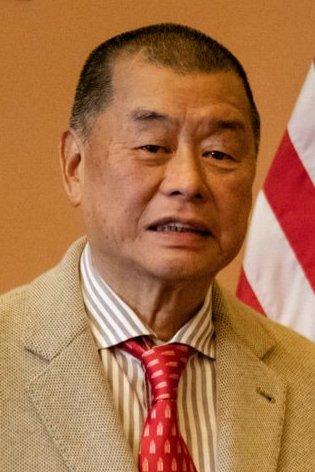
Jimmy Lai, charged with collusion with foreign forces and seditious activity under Hong Kong national security law, faced another delay on Friday due to concerns over the 77-year-old’s health
Newsroom (18/08/2025, Gaudium Press) The trial of prominent democracy activist Jimmy Lai, charged with collusion with foreign forces and seditious activity under Hong Kong national security law, faced another delay on Friday due to concerns over the 77-year-old’s health. Closing arguments, initially set for Thursday, were postponed to Monday after Lai experienced heart palpitations, prompting a medical examination, according to his legal team. The delay was compounded by an impending typhoon that disrupted the court’s schedule.
Lai, a Cantonese native and practicing Catholic who holds a British passport, is a towering figure in Hong Kong’s pro-democracy movement. His journey from a stowaway arriving in Hong Kong to a garment factory worker, and later a media mogul through his founding of the now-defunct Apple Daily newspaper, has made him a symbol of resilience and press freedom. Lai is the only one of seven former senior Apple Daily officers to plead not guilty to charges of conspiring with foreign forces to endanger Chinese national security, a crime that could carry a life sentence. The other six officers entered guilty pleas in 2022.
The charges stem from Hong Kong’s controversial 2020 national security law, enacted by Beijing in response to widespread pro-democracy protests in 2019. The law grants authorities sweeping powers to arrest and prosecute individuals for acts deemed to promote secession, subversion, or collusion with foreign entities. Critics argue it undermines the “one country, two systems” framework established when Hong Kong transitioned from British to Chinese rule in 1997, effectively curbing freedoms in the semi-autonomous region.
Lai’s trial, which began in December 2023 after years of delays, has drawn global attention. Supporters, including international human rights groups and Catholic leaders, have called for his release, citing concerns over the trial’s fairness. “There is no jury. The three judges were handpicked by Hong Kong’s chief executive, who is under the thumb of the Chinese Communist Party,” wrote Father Robert Sirico, founder of the Acton Institute, in a recent essay for The Free Press. Sirico described the trial as fully “subject to Chinese control,” echoing widespread skepticism about its impartiality.
Lai has been detained for over 1,600 days, much of it in solitary confinement, according to his attorneys. They report he has been denied independent medical care for diabetes and access to Holy Communion, raising concerns about his treatment in custody. The bishop of Hong Kong, Cardinal Stephen Chow, has remained reserved on the matter. When asked in late 2024 by the National Catholic Register about joining a public statement supporting Lai, a diocesan spokesman said, “As the matter is still in judicial proceedings, the Diocese of Hong Kong has no further reply. However, Cardinal Chow prays that Mr. Lai, a brother in Christ, be at peace.”
The case has also drawn attention from international figures, including U.S. President Donald Trump, who vowed this week on Fox News to “do everything [he] can” to secure Lai’s release. Trump noted he has “already brought it up” in government discussions but clarified, “I didn’t say 100% I’d save him. I said 100% I’m going to be bringing it up.” In 2023, a U.S. congressional commission urged sanctions against Hong Kong prosecutors and judges if Lai was not freed, while a coalition of human rights groups echoed calls for his release. Lai’s advocacy for free speech and human rights has earned him accolades, including the 2024 Bradley Prize for his commitment to freedom.
The trial’s outcome remains uncertain, with many observers, including Sirico, expressing little hope for an acquittal given the Chinese government’s influence. Lai’s supporters continue to rally, with gestures like a proposed “Jimmy Lai Way” street renaming in Washington, D.C., and exhibitions of his artwork at The Catholic University of America in 2024.
As tensions in Hong Kong persist, the case underscores broader concerns about the erosion of the city’s autonomy. With the Vatican’s 2018 bishop appointment agreement with China renewed in 2024 for four years, may face renewed scrutiny over how to address Lai’s plight without straining delicate diplomatic ties. For now, Lai’s fate rests with a court widely seen as an extension of Beijing’s authority, while his supporters hold fast to his legacy as a beacon of courage and conviction.
- Raju Hasmukh with files from Crux Now and CNA
Related Images:


