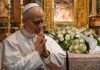




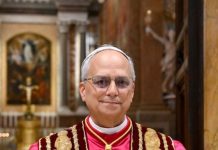












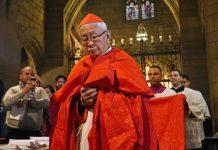

Archbishop Gabriele Caccia, calls for nations to implement policies that support and protect families, motherhood, and maternity, along with the promotion of equality between women and men.
Newsroom (16/07/2025, Gaudium Press) During the High-Level Political Forum at the United Nations, Archbishop Gabriele Caccia, the Holy See’s Permanent Observer, called for policies that safeguard families, motherhood, and maternity while advancing gender equality. His remarks, delivered on July 14 and 15, addressed the implementation of Sustainable Development Goal 3 (SDG 3) on health and well-being and Sustainable Development Goal 5 (SDG 5) on gender equality and women’s empowerment.
SDG 3: Holistic Health as a Foundation for Human Development
On July 14, Archbishop Caccia emphasized that health extends beyond the absence of disease, encompassing “a holistic state of physical, psychological, social, spiritual, and emotional well-being” critical to integral human development. He expressed concern over uneven progress toward SDG 3, citing fragile health systems, insufficient funding, and the rising burden of non-communicable diseases as key barriers exacerbating global health disparities.
To address these challenges, Caccia advocated for comprehensive, integrated policies that recognize the interconnectedness of SDG 3 with other Sustainable Development Goals. He stressed the need to prioritize vulnerable populations, including the unborn, children, the elderly, persons with disabilities, migrants, and those in conflict zones. “Ideological or economic agendas must never shape healthcare; it must remain person-centered,” he urged.
Highlighting the Catholic Church’s role, which operates roughly a quarter of global health facilities, Caccia underscored the importance of faith-based organizations in delivering care to the poorest and most remote communities. He called for stronger partnerships with these institutions to ensure healthcare remains focused on human dignity.
SDG 5: Gender Equality Rooted in Human Dignity
On July 15, the discussion shifted to SDG 5, with Archbishop Caccia affirming that gender equality is grounded in the “equal God-given dignity” of every individual, a principle he described as “fully recognizable even by reason alone.” This dignity, he argued, is the foundation for achieving gender equality and empowering women and girls.
However, Caccia cautioned that recognition alone is insufficient. He called for conditions that foster the integral development of women and girls, including access to quality education, healthcare, decent work, and full participation in all spheres of life. Systemic barriers such as poverty, violence, and exclusion must be addressed, he said, describing these efforts as “a moral imperative and a prerequisite for long-term development and progress.”
Central to his message was the need to protect the roles of women and men within families and communities. “Policies that support and protect families, motherhood, and maternity need to be implemented alongside the promotion of equality between women and men,” Caccia stated, warning against approaches that reduce women to “mere instruments of economic or political agendas.”
A Call for Renewed Commitment
With only five years remaining to achieve the 2030 Agenda, Archbishop Caccia urged a renewed global commitment to the integral development of every woman and girl. His remarks underscored the Holy See’s stance that human dignity must remain at the core of development efforts, balancing family-centric policies with the pursuit of gender equality to create a just and sustainable future.
- Raju Hasmukh with files from Vatican News
Related Images: