




















Vatican unveils digital Annuarium Pontificium with real-time updates and advanced search. Pope Leo XIV hails new platform as vital service to the Church.
Newsroom (09/12/2025 Gaudium Press ) On the Solemnity of the Immaculate Conception, December 8, the Holy See officially released the first fully digital edition of the Annuarium Pontificium, the Pontifical Yearbook long regarded as the authoritative directory of the Catholic Church worldwide.
The new online platform, accessible through any web browser or via dedicated iOS and Android apps, instantly replaces the limitations of the annual printed volume with continuously updated data on the Roman Curia’s Dicasteries, dioceses, religious institutes, and apostolic nunciatures.
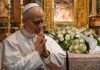
Pope Leo XIV personally inaugurated the service during a presentation attended by senior Vatican officials. Accompanied by Archbishop Edgar Peña Parra, Substitute of the Secretariat of State, and Monsignor Lucio Adrián Ruiz, Secretary of the Dicastery for Communication, the Pope carried out the platform’s first login and explored its features.
“Thank you for this work, which will be of great use for many who work in the service of the Church,” Pope Leo XIV told the development team. He urged them “to continue with this spirit of service, so that what is born with care and attention may, in time, become an even greater help.”
The digital Yearbook marks a significant modernization of a reference tool whose roots trace back to the medieval Liber Pontificalis. First published in its modern form in the mid-twentieth century, the Annuarium has served as the official source for verified information on the Church’s global structure.
The Secretariat of State, which coordinated the project, and the Dicastery for Communication, which handled technical development, designed the platform explicitly as a working instrument for multiple ecclesial stakeholders. Roman Curia offices now have immediate access to the latest appointments and structural changes. Apostolic nunciatures, bishops’ conferences, religious institutes, pontifical universities, and accredited journalists can consult certified data without waiting for the next print run.
Advanced search functions allow filtering by name, diocese, office, country, or institutional category. New appointments and modifications to Church structures are reflected online almost immediately, eliminating the delay inherent in the former annual printed edition.
“In a time when communication is ever faster and more global, offering immediate and reliable access to information on the life of the Church—with certified data—means putting technology at the service of the ecclesial mission,” Archbishop Peña Parra said. “It is a sign of attentiveness, transparency, and responsibility towards the Catholic community and towards all those who seek to understand the reality of the Church in the world.”
The platform was built with contributions from young professionals in service design and user experience, combining technical robustness with intuitive navigation. Data normalization was handled by the Central Office of Church Statistics.
Conceived as an evolving project, the digital Yearbook will gradually incorporate historical information from past editions and expand its analytical capabilities in future releases. The Secretariat of State has invited users to send feedback and suggestions to annuariopontificio@sds.va to help refine the service.
The platform is available at www.annuariopontificio.catholic and through dedicated mobile apps. Access requires registration and operates on a subscription basis with two paid plans that include continuous updates.
With Monday’s launch, the Holy See has taken a decisive step toward real-time transparency, ensuring that official information about the Church’s leadership and institutions is as current and accessible as the digital age demands.
- Raju Hasmukh with files from Vatican News
Related Images: