














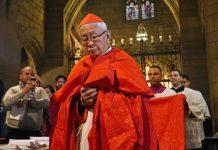

On Wednesday, 28 May, the Mount of Olives near Jerusalem became a focal point of prayer and unity as the Franciscan friars of the Custody of the Holy Land gathered to celebrate the solemnity of the Ascension of Jesus.
Newsroom (May 30, 2025, 08:45, Gaudium Press) The festivities, rich in symbolism and ecumenical significance, unfolded from early afternoon into the following dawn, drawing faithful from across the region.
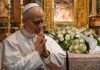
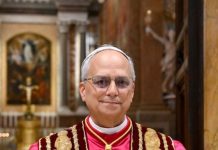
Custodial Vicar Fra Ibrahim Faltas underscored the profound meaning of this year’s celebration, noting the rare convergence of all Jerusalem’s Churches in commemorating the feast. “We are witnesses of a sign of communion,” he said. “This is a strong and prophetic sign, reminding us that unity is possible—a living witness of the Gospel in the heart of the Holy Land.”
A Site Steeped in History
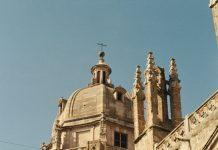
The Chapel of the Ascension, marking the traditional site of Jesus’ ascent into heaven, carries centuries of layered history. The original 4th-century shrine was destroyed, only to be rebuilt by Crusaders as an octagonal edicule, its open roof a symbolic gesture toward the heavens. In 1198, after Salah al-Din claimed the site, a dome was added, and it became part of Jerusalem’s Muslim waqf. Though now used as a mosque, no active Islamic rites are performed there, allowing its Christian significance to endure.
From Vespers to Dawn Mass
The day’s observances began with the solemn entrance of the Vicar into the chapel, followed by Vespers and a procession in which friars circled the Crusader structure three times, chanting the Litany of the Saints. The night vigil continued with the Office of the Readings and multiple Masses, culminating in a solemn Eucharistic celebration at dawn.
Under the open sky before a gathered crowd, Fra Ibrahim reflected on the feast’s dual call to heavenly hope and earthly responsibility. “Here, on the Mount of Olives, our eyes look upwards, but our hearts remain anchored to this land—a land that is loved, wounded, and awaited,” he said in his homily.
The Ascension: A Mystery and a Mission
The Vicar emphasized that the Ascension is not merely a historical event but a living mystery that challenges believers. “It is the seal of Christ’s mission and the starting point of the Church’s mission,” he declared. “Our humanity is called to heaven; our flesh is welcomed into the Trinity, and our wounds are enveloped by eternal light.”
Yet even in this moment of liturgical joy, the suffering of the region weighed heavily. Turning his thoughts to Gaza, Fra Ibrahim voiced a piercing question: “Where is God when man destroys what He has created?” In response, he urged Christians to embody hope amid despair. “We are asked to bring heaven to earth, to plant seeds of peace exactly where everything seems lost.”
A Call to Fraternity in a Divided Land
In a land marked by conflict, the Vicar’s message was clear: the Christian vocation demands radical solidarity. “Here in the Holy Land, this call is more urgent than ever,” he said. “We must go against the tide—choosing fraternity, seeking the other’s face even when it seems impossible. Our work is to build unity.”
As the sun rose over Jerusalem, the celebrations concluded, leaving behind not just memories of prayer but a renewed challenge: to live the Ascension’s promise by lifting the world toward reconciliation, one act of peace at a time.
- Raju Hasmukh with files from custodia.org
Related Images: