


















Ivana Bronlund’s custody battle exposes Danish parenting tests’ cultural bias against Greenlanders, sparking Catholic debates on state overreach into God-given parental rights.
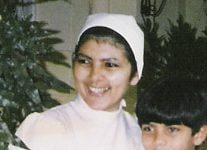
Newsroom (02/10/2025, Gaudium Press ) The heart-wrenching case of Ivana Bronlund, an 18-year-old Greenlandic woman whose newborn daughter was taken by Danish authorities just an hour after birth, has ignited a firestorm of debate over state-mandated parenting tests and their impact on family rights. Bronlund’s legal battle to regain custody of her child, born on Aug. 11, has drawn international attention, raising profound questions about the balance between state intervention and parental autonomy, particularly for marginalized communities like Greenlanders.
A Test of Competence or Culture?
At the center of the controversy is Denmark’s parental-competence test, known as the FKU, a rigorous evaluation administered by psychologists to assess a parent’s fitness to raise a child. The test, which spans 15 to 20 hours over several months, includes psychological interviews, observations of parent-child interactions, and even queries like “What is glass made of?” or “What is the name of the big staircase in Rome?” Designed to evaluate personality, cognitive abilities, intelligence, and psychological health, the FKU is not mandatory for all parents but is imposed when local authorities in Denmark’s municipalities—roughly equivalent to U.S. counties—flag significant welfare concerns in a household.
For Bronlund, the test proved a devastating barrier. Despite a January decision by the Danish government to exempt Greenlandic parents from the FKU in response to concerns about cultural bias, authorities deemed Bronlund “sufficiently Danish” to be subject to the test because she had lived in mainland Denmark since infancy. A key factor in the government’s determination that she was unfit to parent was her history of childhood abuse at the hands of her father. “The one hour I was allotted with my daughter was the best hour of my life,” Bronlund told The New York Times in a Sept. 15 interview.
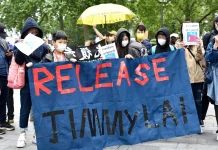
Public outcry erupted in Denmark and Greenland this summer, with protests demanding Bronlund’s reunification with her daughter. Supporters argued that while parenting tests may have merit, the FKU’s design fails to account for Greenlandic cultural nuances, disproportionately disadvantaging Indigenous families. On Sept. 22, a national appeals board ruled in Bronlund’s favor, ordering her daughter’s return. Danish Minister for Social Affairs and Housing Sophie Haestorp Andersen admitted that subjecting Bronlund to the test was “a severe mistake,” given the exemption for Greenlanders.
A Broader Pattern of Family Separation
Bronlund’s case is not an isolated incident. In 2022, Danish authorities placed 2,712 children in foster care against their parents’ wishes, a figure that includes but is not limited to cases involving the FKU. The Danish Institute for Human Rights reports that Greenlandic families are disproportionately affected: 7% of children in Greenland live outside their homes, compared to just 1% across Denmark. Critics argue that systemic prejudice may lead officials to more readily suspect Greenlandic parents of incompetence, a claim amplified by Greenland’s social challenges, including the world’s highest suicide rate and a 20% rate of childhood sexual abuse among those born after 1995, according to a 2018 Greenland Population Survey.
The Danish government’s response to Greenlandic concerns has been mixed. Following diplomatic tensions, including former U.S. President Donald Trump’s calls for closer ties or annexation, Denmark established VISO, a specialized unit with expertise in Greenlandic culture and language, to assess Greenlandic parents. Yet the FKU remains in place for non-Greenlandic Danes, and cases like that of Sophie, a Danish mother whose three children were removed in 2021, highlight its lingering impact. “I can’t even describe how I felt afterwards,” Sophie told Danish news outlet DR. “It was so hard to be in my body.”
Historical Wounds Resurface
Bronlund’s victory coincided with a somber reckoning in Greenland. Just before Prime Minister Mette Frederiksen’s visit to the island, a 347-page report revealed Denmark’s forced sterilization campaign targeting Inuit women in the 1960s and 1970s. The program, which implanted IUDs in women and girls as young as 12 without their consent, affected half of Greenland’s fertile female population at the time. Ostensibly aimed at curbing population growth, the campaign has left a legacy of trauma in a region whose population has stagnated at roughly 57,000 since the early 1990s. Frederiksen’s apology during her visit underscored Denmark’s attempt to address historical injustices, but for many, it did little to heal old wounds.
Catholic Perspectives on Parental Rights
For Catholics, the Bronlund case and the FKU raise fundamental concerns about the state’s role in family life. Stephen Krason, professor emeritus of political science at Franciscan University and editor of Parental Rights in Peril (2023), called the tests “an outrageous example of state intrusion into the family.” He questioned the validity of reducing parental capability to a standardized test, describing it as “one of the flimsiest things I’ve ever encountered.”
Catholic social teaching, as articulated in Pope Leo XIII’s 1891 encyclical Rerum Novarum, emphasizes the primacy of parental authority. “Paternal authority can be neither abolished nor absorbed by the State,” Leo wrote, allowing state intervention only in cases of grave risk to family members. Guillermo Morales Sancho, an attorney with Alliance Defending Freedom International, echoed this view, arguing that the FKU inverts the burden of proof, presuming parental incompetence until proven otherwise. “Parents enjoy the rebuttable presumption of properly taking care of their children,” he said, advocating for state intervention only when neglect or abuse is clearly demonstrated.
The Spiritual Cost of State Overreach
Denmark’s welfare state, renowned for its cradle-to-grave support, has fostered a culture of reliance on government over family and faith. Danish journalist and Catholic convert Iben Thranholm observed that in a society where the state acts as “father, mother, and nanny,” spiritual disconnection is rampant. With 40% of Danish households occupied by single individuals and state-funded artificial insemination available, traditional family structures are eroding. “The state cannot make you feel loved or create a family for you,” Thranholm said, pointing to rising loneliness, anxiety, and depression as symptoms of a “spiritual pandemic.”
In this context, hospitals have become modern sanctuaries, where existential crises prompt reflection on God and meaning. “When people realize the system cannot rescue them … they start to think about God,” Thranholm noted. For critics like Krason and Morales Sancho, the FKU exemplifies a broader trend of state overreach that undermines the family as a God-given institution, leaving both individuals and society spiritually adrift.
As Denmark grapples with its policies and their implications for Greenlandic and Danish families alike, Bronlund’s case serves as a stark reminder of the delicate balance between protecting children and preserving the sacred bond between parent and child.
- Raju Hasmukh with files from NC Register
Related Images: